Body Language Secrets

body language

What do your actions say about you?

Many studies have been conducted and many reports exist regarding the issue of body language. It’s no secret that our actions do often speak louder than words, sometimes revealing emotions and feelings that we were hoping to keep subdued.

The concept of body language, properly applied, can be a useful tool for marketers. Observing how a prospect is responding to what is being said can reveal important clues to help the astute marketer gauged the interest of the prospect.

My friend and colleague, Patty Miller, shared a video on LinkedIn speaking to this issue. The video is called five proven tactics to read body language. (You can find my interview on YouTube with Patty here!  Or here, if you prefer a podcast)

Watch the Video here:

So although this short video may appear to be a bit simplistic, it does clearly identify five key areas that anyone can observe to help read their audiences interest and engagement levels.

Until next time…

Are you ready to grow your business now? If you’re ready to take the next step and make your business more profitable, contact us today.

If you like the information you are receiving, please consider forwarding this post.

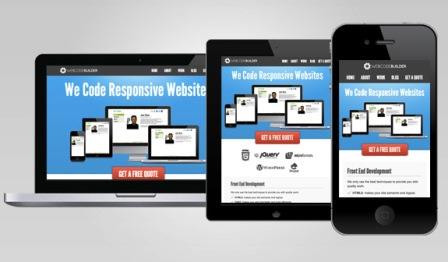
Why Your Site Needs To Be Mobile Responsive

mobile responsive

Are you sure you are mobile responsive?

If not, you are not only on the radar for Google penalties, but are also losing potential clients.

We have shared the news about how Google penalizes non-mobile responsive sites, but beyond rankings, you could be losing business.

Today, we wanted to share with you an infographic from GoMobile Solutions that shows clearly why your site needs to be mobile.

See the infographic:

Until next time…

Are you ready to grow your business now? If you’re ready to take the next step and make your business more profitable, contact us today.

If you like the information you are receiving, please consider forwarding this post.

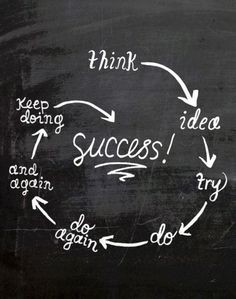
Keep Your Eyes On The Prize – 3 Key Motivators

how to stay motivated

Do you ever think that maybe it’s time to throw in the towel?

Sometimes it can be difficult to stay motivated.

As an entrepreneur, some days it can feel like all you do is fight an uphill battle. And sometimes, during these times, you can feel a bit overwhelmed and wonder if all this effort is worth it, or if you should just throw in the towel and try something else.

As someone who has been an entrepreneur for over 30 years, I have felt this pain. During my career, I have had some big wins and some big losses – probably something familiar to your story. And when I feel like throwing in the towel, I take the time to re-evaluate why I do what I do and what it would mean to change all of this.

To help keep you moving forward, I have compiled the following three motivators:

1. Stay focused. Sometimes we get overwhelmed simply because we are pulled into many different directions at once. Entrepreneurs are used to juggling many balls, but occasionally we can feel boxed in. Create a checklist of things you have to take care of and prioritize them. Take care of them in order, staying focused on the issue at hand. And don’t beat yourself up if you don’t get everything done. Remember, Rome wasn’t built in a day.

2. Stay positive. Yeah, I know. Sometimes this is easier said than done. But remember that there is light at the end of the tunnel and that the struggles you are contending with will pass. Be sure that you are surrounding yourself with people who support you and are a positive influence. Naysayers will only drive you deeper into negativity.

3. Stay true to yourself. As I mentioned above, when you’re wondering whether to keep going or to give it all up, take the time to reflect white is you do what you do. Create the list of pros and cons-and, of course, there are pros and cons to everything and every career. Then take an objective look and see which column has the most weight. Your decision will become clear.

One bonus motivator: Take a break!  Go for a walk, watch a movie, visit a friend.  Just give yourself a bit of time away and you’ll be surprised how refreshed and ready to jump back into the thick of things you’ll be.

Now, I’m not suggesting that at times it might not be best to shift gears and do something else. And, while most people dream of being an entrepreneur, it certainly isn’t the life for everyone. But if you are a true entrepreneur and you generally welcome and even thrive on the challenges thrown in your path, review these three key motivators, take a deep breath and get back in the game.

Until next time…

Are you ready to grow your business now? If you’re ready to take the next step and make your business more profitable, contact us today.

If you like the information you are receiving, please consider forwarding this post.

The Ad-Blocking Conundrum

adblocking

It won’t come as a surprise to anyone that ad blockers have become very popular.

Consumers have become fed up with having their digital experience interrupted by pop-up ads, ads showing up in the middle of articles, and just generally having to make do with less online real estate dedicated to the things that interest them.

Just take a look at these statistics released in the “2016 Mobile Adblocking” report from PageFair.

• At least 419 million people (22 percent of the world’s 1.9 billion smartphone users) are blocking ads on the mobile Web.

• Both mobile Web and in-app ads can now be blocked.

• As of March 2016 an estimated 408 million people are actively using mobile ad-blocking browsers (e.g., a mobile browser that blocks ads by default).

• As of March 2016 in Europe and North America there were 14 million monthly active users of mobile ad-blocking browsers.

• A further 4.9 million content blocking and in-app ad-blocking apps were downloaded from the app stores in Europe and North America since September 2014.

The increase of adblocking on the desktop began to slow in 2016, reaching its peak in 2018, before beginning to fall through 2020. However, over the last two years adblocking has started to rise again, with 290 million web users actively blocking ads worldwide in 2021.

As consumers, this trend proves that we were not alone in our dislike of online advertising.

But if you are a publisher or an advertiser – or even a small business owner trying to promote your business – these alarming statistics are cause for concern.

Over the past couple of decades, mainstream advertising has shifted its focus to the online world. After all, where can you get such broad reach for so little money? As social platforms and other forms of online advertising have grown, more and more screen real estate has been given over to revenue generating ads. In fact, some reports have stated that it won’t be long before organic reach is completely decimated in favor of paid results.

But it is clear that our patience and our tolerances have reached their limits and ad blocking has become the norm.

The biggest social media platform, Facebook, is fighting back. They are attempting to change their algorithm to manipulate ad blocking software and, in effect, creating unblockable ads. They’ve also instigated a program allowing users to exercise a bit of control over the advertising that they see. Obviously, online advertisers are watching how these techniques work to see if and how they can shift their strategies.

So back to the conundrum; as a consumer you hate the ads but as someone trying to grow your brand and convert visitors into customers, what can you do?

Well, organic search isn’t dead yet. And by using some techniques strategically, perhaps these strategies will maintain and improve the effectiveness of organic versus paid.

Try these quick tips to see how to improve your organic social reach:

1. Make sure that you are using your social sharing options on content pages. When users share your content this way the algorithms do not have the same impact.

2. Try to engage your visitors a little more by encouraging more user generated content such as on boxing videos or asking for reviews and comments.

3. Since people are more likely to read and interact with content from their peers, encourage employee advocacy.

4. Influencer marketing continues to be a great way to promote your brand. Leverage your influencer marketing as much as possible.

5. Create and share great content. Make sure that it identifies and solves your site visitors pain points.

6. Consider a referral program rewarding users for sharing your content.

7. If you are not including your social sharing options and handles in your emails, start doing so immediately.

Until next time…

Are you ready to grow your business now? If you’re ready to take the next step and make your business more profitable, contact us today.

If you like the information you are receiving, please consider forwarding this post.

Popup Punishment Around The Corner

popup penalty

Are pop-ups your friend or your foe?

Well, that depends on whether you are using pop-ups for your website or online business, or if you’re an Internet surfer or website visitor.

Let’s face it, pop-ups can be annoying! All of us – even those who use pop-ups on their own sites – become impatient and annoyed with intrusive pop-ups. But pop-ups exist for one reason: they work!

Some statistics show that marketers have received a 1350% increase in subscription rates, as well as a conversion rate of 10 times by using pop-ups. And with mobile use increasing every year, many marketers have targeted their email subscription pop-ups to mobile devices as well as desktops, boosting their conversions to more than 1700%.

But all this is going to change as of January 10, 2017.

This is the date that Google has announced that it will begin penalizing mobile pages that are showing intrusive pop-up and interstitial ads, affecting their search results.

This is going to have a huge impact for many marketers as overlay pop-ups, full screen welcome mats and standalone interstitial have been huge conversion boosters for most people. But with Google still dominating the online search world, you had better be prepared for this change and begin looking for solutions.

There are three main reasons why Google started punishing sites using these for screen pop-ups and interstitials, keeping the user experience of mobile browsing in mind.

1. The main content is being blocked. Screen space on mobile devices is much smaller than on desktops, resulting in the main content of sites becoming obstructed with the display of pop-ups, overlays and interstitials.

2. Lousy user experience. Intrusive interstitials on pages results in a poorer user experience as compared to pages where content is immediately accessible. If your interstitials are spammy, difficult to dismiss, or diminish your users’ experience, your mobile page may be devalued.

3. Clicking ads accidentally. These pop-up ads tend to take up a huge amount of screen real estate while having the smallest possible buttons to close out and dismiss them, inevitably resulting in the user accidentally clicking on the ad.

So, what’s the penalty?

Google’s intention is to keep pace with the way users are accessing the Internet, and to ensure that users are finding the best answers to their questions as quickly as possible, regardless of the device. As a result, Google has decided to punish sites using these intrusive pop-ups on mobile devices, meaning if you continue to use these, your ranking may suffer if you are still using intrusive pop-ups for mobile users. Note that Google doesn’t penalize non-intrusive interstitials.

The three types of pop-ups and ads that are most likely to get you punished are:

1. An intrusive pop-up covering the main content, either immediately upon page load or while the visitor is looking through the page.

2. An intrusive interstitial that looks like a forced ad, requiring the user to dismiss before gaining access to the main content.

3. A full screen pop-up overlay, or standalone interstitial, requiring the user to dismiss before the main content is accessible.

There are pop-up solutions available that will help grow your lists and your conversions while coloring inside the new lines that Google has established. Use these guidelines and be prepared for next year. After all, as a user you will appreciate these changes.

Until next time…

Are you ready to grow your business now? If you’re ready to take the next step and make your business more profitable, contact us today.

If you like the information you are receiving, please consider forwarding this post.

How To Find Your Dream Marketer

professional marketer

When looking to grow your company, it makes sense to hire a marketing strategist.

Business owners don’t blink when it comes to hiring specialists for their business such as accountants, lawyers, and customer service reps.

Yet, for some reason, many entrepreneurs and business owners resist the move to hire a professional marketer. Many times they think it can be done in-house, often resulting in a haphazard approach and questionable results.

Keep in mind that your marketing team is what puts money directly into your pocket. Therefore, spending money in this area should be seen as an investment rather than simply an expense.

Hiring a marketing professional does come at a cost. Based on Robert Half’s salary guide for 2023, the median salary for a creative director is around $159,000 per year, depending on location. Adding benefits to this base adds an additional 25 to 40%, according to Joe Hadzima of the MIT Sloan School of Management. If you choose to hire a consultant rather than bringing on an employee, you will shave the benefit portion from these figures. But anyway you look at it, if you’re going to hire a quality marketer with any level of expertise, it will represent an investment.

Read more

Defining Your Marketing Strategy

marketing strategy

Before you can define your marketing strategy, you must understand exactly what a marketing strategy is.

Simply put, a marketing strategy is a plan structured around the resources available to you to promote and grow your business, targeted to your defined ideal client.

So now that you have this definition, review the following list to measure the current status of your marketing strategy and consider where it could go by integrating a structured marketing strategy in the future promotion of your business.

The top dozen questions to define your marketing strategy:

1. First of all, what is it about your business that you are passionate about? Reflect back on what motivated you to start your company.

2. What is it that you provide to your target market in ways that differ from your competitors?

3. Just like people, businesses have – or should have – a personality. What is the dominant trait in your business that you want your customers to identify?

4. What does your ideal client look like? This, really should have been identified when you were planning your business. After all, you can’t be everything to everyone, and if you haven’t defined your client by now, your business is probably flailing.

5. You’ve heard about the “elevator speech”. What is yours? Come up with a simple 10-word message that defines, explains and excites prospects about your business.

6. How does your target market become aware of your business? Within this question, you should be able to identify where and how you can best reach your target audience.

7. How do you build trust? People do business with those they like, no, and trust. What are you doing that will build trust to your target market, assuring them that you are the best person to do business with.

8. How is your cash flow? Be realistic. If you aren’t honest with yourself about your cash resources, you can’t be realistic about what you can achieve. If you are in a position that you have assets but require interim assistance was financing projects, what revenue sources are available to help you grow your business?

9. Put yourself in your customers’ shoes. By walking a mile in your clients’ shoes, you can define and refine the customer experience. Happy client not only becomes a repeat client, but also becomes a source for referrals by becoming an advocate for your business.

10. Once you have defined where you want to goal, what gaps in resources do you face? None of us are experts at everything. Define what you can do and either assign tasks to someone else in your organization in their area of expertise, or outsource to a professional.

11. Do you require partnerships with others in order to achieve your goals? In some cases, it makes sense to partner with complementary business professionals to keep costs down, share resources, and benefit.

12. Finally, now that you’ve answered all of these questions, what does the result of implementing this strategy look like? If you see any holes in the results, review the list again and refine your strategy further.

Until next time…

Are you ready to grow your business now? If you’re ready to take the next step and make your business more profitable, contact us today.

If you like the information you are receiving, please consider forwarding this post.

Allocating Your Search Budget

search budget

Does deciding how to allocate your search budget seem like a daunting task?

Should you use Google PPC or social PPC?

This question comes up often, especially amongst entrepreneurs and small business owners who are trying to manage their online marketing budgets themselves.

There is of course no right answer, and it’s hard to know right off the bat which of these avenues will provide the best return on your investment. Therefore, let’s take a look at a couple of determining factors to help make your decision.

First of all, like every other marketing initiative, you must identify your goals and the metrics you will use to measure the success or failure of your undertaking. What is the purpose of your online campaign? Are you looking for an awareness campaign that will generate clicks to your page? Is your focus on getting leads? Are you looking to advertise at the lowest possible cost per lead? Or maybe you’re simply looking to increase your following on various social media platforms.

Once you’ve identified and clarified your goals, see which platform is the best fit for your target audience. Based on what your product or service offering is, some social media channels make more sense than others. For example, LinkedIn is more of a business/professional network, as opposed to Facebook or Twitter which are more social in nature.

The next thing to do is to define your budget. Paid search has improved greatly over the years, and allows you to drill down to a finite definition of your target audience. And, in some cases, you can even designate what times of day your ad will appear. Remember that some of your keywords may be more competitive than others, and more competitive they are the more expensive they will be. Remember to set your daily spend a limit so that you do not blow your budget.

Once you got this figured out, my best advice is to run a small test campaign. Allocate a small portion of your budget to each of the areas that you have determined are a good fit for your target audience and run the test campaign for three days to a week. Check your metrics on each platform to determine which is working the best for you. Once you have learned what is working, focus your efforts on that area.

Remember that there may be a benefit to advertising on a specific platform even if it’s not the most inexpensive choice. Organic search rankings can be augmented by paid search ads, regardless of whether it is on social media platforms or on search engines. Weigh the pros and cons; only you know if the cost of running a small paid campaign will help you attain your goals.

Until next time…

Are you ready to grow your business now? If you’re ready to take the next step and make your business more profitable, contact us today.

If you like the information you are receiving, please consider forwarding this post.

How To Evaluate Email Campaigns

email campaign

Are you still measuring your success by open and click through rates and the size of your email subscriber list?

Yes, these metrics do still matter.

But measurement and evaluation of email campaigns has become much more sophisticated as email marketing has become more sophisticated.

Once upon a time, it was cause for celebration and doing the happy dance if your measurement tools showed that most of your emails were being opened and clicked through, and that your subscriber base was growing. As the saying goes in e-commerce, the money is in the list. This will never change. After all, sales is a numbers game and the more people who see your offerings, the more sales you will get.

But times have changed. More and more business happens online, and this avenue only continues to grow. Therefore, it is important to ensure that your email campaigns are following a specific strategy. And it just like any other marketing strategy, be sure that you are starting by defining the goals of your email campaign.

When determining your goal, use the following blueprint to help define it:

1. Be specific. If your message is unclear, you risk confusing your audience. In a confused recipient is unlikely to become a buyer.

2. Make sure your campaign is measurable. Regardless of what type of marketing campaign you are running, if you can’t measure your results you are simply wasting your time and your money. Make sure that you are using qualitative and quantitative goals within your measurement format.

3. Make your goal achievable. You have to do this for a number of reasons, but most importantly if you set goals that are outside of your scope, you risk running out of resources or facing dramatic disappointment, potentially tainting your outlook for future campaigns.

4. Set a time for your campaign to run. Deadlines are important. If you do not set a deadline, you are missing one of the most critical elements for measuring the success of your campaign.

5. Make sure that your campaign is relevant. Yes, it’s important to communicate with your subscribers on a regular basis and to ensure that you are providing them with opportunities. But if these offers and opportunities are not relevant to your audience, they will lose interest and unsubscribe.

Now that you have structured the blueprint for your email campaign, be sure that you are clear on your goals. Back to measuring the success of your campaign, being clear on the purpose of the email campaign will greatly affect the outlook.

The main reasons why people send email campaigns are:

1. To increase conversions. This is an important goal regardless of whether you are just starting out in business or whether you have a well-founded online presence. It’s not enough just to lead subscribers to your site. If visitors are not making purchases, something in your sales funnel is working set a goal to turn visitors into buyers.

2. Building loyalty. It takes a while for your e-commerce brand to mature. But when it does, you’ll learn that not all subscribers are created equally. Do you know how to differentiate between your subscribers who are high-value buyers and those who are “window shopping”? When looking at your high-value buyers, think of them not only in terms of the immediate value they bring to your business, but also of their reach and influence for referral business and social media promotion.

3. Obtain subscribers who are engaged. Let’s talk about that old, original metric of getting subscribers. This is a must. Email subscriber lists fluctuate; it’s just the nature of the beast. But the ultimate goal here is to acquire engaged subscribers. What is your objective to increase your opt in list, extending your reach? If you keep your subscribers interested in engaged, you are not only more likely to keep them subscribed, but will also benefit from of their extended reach helping you build your list and grow your revenue.

Until next time…

Are you ready to grow your business now? If you’re ready to take the next step and make your business more profitable, contact us today.

If you like the information you are receiving, please consider forwarding this post.

How To Measure ROI

measure ROI

Marketing campaigns should be viewed as an investment in your business, not a cost.

One of the biggest problems that entrepreneurs and small business owners face is coming to terms with making marketing investments in their businesses.

Unfortunately, many of them tend to be short-sighted and look only at the initial outlay to develop, create and implement a marketing campaign.

But a marketing campaign, done right, is an investment in your business with the ultimate goal of increasing brand awareness, more prospects, more customers, and – ultimately – great PR and more profit.

Just like any other investment, an investment in a marketing campaign needs to be measured and the results monitored and evaluated to ensure that your marketing budget is being appropriately allocated. With proper monitoring and calculation of ROI, you can focus on those campaigns that deliver the best results, regardless of your product or service. Remember, not all marketing campaigns are created equal.

When times get tough, the marketing budget is always the first to be slashed. This is completely counterintuitive, since marketing is an investment designed to produce revenue for your business. By learning to determine and measure your ROI on marketing campaigns, you can gain comfort that your marketing budget is not just some fluffy expense that you can throw away during times of economic difficulty.

One common mistake that many small business owners make when calculating ROI is to simply calculate profit minus investment to determine their return. For example, if you invested $50,000 in a marketing campaign and ended up with $100,000 at the end of the project, the simple calculation is that you received a 100% return on your investment. Now, although this calculation might work in simpler applications, it is not an accurate picture of your marketing ROI.

Measuring ROI for marketing campaigns can be complex due to the many variables on both the profit side and the investment side of the equation. Understanding the formula is key to producing the best possible results for your marketing investments.

There are many ways to calculate marketing ROI but the best formula, in the simplest terms, is:

(Gross Profit – Marketing Investment)
Marketing Investment

When you apply the example I gave above, you can see how this formula changes the performance of the marketing campaign. If your typical profit margin for your product or service is 50%, that means that only 50% of the $100,000 in revenue was actually gross profit, the other 50% being attributed to create the product or service that was being sold. So, in this example, your actual ROI on the campaign is zero.

Now this does not mean that you should not be investing in marketing; it simply is intended as an example to show you that without proper calculation of ROI, you can be misled, leading to disappointment. There are many ways to determine ROI, depending on the intended outcome of each individualized campaign. Therefore, it is often a good idea to turn to a professional marketer for assistance in determining your goals and leveling your expectations.

Until next time…

Are you ready to grow your business now? If you’re ready to take the next step and make your business more profitable, contact us today.

If you like the information you are receiving, please consider forwarding this post.

YouTube
YouTube
LinkedIn
LinkedIn