How To Evaluate Email Campaigns

email campaign

Are you still measuring your success by open and click through rates and the size of your email subscriber list?

Yes, these metrics do still matter.

But measurement and evaluation of email campaigns has become much more sophisticated as email marketing has become more sophisticated.

Once upon a time, it was cause for celebration and doing the happy dance if your measurement tools showed that most of your emails were being opened and clicked through, and that your subscriber base was growing. As the saying goes in e-commerce, the money is in the list. This will never change. After all, sales is a numbers game and the more people who see your offerings, the more sales you will get.

But times have changed. More and more business happens online, and this avenue only continues to grow. Therefore, it is important to ensure that your email campaigns are following a specific strategy. And it just like any other marketing strategy, be sure that you are starting by defining the goals of your email campaign.

When determining your goal, use the following blueprint to help define it:

1. Be specific. If your message is unclear, you risk confusing your audience. In a confused recipient is unlikely to become a buyer.

2. Make sure your campaign is measurable. Regardless of what type of marketing campaign you are running, if you can’t measure your results you are simply wasting your time and your money. Make sure that you are using qualitative and quantitative goals within your measurement format.

3. Make your goal achievable. You have to do this for a number of reasons, but most importantly if you set goals that are outside of your scope, you risk running out of resources or facing dramatic disappointment, potentially tainting your outlook for future campaigns.

4. Set a time for your campaign to run. Deadlines are important. If you do not set a deadline, you are missing one of the most critical elements for measuring the success of your campaign.

5. Make sure that your campaign is relevant. Yes, it’s important to communicate with your subscribers on a regular basis and to ensure that you are providing them with opportunities. But if these offers and opportunities are not relevant to your audience, they will lose interest and unsubscribe.

Now that you have structured the blueprint for your email campaign, be sure that you are clear on your goals. Back to measuring the success of your campaign, being clear on the purpose of the email campaign will greatly affect the outlook.

The main reasons why people send email campaigns are:

1. To increase conversions. This is an important goal regardless of whether you are just starting out in business or whether you have a well-founded online presence. It’s not enough just to lead subscribers to your site. If visitors are not making purchases, something in your sales funnel is working set a goal to turn visitors into buyers.

2. Building loyalty. It takes a while for your e-commerce brand to mature. But when it does, you’ll learn that not all subscribers are created equally. Do you know how to differentiate between your subscribers who are high-value buyers and those who are “window shopping”? When looking at your high-value buyers, think of them not only in terms of the immediate value they bring to your business, but also of their reach and influence for referral business and social media promotion.

3. Obtain subscribers who are engaged. Let’s talk about that old, original metric of getting subscribers. This is a must. Email subscriber lists fluctuate; it’s just the nature of the beast. But the ultimate goal here is to acquire engaged subscribers. What is your objective to increase your opt in list, extending your reach? If you keep your subscribers interested in engaged, you are not only more likely to keep them subscribed, but will also benefit from of their extended reach helping you build your list and grow your revenue.

Until next time…

Are you ready to grow your business now? If you’re ready to take the next step and make your business more profitable, contact us today.

If you like the information you are receiving, please consider forwarding this post.

How To Measure ROI

measure ROI

Marketing campaigns should be viewed as an investment in your business, not a cost.

One of the biggest problems that entrepreneurs and small business owners face is coming to terms with making marketing investments in their businesses.

Unfortunately, many of them tend to be short-sighted and look only at the initial outlay to develop, create and implement a marketing campaign.

But a marketing campaign, done right, is an investment in your business with the ultimate goal of increasing brand awareness, more prospects, more customers, and – ultimately – great PR and more profit.

Just like any other investment, an investment in a marketing campaign needs to be measured and the results monitored and evaluated to ensure that your marketing budget is being appropriately allocated. With proper monitoring and calculation of ROI, you can focus on those campaigns that deliver the best results, regardless of your product or service. Remember, not all marketing campaigns are created equal.

When times get tough, the marketing budget is always the first to be slashed. This is completely counterintuitive, since marketing is an investment designed to produce revenue for your business. By learning to determine and measure your ROI on marketing campaigns, you can gain comfort that your marketing budget is not just some fluffy expense that you can throw away during times of economic difficulty.

One common mistake that many small business owners make when calculating ROI is to simply calculate profit minus investment to determine their return. For example, if you invested $50,000 in a marketing campaign and ended up with $100,000 at the end of the project, the simple calculation is that you received a 100% return on your investment. Now, although this calculation might work in simpler applications, it is not an accurate picture of your marketing ROI.

Measuring ROI for marketing campaigns can be complex due to the many variables on both the profit side and the investment side of the equation. Understanding the formula is key to producing the best possible results for your marketing investments.

There are many ways to calculate marketing ROI but the best formula, in the simplest terms, is:

(Gross Profit – Marketing Investment)
Marketing Investment

When you apply the example I gave above, you can see how this formula changes the performance of the marketing campaign. If your typical profit margin for your product or service is 50%, that means that only 50% of the $100,000 in revenue was actually gross profit, the other 50% being attributed to create the product or service that was being sold. So, in this example, your actual ROI on the campaign is zero.

Now this does not mean that you should not be investing in marketing; it simply is intended as an example to show you that without proper calculation of ROI, you can be misled, leading to disappointment. There are many ways to determine ROI, depending on the intended outcome of each individualized campaign. Therefore, it is often a good idea to turn to a professional marketer for assistance in determining your goals and leveling your expectations.

Until next time…

Are you ready to grow your business now? If you’re ready to take the next step and make your business more profitable, contact us today.

If you like the information you are receiving, please consider forwarding this post.

Market Your Business Without Breaking The Bank

don't break the bank

As a small business owner or an entrepreneur, you have to closely guard your cash flow to be successful.

But guarding the purse strings is not the same as refusing to spend your cash appropriately to build your business.

The important thing is to be strategic with your spending and make sure that your investments pay off.  You don’t have to blow the budget to make a big impact. In fact, there are lots of ways to market your business $400 or less, assuming you are willing to put in a bit of sweat equity.

Here are six easy to implement and inexpensive marketing strategies:

1. Do your market research. I’ve repeated numerous times just how important it is to research your market. The more time you invest and the more you refine your ideal client, the better you can focus your marketing efforts and target them to the appropriate audience. Also be sure to check out what your competitors are doing. Be strategic. Don’t try to compete with big players with an established brand, but analyze your field to see where weaknesses or gaps exist in the marketplace and take advantage of these.

2. Use email to your advantage. There are many email marketing platforms out there that offer free accounts up to a certain limit of subscribers or emails per month. And if you purchase a plan through an email marketing provider they are generally very inexpensive. Email marketing is a tactic that works. Many studies have proven that email is the preferred channel for clients and prospects to receive communications. But remember that nobody likes spam. There are rules in place that specify how you can legally prospect for business. Be sure that you are coloring in the lines.

3. Timing is everything. Most consumers search for a product or service online. Ensure that prospects who land on your website can access the information that they need to make a buying decision quickly and efficiently. Nearly all new websites are already optimized for mobile devices, but if you have an older same be sure that you have a mobile ready version available. Remember that nearly half of all browsing is now done on mobile devices.

4. Make sure you can be found. As noted above, most consumers go online to research products and services prior to making a purchase. As a small business owner or entrepreneur, make sure that you do keyword research and appropriately integrate search engine optimization (SEO) into the content of your site. Used appropriately, SEO can result in favorable SERP, or search engine result placement, in organic search results. When searching online, few people bother to look beyond the second page of results, so be sure that you are able to be found.

5. Use social media. But be strategic. Hundreds of social media sites are in existence, but there are only a small handful that are used regularly by the majority of people. When you did your research, you should have identified which of these social networks your prospects are most likely to use. Create profiles on those social networks and interact with your prospects and clients on the sites. Remember that these are places where people will post comments though, and make sure that you are interacting. You could consider making a small investment to sponsor posts on sites like LinkedIn, Facebook or twitter. All of these platforms allow you to target your ideal market as well as set a daily limit, ensuring that you do not overspend.

6. Expand your team. No, I’m not talking about hiring when you can’t afford to do so. Instead, I’m referring to the concept of creating strategic alliances. Sharing contacts and working with other businesses who can complement your offerings cannot only increase your brand awareness, but can also help you grow your business much quicker than you could on your own. Again, play fair. Make sure that the alliance works both ways.

Until next time…

Are you ready to grow your business now? If you’re ready to take the next step and make your business more profitable, contact us today.

If you like the information you are receiving, please consider forwarding this post.

5 Tips To Keep Online Customers Happy

online customers

As online shopping continues to grow, it’s important to make sure that you provide a simple, seamless experience for your online customers.

Maybe you don’t have an online store. Perhaps you just have a handful of items or services that your offering to your visitors. Whatever the case, if you want repeat business, referrals and great reviews, keep your clients happy!

Consider the following five tips to help create a great user experience:

1. Make sure that your site is responsive. While Google is not longer directly penalizing websites that aren’t mobile responsive, having a site that is not responsive can hurt still affect your SEO rankings indirectly.  But it can hurt your user experience even more. People are using mobile devices like tablets and smartphones all the time. If your site does not respond and display well on these devices, users will become frustrated and buy from someone else.

2. Check your page load times. This tip kind of works hand-in-hand with the tip noted above. People want to see great pictures of your products and/or great descriptions of your products and services, but if it takes a long time to load, kiss the sale goodbye.

3. Do not make your users create an account. With more and more transactions happening online, the need to create an account or connect with the social media account has become prevalent. People are becoming fatigued with this process and are choosing, more and more often, to opt out rather than creating a new account. Make it as simple as possible for people to see what you are offering. You will get the information you need when they make a purchase, so don’t make it onerous for them to shop.

4. Watch the pop-ups. Depending on the type of site you have, you might have anywhere from one to several pop-ups on your page. Remember the golden rule. After all, don’t you find pop-ups annoying when you are trying to ascertain the contents of the site? Keep the pop-ups to a minimum to keep user frustrations also at a minimum.

5. Give people payment options. Limiting the way people can pay for your products or services will also limit the number of buyers. Be sure that people can pay with whatever method they choose, as easily as possible.

One final bonus tip: remember that people like to deal with people or businesses that they like, know, and trust. Do not treat your customers like strangers. Develop that relationship, build that trust and gain a loyal client.

Until next time…

Are you ready to grow your business now? If you’re ready to take the next step and make your business more profitable, contact us today.

If you like the information you are receiving, please consider forwarding this post.

Secrets To Marketing Your Business

marketing your business

Summer is over!

Okay, even though the season is not yet officially over, Labor Day always seems to signal that summer is now a thing of the past. Now that holidays are over and kids are back in school, everybody seems to be getting back to business.

And now that we’re back to business, it’s a good time to focus on how to properly market your business. Last year we created a video series that presented five proven strategies to market your business. These strategies include things like building your brand, networking, using social media, etc. As we march forward for the final third of the calendar year, take a few minutes to check out our videos and see if you are utilizing all of these marketing tools to your advantage.

Watch our video series here, or watch on YouTube.


Until next time…

Are you ready to grow your business now? If you’re ready to take the next step and make your business more profitable, contact us today.

If you like the information you are receiving, please consider forwarding this post.

Improve Your Email Open Rates – Part 2

writing engaging copy

Learn the secrets to writing engaging copy.

In our last post, we talked about the important role that the subject line plays in your email open rates.

But getting the subject line right is really only half the battle. It’s really just a few words, acting as a headline, to draw the attention of your audience. Now you have to provide interesting and engaging copy to your audience.  And that can be a lot more difficult!

Review these seven tips to help write engaging copy for your audience:

1. Be sure to keep your copy short. After all, this is an email, not an article or an e-book. If your engagement is suffering, heavily edit your copy. Less is more.

2. Write as though you are writing to a friend. Make your email personal and don’t be afraid to add some humor, if appropriate. Your readers want to interact with a human, after all.

3. Write your email as though you are writing directly to another person. Use the word “you”; it provides a powerful personal connection to your reader. Remember, your email should come across as a two-way conversation.

4. Write your email quickly. When you let the words flow, it helps your email come across as more natural and inviting. You can always edit once you have your ideas and your content written.

5. Don’t to follow a script. If you use the same technique with every email, your content comes across as staid and boring. Spice it up, and use emotive words.

6. Use different greetings. Write whatever comes naturally. Call people by their name, or use “hi” or “howdy”. Friendly greetings will create an immediate response from your reader. Avoid being mechanical.

7. Occasionally, write longer copy when you feel like it. It’s good practice and can help improve your sales. But remember, only do this open occasionally. Changing it up keeps your audience wondering what you’re going to offer next.

Until next time…

Are you ready to grow your business now? If you’re ready to take the next step and make your business more profitable, contact us today.

If you like the information you are receiving, please consider forwarding this post.

Improve Your Email Open Rates – Part 1

email open rates

We all know the stats. Open rates for emails often suck.

In an era when inboxes are flooded with emails on a daily basis, all screaming for attention, how do you get noticed?

Email communication is the norm. But getting people to open your emails and to engage with the content is a challenge. In an effort to help you improve your open rates, we’ve decided to post a three-part series on improving your email open rates. Today, in Part 1, we are offering you seven tips to help you write enticing and engaging subject lines.

Your subject line may just consist of just a few words but, just like the headlines in print media, it is the most important part of your email. If you haven’t captured the reader’s attention and created some intrigue, it is unlikely that your email will be opened.

Here are seven tips to help you with your subject lines:

1. Be sure that you are offering your audience something of value. Avoid providing rehashed content that can be found anywhere on the Internet.

2. If you have something great to offer, be direct. You don’t need to add fluff.

3. Get your readers attention by creating some intrigue. Don’t reveal the whole story.

4. Make sure that your subject lines are personal. Treat your reader like a friend and your email is more likely to be opened.

5. Don’t get hung up on grammar. I know, I’m one of those folks who is a bit of a stickler for correct spelling and grammar. But in some cases it pays to be more conversational. You’re not writing an essay; you’re communicating a message. Just be sure that your message is clear and that you’re not confusing people (for instance, affect and effect have completely different meanings).

6. Experiment with your subject lines. Regardless of the email service you use, you should have the option for A/B testing. Try out different lines and see what gets you the best open rate.

7. The golden rule is to always offer quality content. If your subscribers are used to getting great content from you, you’re more likely to get a great open rate even if your subject line isn’t the best.

Until next time…

Are you ready to grow your business now? If you’re ready to take the next step and make your business more profitable, contact us today.

If you like the information you are receiving, please consider forwarding this post.

Get Better Results from A/B Testing

AB Testing

Are you using email marketing in your business?

I’m sure you are. Digital communications and digital marketing constitute a large portion of business promotion.

Nearly everyone has some form of email communication, whether it is a newsletter, a product promotion, or business prospecting campaign. And, if you are looking to achieve better results, you should be employing some form of A/B testing.

Simply put, A/B testing is trying different subject lines. We all know, just like in the “old days” of print newspapers and magazines, headlines are what draw the reader into the story. With people receiving hundreds of emails every day, it’s important that your subject line is one that will attract the most opens. After all, if your email is being opened, you’re not engaging your audience, nor are you selling any product.

With this in mind, consider the following for points to improve your A/B testing:

1. How do you develop an A/B test concept that actually gives you the results you looking for? As marketers, just like most people immersed in their own industry, we can’t always trust our own ideas. One of the ways to develop a great a be split test is to engage a handful of your clients and ask them to work through your sales funnel. Then, have them go through a competitor’s sales funnel and let you know how yours compares and where it can be improved upon.

2. What were the results from your last A/B test? Like every other marketing campaign you undertake, it is critical to review your results. Take your last campaign and compare the open and engagement rate as compared to previous campaigns. If you’re results were better this time, why were they better? Conversely, if they were worse, what changed?

3. What was it about the more successful version that users preferred? Was it the topic you covered? Was it the way it was presented? Were there too many or too few words in the version that did not work as well? What did users prefer about the winning version?

4. Was there anything that they preferred about the version that did not perform as well? Never negate the value of something that doesn’t perform as well as you want or expect. We build on things that are less successful to create winners.

All marketing campaigns, in order to either be successful or to allow you to build success, require a “post-mortem”. By tearing apart all aspects of your campaign, you can more easily identify those elements that were successful and those that did not perform as expected. An email campaign is no different, and proper utilization of an A/B tool can be a trailblazer to a successful email marketing campaign.

Until next time…

Are you ready to grow your business now? If you’re ready to take the next step and make your business more profitable, contact us today.

If you like the information you are receiving, please consider forwarding this post.

6 Steps To Improve Your Content Marketing

content marketing

Is your content marketing working for you?

To be relevant online, it is important that you are continually providing fresh, new material. This is not only critical for search engine optimization, but also to keep the visitors to your website -your clients and prospects – engaged and interested. You have to give them a reason to keep coming back. After all, if they’ve already seen everything you have to offer, why would they come back? And, of course, if they don’t come back chances are they’re going to miss something new when you do put it out there.

But you can’t just randomly put up content. You need to be original. You need to be relevant. And, if you are sharing material that you have found in other places, you need to give attribution.

Ask the following six questions to improve the content that you are providing:

1. Do your visitors find your posts, white papers, infographics, webinars, etc. relevant and helpful?  Most people, when searching the Internet, are looking for answers to questions or problems. If you are providing something of value they are more likely to learn to trust you, to become regular visitors to your site, and eventually your client.

2. When someone lands on the blog portion of your site, what do they read first? There are lots of software solutions out there that can help you to track and identify this information. Some will give basic stats, such as the number of visitors to the site and others will provide you with live tracking of exactly where they scrolled to on the page.

3. What was it about the article noted above that first caught the visitor’s eye? Was it the title? Was it the associated image? Was it the actual material within the article? All of these are important factors that can lead to more readership and a better response to the article. Just like in print media, a headline is important to capture your audience, and images must be relevant to the material you are presenting.

4. Do you know if your visitors enjoy reading similar content from your competitors, and if so, which ones? Let’s face it, much of what is out there has been said by others in different ways. Searching cyberspace for answers is kind of like watching TV; 500 channels all showing the same or similar programming. So make sure that your content is presented in a way that attracts and retains more readers than your competitor.

5. What topics would your visitors like to see next? Delivering what you are client or prospect wants is key to keeping them loyal to you. There are many ways that you can find out what your website visitors are looking for. Consider dropping in an online poll, or use some of that tracking software I mentioned earlier to ascertain what types of articles are attracting the most readers.

6. Where do your visitors typically go to find content that is related to their interests, job, or industry? By discovering the answer to these questions, you can reach out to specific sites and associations that they are engaged with and offer to provide guest content from time to time. This serves not only to help your SEO with back links, but also helps you gain authority as an expert within the chosen industry.

Until next time…

Are you ready to grow your business now? If you’re ready to take the next step and make your business more profitable, contact us today.

If you like the information you are receiving, please consider forwarding this post.

How To Get Discovered With Organic Search

organic search

How is your company getting found online?

There are tons of articles out there about paid search. SEO, Adwords, display ads, paid ads on social media… We’ve heard and read about them all. And, done properly, any and all of these methods can be effective and done with in a pre-set budget.

But prior to the development of these methods and the incarnation of the tens of thousands of companies and individuals who provide these services, there was something called organic search.

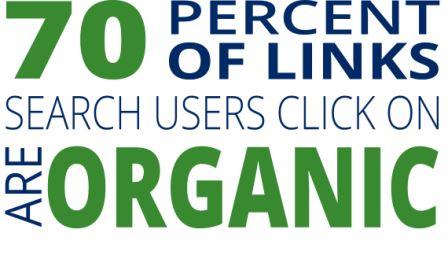
Organic search is simply being found online without paying for positioning on search engines. In other words, as defined by Wikipedia, “Organic search results are listings on search engine results pages that appear because of their relevance to the search terms, as opposed to their being advertisements.”

Of course, even organic search requires a strategy in order to show up on the listings. However, these tactics can be undertaken without the need to hire outside help.

Search engines obviously require input data that allows your company to be found. Things like keywords and backlinks are still important, but can be created through website design and data, clever content, and having your site backlinked to other sources, which helps determine the popularity of your site.

Review the following four questions to find out how users discover your company through organic search:

1. When searching for your keywords, what do users notice first: your website, your ads, or your competitors? If they are finding your ads, it proves that your paid advertising is working, but says little about your organic search. If they’re finding your competitors first, it’s definitely time to review your site and your content to make sure that you are targeting the appropriate keywords for your business. If they’re finding your website first, you are getting good organic search results.

2. What words are standing out to users on the Google search page results? Regardless of whether your site is being found on the first two pages of search engine results, review the words that are showing up on the results and make sure that you are using the words and terms that are being found.

3. If, and when, users are clicking on your link what do they expect to find? Make sure that you are using keywords that are appropriate to your business. Falsifying your content to gain organic search results is not the way to go. Users will be upset at what is a thinly veiled attempt to gain traffic and will boycott your site.

4. Does your landing page (or homepage) meet the users’ expectations? As mentioned above, make sure that you are being found by users who are entering a search query that is true to your business. You have only a matter of seconds to capture the attention of a visitor to your site. If they are not drawn to keywords and content that matches their interest, they’ll move on to the next search result.

Organic search results are an important part of online business success. Make sure that you don’t neglect this function. Keep your content fresh and current; both search engines and users are looking for this!

Until next time…

Are you ready to grow your business now? If you’re ready to take the next step and make your business more profitable, contact us today.

If you like the information you are receiving, please consider forwarding this post.

YouTube
YouTube
LinkedIn
LinkedIn