How To Measure ROI

measure ROI

Marketing campaigns should be viewed as an investment in your business, not a cost.

One of the biggest problems that entrepreneurs and small business owners face is coming to terms with making marketing investments in their businesses.

Unfortunately, many of them tend to be short-sighted and look only at the initial outlay to develop, create and implement a marketing campaign.

But a marketing campaign, done right, is an investment in your business with the ultimate goal of increasing brand awareness, more prospects, more customers, and – ultimately – great PR and more profit.

Just like any other investment, an investment in a marketing campaign needs to be measured and the results monitored and evaluated to ensure that your marketing budget is being appropriately allocated. With proper monitoring and calculation of ROI, you can focus on those campaigns that deliver the best results, regardless of your product or service. Remember, not all marketing campaigns are created equal.

When times get tough, the marketing budget is always the first to be slashed. This is completely counterintuitive, since marketing is an investment designed to produce revenue for your business. By learning to determine and measure your ROI on marketing campaigns, you can gain comfort that your marketing budget is not just some fluffy expense that you can throw away during times of economic difficulty.

One common mistake that many small business owners make when calculating ROI is to simply calculate profit minus investment to determine their return. For example, if you invested $50,000 in a marketing campaign and ended up with $100,000 at the end of the project, the simple calculation is that you received a 100% return on your investment. Now, although this calculation might work in simpler applications, it is not an accurate picture of your marketing ROI.

Measuring ROI for marketing campaigns can be complex due to the many variables on both the profit side and the investment side of the equation. Understanding the formula is key to producing the best possible results for your marketing investments.

There are many ways to calculate marketing ROI but the best formula, in the simplest terms, is:

(Gross Profit – Marketing Investment)
Marketing Investment

When you apply the example I gave above, you can see how this formula changes the performance of the marketing campaign. If your typical profit margin for your product or service is 50%, that means that only 50% of the $100,000 in revenue was actually gross profit, the other 50% being attributed to create the product or service that was being sold. So, in this example, your actual ROI on the campaign is zero.

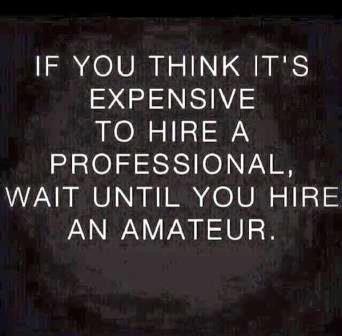
Now this does not mean that you should not be investing in marketing; it simply is intended as an example to show you that without proper calculation of ROI, you can be misled, leading to disappointment. There are many ways to determine ROI, depending on the intended outcome of each individualized campaign. Therefore, it is often a good idea to turn to a professional marketer for assistance in determining your goals and leveling your expectations.

Until next time…

Are you ready to grow your business now? If you’re ready to take the next step and make your business more profitable, contact us today.

If you like the information you are receiving, please consider forwarding this post.

Market Your Business Without Breaking The Bank

don't break the bank

As a small business owner or an entrepreneur, you have to closely guard your cash flow to be successful.

But guarding the purse strings is not the same as refusing to spend your cash appropriately to build your business.

The important thing is to be strategic with your spending and make sure that your investments pay off.  You don’t have to blow the budget to make a big impact. In fact, there are lots of ways to market your business $400 or less, assuming you are willing to put in a bit of sweat equity.

Here are six easy to implement and inexpensive marketing strategies:

1. Do your market research. I’ve repeated numerous times just how important it is to research your market. The more time you invest and the more you refine your ideal client, the better you can focus your marketing efforts and target them to the appropriate audience. Also be sure to check out what your competitors are doing. Be strategic. Don’t try to compete with big players with an established brand, but analyze your field to see where weaknesses or gaps exist in the marketplace and take advantage of these.

2. Use email to your advantage. There are many email marketing platforms out there that offer free accounts up to a certain limit of subscribers or emails per month. And if you purchase a plan through an email marketing provider they are generally very inexpensive. Email marketing is a tactic that works. Many studies have proven that email is the preferred channel for clients and prospects to receive communications. But remember that nobody likes spam. There are rules in place that specify how you can legally prospect for business. Be sure that you are coloring in the lines.

3. Timing is everything. Most consumers search for a product or service online. Ensure that prospects who land on your website can access the information that they need to make a buying decision quickly and efficiently. Nearly all new websites are already optimized for mobile devices, but if you have an older same be sure that you have a mobile ready version available. Remember that nearly half of all browsing is now done on mobile devices.

4. Make sure you can be found. As noted above, most consumers go online to research products and services prior to making a purchase. As a small business owner or entrepreneur, make sure that you do keyword research and appropriately integrate search engine optimization (SEO) into the content of your site. Used appropriately, SEO can result in favorable SERP, or search engine result placement, in organic search results. When searching online, few people bother to look beyond the second page of results, so be sure that you are able to be found.

5. Use social media. But be strategic. Hundreds of social media sites are in existence, but there are only a small handful that are used regularly by the majority of people. When you did your research, you should have identified which of these social networks your prospects are most likely to use. Create profiles on those social networks and interact with your prospects and clients on the sites. Remember that these are places where people will post comments though, and make sure that you are interacting. You could consider making a small investment to sponsor posts on sites like LinkedIn, Facebook or twitter. All of these platforms allow you to target your ideal market as well as set a daily limit, ensuring that you do not overspend.

6. Expand your team. No, I’m not talking about hiring when you can’t afford to do so. Instead, I’m referring to the concept of creating strategic alliances. Sharing contacts and working with other businesses who can complement your offerings cannot only increase your brand awareness, but can also help you grow your business much quicker than you could on your own. Again, play fair. Make sure that the alliance works both ways.

Until next time…

Are you ready to grow your business now? If you’re ready to take the next step and make your business more profitable, contact us today.

If you like the information you are receiving, please consider forwarding this post.

Secrets To Marketing Your Business

marketing your business

Summer is over!

Okay, even though the season is not yet officially over, Labor Day always seems to signal that summer is now a thing of the past. Now that holidays are over and kids are back in school, everybody seems to be getting back to business.

And now that we’re back to business, it’s a good time to focus on how to properly market your business. Last year we created a video series that presented five proven strategies to market your business. These strategies include things like building your brand, networking, using social media, etc. As we march forward for the final third of the calendar year, take a few minutes to check out our videos and see if you are utilizing all of these marketing tools to your advantage.

Watch our video series here, or watch on YouTube.


Until next time…

Are you ready to grow your business now? If you’re ready to take the next step and make your business more profitable, contact us today.

If you like the information you are receiving, please consider forwarding this post.

5 Ways To Improve Client Rentention

client retention

Do you have loyal customers?

It’s one thing to obtain a client; it something else to keep that client.

There have been statistics as long as there have been sales. Depending on your industry, the rates might vary slightly, but overwhelmingly the statistics support the case for keeping your customers happy.

It costs a significant amount more, both in time and actual cash, to obtain a new client. However, once you have obtained that new customer, the costs to service and maintain that customer are markedly less. Therefore, doesn’t it make sense to ensure that you are retaining your customers?

Ask yourself the following five questions to see if you can improve your client retention rates:

1. How do your customers currently use your products or services? It makes sense that the more your clients are using your products or services, the more likely you are to retain them. Keeping your clients informed and engaged is a key element of client retention.

2. Do your clients know about all of the features products and services that you offer? Be sure that you are communicating with your customers on a regular basis, keeping them informed of the full scope of your offerings. If they don’t know that you can provide them with an additional service or benefit that they need, they may look elsewhere.

3. What’s the likelihood that your client would recommend your company to a friend? It’s true; referrals and testimonials are the best form of flattery. If your customer is happy with your services and would be willing to tell a friend about you, you are likely to retain the client – at least as long as you continue to provide them with the quality of service that they have come to expect from you.

4. Is there anything that would make your customers stop doing business with you? Communication with your clients is not only important as a means to keep them engaged with you, but is also an essential part of making sure that you are providing the services and products that will keep your customers loyal to you. Ask your customers if they are happy with your services. Find out if you are meeting all of their needs and expectations, or if there’s anything else that you can do to help them.

5. What, if anything, would your clients change about your company? Again, communicate, communicate, communicate! Phone your clients. Email them. Send out surveys. Ask questions, even if you’re not sure that you want to know the answers. If you are not meeting the needs and expectations of your customers, you can be guaranteed that they’ll find what they need somewhere else.

A happy customer is a loyal customer. And a loyal customer will bring you referral business. Treat your customers with respect and let them know that they matter.

Until next time…

Are you ready to grow your business now? If you’re ready to take the next step and make your business more profitable, contact us today.

If you like the information you are receiving, please consider forwarding this post.

How To Build Higher Converting Landing Pages

landing pages

It’s one thing to create a landing page; it’s another thing to build a landing page that converts!

We are all familiar with the landing page. You know, that page that is intended to entice us to sign up for something or to purchase a product or service. Well, we also know that there are as many designs of landing pages as there are products and services to sell.

There has been a lot of research and trial and error done in the name of developing landing pages. And, weirdly enough, some of those landing pages that seem to go on endlessly actually have a good conversion rate. Now, I say weirdly enough because, quite frankly, I don’t enjoy scrolling down the page forever to try to find the features and benefits of a product or service that I’m interested in. Yet, it has been shown that many of these types of pages are actually very successful.

Design and content are critical when developing your landing page. It must be attractive enough to draw in users, and phrased simply enough that prospects can easily understand what is being offered. If your landing pages cluttered or does not have clear CTAs (call to action), the likelihood of obtaining conversions is pretty slim.

From a functional perspective, it’s imperative that you ensure that the backend is properly structured as well. Test to make sure that your contact form is functioning properly, linking to the appropriate thank you pages and or leading to any upsells that you may have.

In order to build landing pages that are more likely to convert, consider the following six points:
  •  Is your offering presented in a way that your target user can easily understand? As mentioned above, ensuring that your offering is clear and that the details are simply presented will greatly improve the likelihood that the user will convert.
  • Does the landing page meet your prospects’ expectations? There is nothing worse than a landing page that does not clearly define the product or service that is being presented. Can your prospects find the information at their looking for? Are there questions appropriately anticipated and answered? Don’t frustrate your users by giving them incomplete information.
  • Can your prospects easily sign up for your offering using the forms you’ve provided? Again, as mentioned above, be sure to test your landing page forms. Make sure that they are directing your users to the appropriate pages.
  • Can your users be distracted by anything on the page? The key here is to provide information in an easy to read, yet entertaining fashion, without diverting the user’s attention from your key goal of getting them to buy in.
  • Will it your users think that your offer has enough value that they are willing to pay money and enter their contact information for it? There are literally millions of online offers these days. To ensure that you are going to get people to opt in or purchase your product, make sure that it is presented in a way that assures them that they will be getting good value for their money.
  • Have you provided enough information to your users prior to the CTA? Let’s face it; no one is going to click on your CTA if their questions or concerns have not been addressed. Be sure to review your landing page through the eyes of your prospects, anticipating any concerns or questions that they may have before they click on that call-to-action button.

Until next time…

Are you ready to grow your business now? If you’re ready to take the next step and make your business more profitable, contact us today.

If you like the information you are receiving, please consider forwarding this post.

5 Questions For Optimizing Email Marketing

email marketing

Hard to believe, but email as a means of communication has been around for well over 20 years now.

Since the mid-1990s, people have been communicating with each other via cyberspace. In fact, a whole generation has grown up accustomed to this method of communication, as opposed to sending letters and messages in a physical format.

Oh yeah, there were growing pains!

Internet service providers came and went, various email providers came and went, but eventually electronic communications became the norm, overtaking the “old” traditional way of interacting.

And as marketing online became more and more accepted, email became a preferred way to reach out to prospects and clients.

In the early days of email marketing, it was kind of like the old West. Anyone with an email address was open to receiving unsolicited emails from any number of businesses. But as this method of advertising services and products became more and more common, boundaries and rules had to be established. Anti-spam legislation is now in place in most countries, and a new kind of business has evolved – the email service provider.

As businesses have turned more and more to email marketing, inboxes have become repositories of unwanted and unsolicited emails, not unlike “junk mail” of past times. Most of us in business are used to receiving dozens, if not hundreds, of emails each day.  The big question is, how do you ensure that your email is not lost among these emails, and how do you improve your open rates?

So, to optimize your email marketing, ask yourself the following five questions:
  • Why are users opening some of your emails more than others?   Do you find that some of your emails are being opened more than others? Most email service providers provide the opportunity to do A/B split testing for your email campaigns. What subject lines in treat more people to open? Is there a day of the week, or a time of the day that your recipients are more likely to open emails? Reviewing these types of questions can dramatically improve your open rate.
  • Will your target market understand and engage with your next email campaign?  When planning your email campaigns, make sure that you are providing something that is relevant to your target audience. Sometimes we can get caught up in what we want to tell our prospects and clients, rather than responding to their needs and desires. Make sure that when you are planning out your next email campaign that you are delivering something of value to the recipients. If necessary, split out your email list, based on specific messages relevant to subsets of your target market. The closer you get to solving a prospect or client’s problem, the more likely your email is to be opened and engaged with by your target audience.
  • What would users change about your emails if they could?  Are your prospects and clients satisfied with the emails that you are sending? Consider asking your email recipients to respond to a quick poll. Ask them if they like the content they are receiving, the format in which it is delivered, or the frequency with which they are receiving it. The key here is to give your recipients what they want.
  • Do your users receive emails from other companies in your industry?   It is highly likely that your clients and prospects are also being targeted by your competitors. Do your research. See what your competitors are sending and make sure that your emails are more engaging.
  • What do the users like and dislike about those emails?  Just like question 3, find out what your email recipients like and dislike about the emails that they are receiving from your competitors. If your competitors are successful at sending emails that are engaging a larger percentage of your list, you need to find out what they are doing. Discover their strategies for email marketing and see what you can implement to improve your own open and engagement rate.

Until next time…

Are you ready to grow your business now? If you’re ready to take the next step and make your business more profitable, contact us today.

If you like the information you are receiving, please consider forwarding this post.

Know Your Competition!

know your competition

How Do You Measure Up To Your Competitors?

Who do your clients and prospects prefer?

Let’s face it… a free-enterprise based economy provides the environment for a number of businesses to exist within the same industry. Take a look at fast food hamburger joints as just one example. There are multiple choices, yet all of them have carved out their niche.

As entrepreneurs and business owners, we should not fear competition. Competition is what makes us focus our business on our specific target market, and drives us to do better for them.

As consumers of product, we are all familiar with what happens when a monopoly exists; often, we end up with higher prices and substandard service. And although we may dream of cornering the market in our given business sector, competition is healthy and keeps us always working to provide the best customer service and to keep current with trends and improvements within our industries.

Reviewing and improving our businesses is key to ensuring our long-term growth and sustainability.  Reaching out to your clients and prospects is the best way to gauge how your business is viewed.

The following seven questions should help you determine how you measure up to your competitors:

1. If your clients and prospects are familiar with other businesses providing the same products or services as yours, which do they prefer?

2. What is it that makes them prefer one company over the other?

3. What company do they believe does the better job of explaining the product or service offerings in a clear, concise way?

4. Which company does a better job of convincing the client or prospect to convert?

5. What is it that people like or dislike about your top competitor’s newest product or service?

6. What would convince them to switch to your company?

7. What is it that you are doing that might convince your current customers to switch to one of your competitors?

Keep this list handy and refer to it often. Consider polling your clients on these questions at least once a year to ensure that you are continuing to provide the types of products and services that keeps them in engaged with your company.

Competition is not the enemy; becoming complacent in your business, is!

Until next time…

Are you ready to grow your business now? If you’re ready to take the next step and make your business more profitable, contact us today.

If you like the information you are receiving, please consider forwarding this post.

Are You Invested In Your Business?

invested in your business

The inspiration for this article came from a conversation I had the other day with a family member.

This person is looking for employment, primarily in sales. He has responded to several ads and, although he has heard back from a good number of them, none of them have proven to be enticing.

Why, you might ask?

Well, simply put many of these businesses are looking to hire independent salespeople but are not willing to provide enough incentive to make it worthwhile.

Independent salespeople are, by definition, just that – independent. And with this independence does come some responsibility for absorbing your own expenses.

But when a company expects the independent sales rep to absorb all the risk with potentially little to no reward, there is little balance between employer and contractor and little incentive to jump into the deep end.

A truly effective relationship between a company and their independent reps is based on mutual respect, level expectations, and for both parties to be invested in the process.

Independent reps must expect that there will be some risk involved in accepting the role. Each person must be comfortable with the level of risk that they are willing to accept, based on what they expect in terms of results.

While some positions require some level of financial commitment from the independent rep it would be fair to say that all of them require a level of commitment. These reps must be prepared to invest a certain amount of time and energy into any role. The amount of money, time, and effort should be clearly delineated at the time of engagement, and mutually agreed-upon by both the company and the rep.

It is equally important in this equation that the company is invested in their rep. Keep in mind that these individuals are out there representing your business, and if they feel that they are being mishandled or mistreated, is it reasonable to expect that they will give their best and represent your company in the most favorable light?

Businesses must be fair when looking to bring on independent representatives. As a small business owner, I understand the value of hiring independent reps. It is a way of managing expenses while growing your business, when done fairly and properly. But to expect an individual to invest significant cash as well as time and energy, with no support of any kind from the business, creates an uneven playing field and a potentially toxic environment.

Don’t risk your businesses reputation. Be fair to employees and independent contractors alike, and your business will thrive. Take advantage of others at your own risk.

Until next time…

Are you ready to grow your business now? If you’re ready to take the next step and make your business more profitable, contact us today.

If you like the information you are receiving, please consider forwarding this post.

Using Facebook Live

facebook live

As you are probably aware, Facebook is now offering live-streaming.

This addition to Facebook is not a surprise. Tons of social platforms offer livestreaming.

We all know that video has become a very popular way of sharing information. It has become a preferred way of communicating with people online as it tends to be more engaging – and, one hopes, more entertaining as well.

However, it is important to make sure that you are not just chasing the latest shiny bauble when utilizing video for your marketing needs. You must always keep to the fundamentals of marketing; Who is your audience? What is your message? What is the best social platform to engage and reach your audience?… You get the idea.

Livestreaming provides an opportunity to engage your audience in real time.  Whatever platform you choose, be wise when planning your livestream.

Until next time…

Are you ready to grow your business now? If you’re ready to take the next step and make your business more profitable, contact us today.

If you like the information you are receiving, please consider forwarding this post.

Do This To Ensure You Fail!

fail

No one sets out to fail – or do they?

Recently, I had a conversation with a colleague of mine. We are both in the marketing field, and so we typically discuss various issues that come up with our clients. This type of sharing has the benefit of bringing in a fresh set of eyes on the situation, often helping to determine a new approach to a given issue.

Now, in the interests of respecting and maintaining privacy for both my colleague and his client, certain circumstances in the following story will be altered.

But the essence and the lesson remain the same.

This client approached my colleague with a relatively simple project about two or three months ago. There was a fairly tight budget involved for a specific scope of work to be undertaken to complete his part of the project.  Over time, this project has ballooned in size and scope, but the budget has failed to increase at the same pace.

The changes to the project are not unusual or unreasonable, and in all likelihood could develop into an even better final product. The problem with the changes is that they are just being thrown out there, apparently on a whim.

When this project was first brought to my colleague’s attention, it seemed to have a clearly defined purpose and budget. However, now it seems as though whatever the project lead dreams about suddenly becomes part of the project.

This approach to marketing is doomed!

I’ve written in the past about what I term “ad hoc” marketing; its problems and its pitfalls. And what is happening with this project is a prime example of ad hoc marketing.

Too often, business owners are quick to say that marketing doesn’t work, or it doesn’t give them a proper return on investment. And while there are certainly some unscrupulous marketers, just as there are unscrupulous people in every line of work, it’s important that these business owners take responsibility when the failures rest on their shoulders.

No marketing campaign will ever work without first developing a proper marketing strategy. What is your budget? Who is your audience? What is your timeline? What is your message?

Sometimes, of course, things can change as a project gets underway. There is absolutely nothing wrong with changing your strategy if you find that circumstances have changed. But again, you don’t throw out your original marketing strategy and run with whatever idea crosses your mind at the moment. Stop and look at what remains beneficial in your original strategy and plan appropriately to incorporate the changes.

Whether you run a large corporation or are a one-man show, you will never obtain the results you want if you do not take a strategic approach to your marketing.

Until next time…

Are you ready to grow your business now? If you’re ready to take the next step and make your business more profitable, contact us today.

If you like the information you are receiving, please consider forwarding this post.

YouTube
YouTube
LinkedIn
LinkedIn