How To Build Higher Converting Landing Pages

landing pages

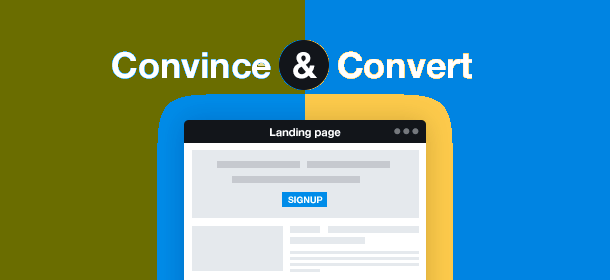
It’s one thing to create a landing page; it’s another thing to build a landing page that converts!

We are all familiar with the landing page. You know, that page that is intended to entice us to sign up for something or to purchase a product or service. Well, we also know that there are as many designs of landing pages as there are products and services to sell.

There has been a lot of research and trial and error done in the name of developing landing pages. And, weirdly enough, some of those landing pages that seem to go on endlessly actually have a good conversion rate. Now, I say weirdly enough because, quite frankly, I don’t enjoy scrolling down the page forever to try to find the features and benefits of a product or service that I’m interested in. Yet, it has been shown that many of these types of pages are actually very successful.

Design and content are critical when developing your landing page. It must be attractive enough to draw in users, and phrased simply enough that prospects can easily understand what is being offered. If your landing pages cluttered or does not have clear CTAs (call to action), the likelihood of obtaining conversions is pretty slim.

From a functional perspective, it’s imperative that you ensure that the backend is properly structured as well. Test to make sure that your contact form is functioning properly, linking to the appropriate thank you pages and or leading to any upsells that you may have.

In order to build landing pages that are more likely to convert, consider the following six points:
  •  Is your offering presented in a way that your target user can easily understand? As mentioned above, ensuring that your offering is clear and that the details are simply presented will greatly improve the likelihood that the user will convert.
  • Does the landing page meet your prospects’ expectations? There is nothing worse than a landing page that does not clearly define the product or service that is being presented. Can your prospects find the information at their looking for? Are there questions appropriately anticipated and answered? Don’t frustrate your users by giving them incomplete information.
  • Can your prospects easily sign up for your offering using the forms you’ve provided? Again, as mentioned above, be sure to test your landing page forms. Make sure that they are directing your users to the appropriate pages.
  • Can your users be distracted by anything on the page? The key here is to provide information in an easy to read, yet entertaining fashion, without diverting the user’s attention from your key goal of getting them to buy in.
  • Will it your users think that your offer has enough value that they are willing to pay money and enter their contact information for it? There are literally millions of online offers these days. To ensure that you are going to get people to opt in or purchase your product, make sure that it is presented in a way that assures them that they will be getting good value for their money.
  • Have you provided enough information to your users prior to the CTA? Let’s face it; no one is going to click on your CTA if their questions or concerns have not been addressed. Be sure to review your landing page through the eyes of your prospects, anticipating any concerns or questions that they may have before they click on that call-to-action button.

Until next time…

Are you ready to grow your business now? If you’re ready to take the next step and make your business more profitable, contact us today.

If you like the information you are receiving, please consider forwarding this post.

5 Questions For Optimizing Email Marketing

email marketing

Hard to believe, but email as a means of communication has been around for well over 20 years now.

Since the mid-1990s, people have been communicating with each other via cyberspace. In fact, a whole generation has grown up accustomed to this method of communication, as opposed to sending letters and messages in a physical format.

Oh yeah, there were growing pains!

Internet service providers came and went, various email providers came and went, but eventually electronic communications became the norm, overtaking the “old” traditional way of interacting.

And as marketing online became more and more accepted, email became a preferred way to reach out to prospects and clients.

In the early days of email marketing, it was kind of like the old West. Anyone with an email address was open to receiving unsolicited emails from any number of businesses. But as this method of advertising services and products became more and more common, boundaries and rules had to be established. Anti-spam legislation is now in place in most countries, and a new kind of business has evolved – the email service provider.

As businesses have turned more and more to email marketing, inboxes have become repositories of unwanted and unsolicited emails, not unlike “junk mail” of past times. Most of us in business are used to receiving dozens, if not hundreds, of emails each day.  The big question is, how do you ensure that your email is not lost among these emails, and how do you improve your open rates?

So, to optimize your email marketing, ask yourself the following five questions:
  • Why are users opening some of your emails more than others?   Do you find that some of your emails are being opened more than others? Most email service providers provide the opportunity to do A/B split testing for your email campaigns. What subject lines in treat more people to open? Is there a day of the week, or a time of the day that your recipients are more likely to open emails? Reviewing these types of questions can dramatically improve your open rate.
  • Will your target market understand and engage with your next email campaign?  When planning your email campaigns, make sure that you are providing something that is relevant to your target audience. Sometimes we can get caught up in what we want to tell our prospects and clients, rather than responding to their needs and desires. Make sure that when you are planning out your next email campaign that you are delivering something of value to the recipients. If necessary, split out your email list, based on specific messages relevant to subsets of your target market. The closer you get to solving a prospect or client’s problem, the more likely your email is to be opened and engaged with by your target audience.
  • What would users change about your emails if they could?  Are your prospects and clients satisfied with the emails that you are sending? Consider asking your email recipients to respond to a quick poll. Ask them if they like the content they are receiving, the format in which it is delivered, or the frequency with which they are receiving it. The key here is to give your recipients what they want.
  • Do your users receive emails from other companies in your industry?   It is highly likely that your clients and prospects are also being targeted by your competitors. Do your research. See what your competitors are sending and make sure that your emails are more engaging.
  • What do the users like and dislike about those emails?  Just like question 3, find out what your email recipients like and dislike about the emails that they are receiving from your competitors. If your competitors are successful at sending emails that are engaging a larger percentage of your list, you need to find out what they are doing. Discover their strategies for email marketing and see what you can implement to improve your own open and engagement rate.

Until next time…

Are you ready to grow your business now? If you’re ready to take the next step and make your business more profitable, contact us today.

If you like the information you are receiving, please consider forwarding this post.

5 Ways To Ensure Your Ads Are Effective

advertising

What do users think of your ads?

Technology has changed the way that we target and advertise to our business prospects.

More and more, we are living in a digital world. And, more and more, we are relying on digital advertisements.

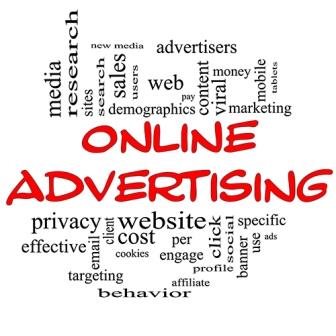
PPC (pay per click) and social media advertising have changed dramatically in the past few years. Learning to advertise online and to hone in on your ideal client is becoming easier, but it can still be tricky. Competitive keywords and business sectors can be very expensive and, if you don’t know what you’re doing, you can watch your online advertising budget evaporate before your eyes.

Because of this, it often makes sense to hire someone who is well-versed in online advertising.

But, as I always say, it is in your best interest to always know and understand a little bit about every function within your business to ensure that you are getting good value for your money. No, I’m not saying that you need to be an expert, but having a general understanding will ensure that no one is taking advantage of you.

One of the first things you must do is discover where your target audience is most likely to be reached in the global marketplace. Once you have determined this, determine a budget for your online advertising spend.

It is now possible to really drill down and hone the audience that will see your ads. But you still must find that balance between using the keywords that are most likely to get results, and how much it costs per click for those keywords.

Once you have figured out your target market and your daily spend, it is also important to create ads that will appeal to your target audience. After all, there’s no point in advertising online if people aren’t clicking and converting.

The following five questions will help you learn what people think of your ads:

1. What is the mindset of someone who comes across your ad for the first time?

If you understand a bit about the psychology and the motivation of the people you are trying to reach, you are more likely to create an ad that will attract their attention.

2. What is it that people notice about your ad?

Finding out what draws them in, and what they like and dislike will help you develop on and that is more likely to obtain clicks from your target audience and convert them to clients.

3. Are your ads appearing helpful or do they look “spammy”?

People are more likely to click on an ad that appeals to them in some way and is not overtly cramming a sale down your throat.

4. What is it about the design or the phrases that catches the user’s eye?

Remember that design will attract or repel, and make sure that your wording entices people to engage.

5. If you are using Google AdWords as part of your strategy, what entices users to click on your ad?

Google still dominates the land of search, and it can be difficult to be noticed, so make sure that you are designing your ad in a way that will be noticed.

A properly managed online advertising campaign can be very effective. But it can also take some time to determine what keywords and what strategy works best to attract and convert the appropriate audience. Allow about three months of trial and error before you expect a great ROI, but after you find what works, you can find this to be an effective advertising tool for your business.

Until next time…

Are you ready to grow your business now? If you’re ready to take the next step and make your business more profitable, contact us today.

If you like the information you are receiving, please consider forwarding this post.

5 Ways To Ensure Your Content Is Effective

effective content

Is your content being read?

We are all familiar with that proverbial saying, “if a tree falls in the forest and no one hears it, does it make a noise?”

Well, we can apply the same question to our content.

You can spend all kinds of time, money, and effort compiling and posting content, but if no one reads it, what’s the point?

Creating relevant content that speaks to your target audience, as well as presenting it in an attractive and easy to read format is critical to gaining readership and loyalty online.

We have put together five questions to ask yourself to ensure that your copy is effective and is being noticed by your target audience.

Check out these 5 questions:
              • What does your homepage tell people about what you are offering? Always try to think like a first-time visitor to your website. Make sure that your homepage is designed in such a way that it clearly represents your brand and your offerings. This will ensure that visitors to your website will know immediately if this is a site that they wish to explore further.
              • Is your content written for consumption by the average reader, and free of jargon? Every industry and profession has its own jargon. We converse regularly with our colleagues and our peers using this jargon. But sometimes we can get so used to speaking in these terms that we forget that those folks not involved in our industry or profession don’t understand what that terminology means. If your clients and prospects understood this jargon, chances are they wouldn’t need you. Make sure you are communicating in plain language to your prospects and clients.
              • Does your choice of language within your content “speak” like your target audience speaks? Aside from simple common sense and personal experience, there is times of research out there that proves that when you communicate in the same terms and language is your intended audience, you create a better rapport. By building this relationship, you build trust and community among your audience, which translates to more readership and a loyal client base.
              • Are your calls to action effective? Content without a call to action is nothing more than an article or an advertisement. Let’s face it, 99% of us are using online methods and strategies to promote our businesses and convert visitors to customers. Make sure that you would include a clear, effective CTA within your content. Measure the effectiveness of your CTAs with the use of analytics and software tools such as heat maps and content analysis.
              • Are you effectively communicating your unique value proposition? Differentiation of your business from all others offering the same or similar products or services is the key to building your business and keeping clients. Review your website content regularly to see that your message is clearly defined. But sometimes we are too close and can’t really see how it is being perceived. Consider polling some of your clients to see if they believe that a first-time visitor to your website could define and describe your UVP in their own words


  • Until next time…

    Are you ready to grow your business now? If you’re ready to take the next step and make your business more profitable, contact us today.

    If you like the information you are receiving, please consider forwarding this post.

7 Ways to Test Your Customer Experience

customer experience

How does your user experience measure up to your competitors?

None of us can afford to stand still in business. If we aren’t continuing to grow and to learn new ways to interact with our clients, we’re dead in the water!

The global marketplace has defined how we interact with our customers. There is really no such thing anymore as a captive audience. Technology and how our clients and prospects interact with our businesses continues to evolve.

The seven questions in this article can help you evaluate how your user experience compares the competition.

One of the more important metrics is to evaluate your performance over time. To help measure this, ask these three questions;

1. Has your customer experience changed since you run your last test?

2. Is your customer experience improving, especially as compared to your competitors?

3. Can you attribute the changes to something you changed on your site, something different about your products or services, or changes within the market?

By asking these three questions, you will be able to evaluate how your company continues to adapt to new realities within the marketplace.

But we must also evaluate how our clients are accessing our businesses online. Mobile now accounts for over 60% of all searches, and this continues to grow and to change the way that we are interacting with our clients and prospects. Therefore, it is equally important that we understand and evaluate the customer experience across the different channels.

The following four questions will address those issues;

1. What does the interaction between your business and your client look like on their smart phone, desktop, tablet, and in person?

2. Regardless of how your client is interacting with you, is there experience consistent?

3. Should your client need to access or complete a process across multiple devices, does it happen smoothly and efficiently?

4. Which of the various channels do your users consider their primary choice?

Understanding how your users are interacting with your company, and how seamless and simple their experience is, will give you a leg up on your competitors. Put yourself in the shoes of your clients and prospects, providing them with the same type of experience that attract you.

Until next time…

Are you ready to grow your business now? If you’re ready to take the next step and make your business more profitable, contact us today.

If you like the information you are receiving, please consider forwarding this post.

Understanding Your Analytics

analytics

What the heck is analytics data, anyway?

Okay, your website is live and you have set up your appropriate social platforms for exposure and engagement. What now?

Depending on your business model and your service offerings, your website and other online platforms will serve different purposes.

If you are primarily offering custom services and engaging clients on a one-on-one basis, your online presence may be more about exposure and demonstrating authority in your market place. However, if you are offering products, especially through an online shopping cart, it is imperative that your online tools are all working together to get prospects into your sales funnel, converting visitors to satisfied customers.

Regardless of the purpose of your online presence, it is still important to understand the analytics data gathered from your website and social engagements.

Google analytics is most likely the most recognized analytics gathering tool, however many tools exist. In fact, most social media platforms have their own analytics tools within their platforms.

Okay, so you have accessed your analytics data but aren’t quite sure exactly what it means. Some of the data is self-explanatory, but some might require you to delve in a little bit deeper.

To understand how to get the best results from your online presence, be sure that you can answer the following five questions:


1.  What is a bounce rate, and why do certain pages have high bounce and exit rates?

A bounce rate is basically when a visitor comes to your site and exits directly from the entry page. It is also considered a bounce if a visitor remains inactive for 30 minutes or more on their entry page. But be sure that you understand what this data means. It is far more important to understand the bounce rate for first time visitors than recurring traffic. As long as someone is returning to your site, the bounce rate is not as significant. Find out what pages are recording the highest bounce rate and review them to see if they can be restructured in such a way to reduce the bounce.

2. Why are users leaving your site at specific points?

There are many reasons why you may be experiencing high bounce rates from specific pages. One reason is that perhaps your pages aren’t optimized properly. When you create a post, a “title tag” is developed which is used by search engines to figure out what your content is about. If your title isn’t even remotely connected to your topic, visitors might leave your site immediately. Make sure that you’re not playing games, creating a title tag that is highly searched in the hopes that you will attract visitors to your site. All you will do is create an animosity with the site visitor, and alienate them from ever visiting your site again.

Also, ensure that the content that you are providing for your visitors gives them something. Helping people understand an issue or providing helpful tips will create loyal visitors, increasing the potential to convert them to clients down the road.

And make sure that your content is presented in a way that is attractive and easy to read. Don’t mix too many fonts, as that tires the reader’s eyes, and be sure to include appropriate imagery.

And always include a call to action. Invite your visitors to take further steps within your site, either by signing up for a newsletter, a reading another article, or giving them a link to related materials. And engaged visitor doesn’t bounce.

3. Why are your conversions lower on mobile than on desktop?

Or perhaps you’re experiencing the reverse; less conversions on desktop than on mobile.

Is your site properly optimized for mobile? Some time ago, Google’s search results started penalizing those websites that were not mobile optimized.  Mobile continues to gain traction over desktop, and if your site takes too long to load or is not optimized for mobile viewers, you are guaranteed to lose visitors.

Most analytics tools will give you a breakdown of where your traffic is coming from. If you find that you are experiencing a higher bounce rate from mobile versus desktop, or vice versa, review your site to make sure that it is optimized, has good load speeds and simple navigation.

4. What is your demographic behavior?

Another great piece of data to review in your analytics is that of your demographics.

Analytics tools will give you a breakdown of the demographics that are visiting your site. You can learn where your traffic is coming from, i.e., from which geographic location. You can also discover ages, genders, and even income levels in some cases.

It is important to understand the demographics of your website visitors so that you can learn if you are targeting your market appropriately. If you are providing a product or service that is mostly geared towards businessmen between the ages of 35 and 54, but you learn that most visitors to your site are men aged 26 to 38, you will need to review how you are presenting your materials in order to capture more of your target market.

5. Does any particular webpage have a high average “time on page”?

The amount of time a visitor spends on your page can be bit of a confusing analytic. While at first glance, it may appear obvious that the longer someone spends on your site or your page, the more interested they are and what you have to say or offer. However, it can be a bit more complicated than that.

First of all, it’s important to understand how this metric is measured. The time that a visitor spends on your site is calculated as the difference between the recorded time of their last page request on the site and their first. Time on site doesn’t account for the time spent reading the last page in the session, therefore it can’t be said to be an accurate reflection of how your visitors are actually using your site.

Back to the understanding of the bounce; if someone is inactive on your site for a period of time, usually 30 minutes or more, it will be recorded as a bounce.

So review the pages the people are exiting from and their entry points to track pages of interest and to gauge what content and what cause of action are most effective.

Until next time…

Are you ready to grow your business now? If you’re ready to take the next step and make your business more profitable, contact us today.

If you like the information you are receiving, please consider forwarding this post.

Know Your Competition!

know your competition

How Do You Measure Up To Your Competitors?

Who do your clients and prospects prefer?

Let’s face it… a free-enterprise based economy provides the environment for a number of businesses to exist within the same industry. Take a look at fast food hamburger joints as just one example. There are multiple choices, yet all of them have carved out their niche.

As entrepreneurs and business owners, we should not fear competition. Competition is what makes us focus our business on our specific target market, and drives us to do better for them.

As consumers of product, we are all familiar with what happens when a monopoly exists; often, we end up with higher prices and substandard service. And although we may dream of cornering the market in our given business sector, competition is healthy and keeps us always working to provide the best customer service and to keep current with trends and improvements within our industries.

Reviewing and improving our businesses is key to ensuring our long-term growth and sustainability.  Reaching out to your clients and prospects is the best way to gauge how your business is viewed.

The following seven questions should help you determine how you measure up to your competitors:

1. If your clients and prospects are familiar with other businesses providing the same products or services as yours, which do they prefer?

2. What is it that makes them prefer one company over the other?

3. What company do they believe does the better job of explaining the product or service offerings in a clear, concise way?

4. Which company does a better job of convincing the client or prospect to convert?

5. What is it that people like or dislike about your top competitor’s newest product or service?

6. What would convince them to switch to your company?

7. What is it that you are doing that might convince your current customers to switch to one of your competitors?

Keep this list handy and refer to it often. Consider polling your clients on these questions at least once a year to ensure that you are continuing to provide the types of products and services that keeps them in engaged with your company.

Competition is not the enemy; becoming complacent in your business, is!

Until next time…

Are you ready to grow your business now? If you’re ready to take the next step and make your business more profitable, contact us today.

If you like the information you are receiving, please consider forwarding this post.

Are You Invested In Your Business?

invested in your business

The inspiration for this article came from a conversation I had the other day with a family member.

This person is looking for employment, primarily in sales. He has responded to several ads and, although he has heard back from a good number of them, none of them have proven to be enticing.

Why, you might ask?

Well, simply put many of these businesses are looking to hire independent salespeople but are not willing to provide enough incentive to make it worthwhile.

Independent salespeople are, by definition, just that – independent. And with this independence does come some responsibility for absorbing your own expenses.

But when a company expects the independent sales rep to absorb all the risk with potentially little to no reward, there is little balance between employer and contractor and little incentive to jump into the deep end.

A truly effective relationship between a company and their independent reps is based on mutual respect, level expectations, and for both parties to be invested in the process.

Independent reps must expect that there will be some risk involved in accepting the role. Each person must be comfortable with the level of risk that they are willing to accept, based on what they expect in terms of results.

While some positions require some level of financial commitment from the independent rep it would be fair to say that all of them require a level of commitment. These reps must be prepared to invest a certain amount of time and energy into any role. The amount of money, time, and effort should be clearly delineated at the time of engagement, and mutually agreed-upon by both the company and the rep.

It is equally important in this equation that the company is invested in their rep. Keep in mind that these individuals are out there representing your business, and if they feel that they are being mishandled or mistreated, is it reasonable to expect that they will give their best and represent your company in the most favorable light?

Businesses must be fair when looking to bring on independent representatives. As a small business owner, I understand the value of hiring independent reps. It is a way of managing expenses while growing your business, when done fairly and properly. But to expect an individual to invest significant cash as well as time and energy, with no support of any kind from the business, creates an uneven playing field and a potentially toxic environment.

Don’t risk your businesses reputation. Be fair to employees and independent contractors alike, and your business will thrive. Take advantage of others at your own risk.

Until next time…

Are you ready to grow your business now? If you’re ready to take the next step and make your business more profitable, contact us today.

If you like the information you are receiving, please consider forwarding this post.

Using Facebook Live

facebook live

As you are probably aware, Facebook is now offering live-streaming.

This addition to Facebook is not a surprise. Tons of social platforms offer livestreaming.

We all know that video has become a very popular way of sharing information. It has become a preferred way of communicating with people online as it tends to be more engaging – and, one hopes, more entertaining as well.

However, it is important to make sure that you are not just chasing the latest shiny bauble when utilizing video for your marketing needs. You must always keep to the fundamentals of marketing; Who is your audience? What is your message? What is the best social platform to engage and reach your audience?… You get the idea.

Livestreaming provides an opportunity to engage your audience in real time.  Whatever platform you choose, be wise when planning your livestream.

Until next time…

Are you ready to grow your business now? If you’re ready to take the next step and make your business more profitable, contact us today.

If you like the information you are receiving, please consider forwarding this post.

Do This To Ensure You Fail!

fail

No one sets out to fail – or do they?

Recently, I had a conversation with a colleague of mine. We are both in the marketing field, and so we typically discuss various issues that come up with our clients. This type of sharing has the benefit of bringing in a fresh set of eyes on the situation, often helping to determine a new approach to a given issue.

Now, in the interests of respecting and maintaining privacy for both my colleague and his client, certain circumstances in the following story will be altered.

But the essence and the lesson remain the same.

This client approached my colleague with a relatively simple project about two or three months ago. There was a fairly tight budget involved for a specific scope of work to be undertaken to complete his part of the project.  Over time, this project has ballooned in size and scope, but the budget has failed to increase at the same pace.

The changes to the project are not unusual or unreasonable, and in all likelihood could develop into an even better final product. The problem with the changes is that they are just being thrown out there, apparently on a whim.

When this project was first brought to my colleague’s attention, it seemed to have a clearly defined purpose and budget. However, now it seems as though whatever the project lead dreams about suddenly becomes part of the project.

This approach to marketing is doomed!

I’ve written in the past about what I term “ad hoc” marketing; its problems and its pitfalls. And what is happening with this project is a prime example of ad hoc marketing.

Too often, business owners are quick to say that marketing doesn’t work, or it doesn’t give them a proper return on investment. And while there are certainly some unscrupulous marketers, just as there are unscrupulous people in every line of work, it’s important that these business owners take responsibility when the failures rest on their shoulders.

No marketing campaign will ever work without first developing a proper marketing strategy. What is your budget? Who is your audience? What is your timeline? What is your message?

Sometimes, of course, things can change as a project gets underway. There is absolutely nothing wrong with changing your strategy if you find that circumstances have changed. But again, you don’t throw out your original marketing strategy and run with whatever idea crosses your mind at the moment. Stop and look at what remains beneficial in your original strategy and plan appropriately to incorporate the changes.

Whether you run a large corporation or are a one-man show, you will never obtain the results you want if you do not take a strategic approach to your marketing.

Until next time…

Are you ready to grow your business now? If you’re ready to take the next step and make your business more profitable, contact us today.

If you like the information you are receiving, please consider forwarding this post.

YouTube
YouTube
LinkedIn
LinkedIn