Why Don’t Most Canadians Have an Estate Plan?

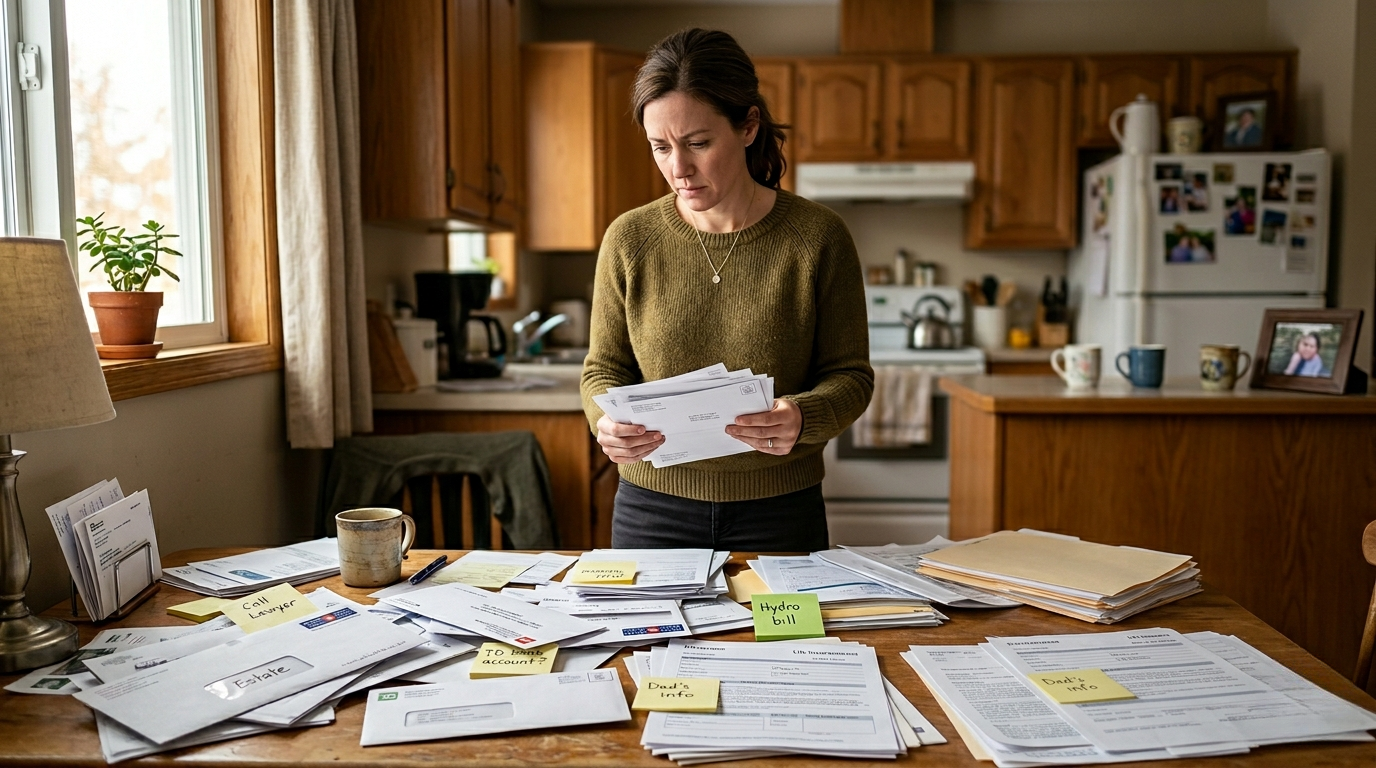
Estate planning documents and notes on a kitchen table, representing the gap between intention and action in Canadian estate planning.

They Keep Saying They’ll Get to It, But Most Never Do.

Marcus and Keiko had been together for eleven years. They owned a home, had two kids in elementary school, and both worked full time. They were organized people. They budgeted. They had RESPs. Every so often, usually after hearing something on the news or after a friend mentioned a difficult probate situation, one of them would say, “We really should get our wills done.” The other would agree. Then the week would fill up again, and the conversation would quietly disappear.

They’re not unusual. They’re the majority.

A new study from IG Wealth Management, released in May 2026, surveyed 1,024 adult Canadians and found that 84 percent say having an estate plan is important. But only 41 percent actually have one. That’s not a knowledge gap. People know they need a plan. So what’s getting in the way?


The awareness is there. The follow-through is not.

When nearly everyone agrees that something matters and fewer than half have done it, the problem isn’t information. It’s resistance; the kind of resistance that builds up around anything that feels big, complicated, and uncomfortable all at the same time. Estate planning lives at the intersection of money, mortality, and family dynamics. That combination is uniquely good at making people look away.

There’s also a timing problem. Estate planning rarely feels urgent in the conventional sense. No deadline arrives. No one sends a reminder. Life simply continues, and the task waits.

The IG study also found a specific gap around charitable giving. Sixty-eight percent of Canadians believe charitable giving should be part of an estate plan. Fewer than a third have formally discussed that intention with an advisor or their family. They have the wish. They haven’t taken the step that would give their wish any legal authority.


What’s actually stopping people?

Most people who haven’t completed an estate plan aren’t uninformed. They’re stuck. When you take a deeper look at where the sticking point is, a few things tend to come up.

The first is not knowing where to start. People picture a lawyer’s office, a stack of documents, and a series of decisions they don’t feel equipped to make. They’re not sure what they actually need. They don’t know what questions to bring.

The second is not knowing what they want. It’s hard to book an appointment to discuss your wishes if you haven’t sorted out what your wishes are. Who raises your children if something happens to both of you? How do you want your assets divided? What happens to the business? These aren’t questions with obvious answers, and sitting down to formalize them when they’re still unresolved feels like walking into a test unprepared.

The third is avoidance. The topic involves thinking about your own death, or incapacity, or the possibility of a spouse dying first. Most people would rather not spend a weeknight on that.

None of these are unreasonable responses. They’re human responses. But they have consequences, and those consequences are rarely felt by the person who delayed. They’re felt by the family left to sort things out.


It’s not just a will.

Here’s something worth understanding: an estate plan isn’t just a will. It includes who manages your finances if you’re incapacitated. It includes your healthcare wishes and who speaks for you if you can’t. It includes beneficiary designations on registered accounts and insurance policies that pass completely outside your will. It includes how your executor is going to know what you own and where to find it.

Each of those areas has decisions attached to it. And most people haven’t thought them through in any structured way.

That’s not a criticism. It’s simply what happens when a topic feels overwhelming and there’s no clear place to begin.


What a real first step looks like.

The first step in estate planning isn’t booking a lawyer. It’s getting clear on what areas need your attention and what decisions each one actually requires.

A lawyer documents your choices and makes them legally binding. But they need you to show up with some sense of what you want to accomplish. If you haven’t done that thinking, you work it out in real time at billable rates, and you often still leave the appointment with things unresolved.

Two tools in the NEXsteps Planning Toolkit are built for exactly that preparatory stage. Both are jurisdiction-specific, covering all thirteen Canadian provinces and territories, so the guidance reflects the rules where you actually live.

Estate Architect™ is a comprehensive, self-guided tool that walks you through every major area of estate planning: wills and trusts, powers of attorney and incapacity planning, personal directives, beneficiary designations, executor roles and responsibilities, and tax considerations including deemed disposition and probate fees. Built-in Q&A guides you through the questions that tend to come up along the way. It works whether you haven’t started yet or have existing documents you’re not sure still fit your life. At the end, you’ll have a clear picture of where things stand and a more informed starting point for the conversations that matter.

The Will Blueprint™ goes deeper on the will itself. It takes you through twelve sections, from jurisdiction and personal information to executor selection, guardianship for minor children, asset overview, estate distribution, and specific wishes. As you work through it, the tool flags issues that need attention before you meet a lawyer. When you’re done, you can print or save a summary to bring to your appointment, a complete record of your answers and every flag the tool raised, so nothing gets missed at the table.

Neither tool replaces legal advice. They’re the preparation that makes the professional conversation actually worthwhile.

When Diane finally sat down before her appointment

She’d booked the lawyer meeting under pressure, knowing it was overdue. But she wasn’t ready. She didn’t know who she’d name as executor, hadn’t thought through what would happen to her condo, and had no idea her beneficiary designation on her RRSP was still her ex-husband’s name. She spent two evenings working through The Will Blueprint, section by section: her family situation, her assets, her executor, her estate distribution wishes. The tool flagged four issues she hadn’t considered, including the RRSP designation. She printed the summary and walked into the appointment with it in hand.


Based on the IG Wealth Management study, nearly 20 million Canadians are in the same place Marcus and Keiko are, waiting for the right moment, or the right prompt, or enough clarity to feel ready. The data confirms that being in the majority on this one isn’t where you want to be.

Getting clear on where you stand is a place to start. That part doesn’t require a lawyer’s appointment.


Visit our services page to see how we can help.

Watch our video here, or watch on our YouTube Channel:

Prefer a podcast? Listen here!

Please send us your questions or share your comments.

Disclaimer: This content is for general information only and is not legal, financial, medical, or tax advice.

Will Ready Isn’t Estate Ready

A woman stands at a kitchen table covered in papers, envelopes, and sticky notes with handwritten labels including "Call Lawyer," "Estate," "TD bank account?," "Hydro bill," "Life Insurance," and "Dad's info," looking overwhelmed as she sorts through documents after a death in the family

The Problem Isn’t the Will. It’s Everything Else.

When Priya’s mother passed away in February, she had a will. Signed, witnessed, stored with a lawyer. By every standard measure, her mother had done the right thing. But when Priya showed up at the family home the following week to begin the estate, she stood in the kitchen with a notepad and realized she had no idea where to start. She didn’t know which bank held the chequing account. She couldn’t find the insurance policy. The Rogers bill kept coming but there was no record of the login. The will said what her mother wanted done with her estate. It said nothing about how to find it.

That’s not a planning failure. That’s an organization failure. And we’re learning just how widespread the problem actually is.


What the Numbers Actually Show

The statistics on estate planning in Canada tend to focus on wills. Only about half of Canadians have one. Among millennials the number drops further. These are real gaps.

But here’s what the data also shows: even among Canadians who do have wills, most haven’t had a meaningful conversation with their family about where things are, what accounts exist, or what their wishes look like in practice. A 2025 Willful survey found that while 59 percent of Canadians say they’ve talked about end-of-life wishes, only 36 percent both know their family’s wishes and have actually shared their own. Another survey from the same year found that only a third of respondents had even discussed where they want to spend their final days.

The will gets written. The conversation doesn’t happen. The executor, often a spouse or adult child, inherits a puzzle with half the pieces missing.


What the First Week Actually Looks Like

I’m a Certified Executor Advisor, and I’ve served as an executor myself. Between those two things, I’ve seen this gap from every angle, and I can tell you that the first week of an estate has almost nothing to do with the will.

It often starts with death certificates. Depending on the estate, you may need several, because some institutions want their own original copy. Then comes the list. Which banks? Which accounts? Is there a line of credit? A safety deposit box? A pension that needs to be redirected or cancelled? Subscriptions charging a card that shouldn’t be used anymore? A digital storage account full of photos no one can access because the password died with the person?

The will doesn’t answer any of those questions. A well-organized estate does.

Most executors spend the first two to four weeks just locating things. Not distributing assets, not filing taxes, not dealing with beneficiaries. Just finding the pieces. Every hour spent hunting for a policy number or tracking down a financial institution is an hour of administrative cost to the estate, and an hour of time the executor isn’t getting back.

The family that prepared isn’t spared grief. But they’re spared the chaos that makes grief so much harder to get through.

Left In The Dark

When Colette’s husband passed away unexpectedly at 61, she found herself executor of an estate she knew almost nothing about. He had handled the finances. She knew roughly what they had, but not where it was held, who their insurance was through, or whether there were accounts she didn’t know about. She spent weeks on the phone, writing letters, and waiting. A year later, she still wasn’t entirely sure she’d found everything. That uncertainty is one of the quieter costs of an unorganized estate.


What Prepared Actually Looks Like

If you’re a homeowner, a parent, a common-law partner, a business owner, or anyone who has people in their life who’d be affected if something happened to you, the question isn’t whether you need a plan. It’s whether your plan is actually findable.

A will in a lawyer’s office is a start. But your executor also needs to know which financial institutions hold your accounts, where your insurance policies are and who to call, what your digital accounts are and how to access or close them, where your important documents are physically stored, who your key contacts are, and what your wishes are for the things a will doesn’t cover.

That’s not a legal document. That’s an organized record. And it’s what makes the difference between an executor who can move forward and one who spends months in a paper chase.

Straightforward. Until It Wasn’t.

When Tariq’s father died at 78, the family assumed the estate would be straightforward. There was a will, a house, and a modest investment account. What they didn’t have was any record of which institutions held what. Tariq spent weeks making calls, sending letters, and waiting for responses, all while trying to figure out whether there were accounts he hadn’t turned up yet. He never did feel entirely confident the estate was complete. That uncertainty doesn’t go away quickly.


Tools That Close the Gap

This is exactly why I built In Plain Sight™ as part of the NEXsteps planning toolkit. It’s a personal records organizer designed to capture all of it: your accounts, your documents, your digital life, your insurance, your key contacts. Structured so the person who steps in after you can find what they need without turning every drawer inside out. It prints cleanly so your executor can work from a hard copy, and it covers the categories that come up again and again in real estate administration.

For families who want to tackle the full picture, The Prepared Estate™ bundles In Plain Sight with Estate Architect™, a companion tool that walks you through the decisions that shape a complete estate plan before you sit down with a lawyer or an advisor.

Neither tool replaces a will. Neither replaces legal advice. But both address the gap that’s costing Canadian families weeks of confusion and real administrative time, every single day.

Explore In Plain Sight™, The Prepared Estate™, and the full NEXsteps planning toolkit.

Priya’s mother had a will. That was something. But it would have been so much easier, and so much more honouring of everything she built, if she’d left a map alongside it.

Don’t leave a scavenger hunt.


Visit our services page to see how we can help.

Watch our video here, or watch on our YouTube Channel:

Prefer a podcast? Listen here!

Please send us your questions or share your comments.

Disclaimer: This content is for general information only and is not legal, financial, medical, or tax advice.


I’ll Be Dead Anyway

An older man looking pensively outside with an image of his children, indicating choices of his estate gifts

He Told Me Three Things. Every One of Them Was Wrong.

Marcel isn’t an unreasonable man. He has a will. He’s thought about what happens when he dies, at least enough to put something on paper. He loves his five kids. He’s been married a long time, even if the marriage hasn’t been easy.

So when I mentioned that his will leaves everything to his spouse with no direction about personal property and suggested a family conversation might be worth having, I wasn’t prepared for how quickly he closed the door.

He said three things. I’ve heard all three before, more times than I can count.

“I’ll be dead. It won’t be my problem.”

“I know my kids. They won’t fight over anything.”

“After I’m gone, if she wants to deal with it, that’s up to her.”

Each one sounds reasonable. Each one is actually a decision, dressed up as indifference. And together, they’re setting up exactly the kind of situation Marcel believes he’s avoiding.


“I’ll be dead. It won’t be my problem.”

This one is technically true and practically useless.

Marcel won’t be there. He won’t witness the disagreement over who gets the dining room table, or the tools in the garage, or the watch he wore every day for thirty years. He won’t be there when two of his children feel like they deserved more clarity, or when one of them walks away from a family gathering feeling like something was taken from them.

But here’s what he will have done. He’ll have made a choice. Not choosing is still choosing. Leaving no direction about personal property, no expressed wishes, no conversation on record, is a decision that gets made by default. It just gets made by other people, under pressure, while they’re grieving.

The question isn’t whether it will be Marcel’s problem. It won’t be. The question is whose problem it becomes, and whether he’s comfortable with that.

Most people, when they think that through, aren’t as comfortable as they thought.


“I know my kids. They won’t fight over anything.”

Marcel probably does know his kids. But there’s a version of his kids he’s never met.

He hasn’t met them at sixty, navigating their own financial pressures, their own marriages, their own histories with each other that have accumulated over decades. He hasn’t met them grieving, operating without the one person who could clarify what he meant or what he wanted. He hasn’t met them negotiating with a spouse who is now the sole legal owner of everything, trying to figure out how to advocate for themselves without causing a rift.

Research backs this up in a way that surprises most people. Estate attorneys report that more than half of the disputes they see involve items that represent less than ten percent of the estate’s total value. Not the money. The stuff. The lamp. The jewellery. The photograph albums. The things that have no market value and enormous emotional weight.

Those disputes aren’t about greed. They’re about what the object means, and about old dynamics that were manageable when the parent was alive and become unmanageable when they’re not.

Marcel’s kids might be fine. Plenty of families navigate this well. But “I know my kids” isn’t a plan. It’s a hope. And hope isn’t the same thing as having the conversation.

When Sylvie’s father passed away

Sylvie and her three brothers had always gotten along. Their father was confident they’d divide things fairly, and he said so often. What he never said was who should get his coin collection, or the fishing gear, or the hand-built bookshelf that had been in his study for forty years. Within six weeks of his death, Sylvie had stopped speaking to her oldest brother. Not over money. Over the bookshelf. It was not about the bookshelf.


“If she wants to deal with it, that’s up to her.”

This one sounds like generosity. It isn’t.

When Marcel’s will passes everything to his spouse, she becomes the legal owner of everything in that estate. Every piece of furniture. Every tool. Every item with sentimental value to one or more of his five children. What she does with those things is entirely up to her. She has no legal obligation to honour anything Marcel said out loud, any promises made at the kitchen table, any understanding his children may have about what was meant for them.

She may handle it beautifully. She may distribute things exactly as Marcel would have wanted. But Marcel has given her that task with no roadmap, no expressed wishes on record, and a family that includes members who may find it hard to advocate for themselves without feeling like they’re creating conflict.

That’s not a small thing. That’s a significant amount of pressure placed on one person, at one of the hardest moments of her life, with five different sets of expectations she may or may not know about.

“She can deal with it” assumes she knows what to do. It assumes she knows what Marcel would have wanted. It assumes the children will trust her judgment and accept the outcome. Those are a lot of assumptions for a plan that has nothing written down.


What Marcel Could Do Instead

None of this requires a lawyer, though updating a will to include specific bequests of personal property is worth discussing with one. What it requires is a willingness to have the conversation while he still can.

That conversation doesn’t have to be formal or a big deal. It can start with something as simple as walking through the house and making note of what matters and who it matters to. It can include a written record of his wishes, even an informal one, so that his spouse and his children have something to refer to. It can include a direct conversation with his kids about what he wants for them and what he’s hoping they’ll do for each other.

The goal isn’t to predict every conflict. It’s to remove as many ambiguities as possible, so the people he loves aren’t left filling in the blanks under the worst possible circumstances.

If you’re not sure where to start, The Prepared Estate™ brings together two tools designed for exactly this stage of planning. Estate Architect™ walks you through the decisions that shape your estate plan, and In Plain Sight™ helps you organize and document the personal records, accounts, and assets your family will need to find. Together, they give your executor, your spouse, and your children something to work with. You can find it at https://agapimarketing.com/planning-toolkit/


Marcel isn’t a bad planner. He’s a very common one. He’s done enough to feel like he’s handled it, without quite doing enough to actually handle it. That gap is where most estate problems live.

The good news is that gap is entirely closeable. But only while he’s still here to close it.


Visit our services page to see how we can help.

Watch our video here, or watch on our YouTube Channel:

Prefer a podcast? Listen here!

Please send us your questions or share your comments.

Disclaimer: This content is for general information only and is not legal, financial, medical, or tax advice.

The Divorce Problem in Your Estate Plan

A woman reviews estate planning documents at a desk while two people in conflict are visible in the background, representing the intersection of inheritance and divorce.

What Happens to an Inheritance If Your Child Is Divorcing?

Most estate plans are written with a simple assumption: assets move from parent to child, and from there, life takes its course.

But life doesn’t stay simple. One of the most overlooked complications in estate administration is what happens when a beneficiary child is in the middle of a separation or divorce when an inheritance arrives.

It raises difficult but practical questions. Does the inheritance stay protected? Can an ex-spouse make a claim? And what should an executor do when the timing of distribution collides with a family breakdown?

These aren’t rare scenarios anymore. They’re becoming part of routine estate administration conversations.


Can a Child’s Ex-Spouse Claim an Inheritance?

In general terms, an inheritance received by one spouse is usually considered separate property, meaning it’s not automatically subject to division on separation or divorce.

But that protection depends heavily on what happens after the inheritance is received.

The legal principle is clear. The practical reality is not.

An inheritance can lose its protected status if it becomes mixed with family or marital property, and this often happens without any intention to blur ownership lines. A beneficiary deposits inherited funds into a joint account for convenience. Inheritance money pays down a shared mortgage or covers shared expenses during separation. Funds get invested into jointly owned assets with no written record separating them from marital property.

Once inheritance funds are mixed with shared assets, tracing them becomes difficult. In some cases, the inherited value can be considered part of the overall property division during separation. Even when the original inheritance is excluded, growth or assets purchased with those funds may still become part of the financial dispute.

The key issue isn’t whether an inheritance is theoretically protected. It’s whether it remains clearly identifiable in practice.


Why Timing Matters in Estate Administration

When a parent passes away, the timing of distribution can become critical if a child is already separated or in divorce proceedings.

Executors often assume their role is purely administrative: follow the will, distribute the assets, and close the file. But when a beneficiary is in the middle of family law proceedings, the timing of that distribution can influence how the inheritance is treated in negotiations between spouses.

If funds are distributed directly to a beneficiary before their separation is finalized, those funds may enter the financial picture being divided. On the other hand, delaying distribution without proper legal justification can create its own tension and disputes within the estate.

Executors aren’t expected to resolve family law matters. But they do need to recognize when a standard distribution may carry unintended consequences.


Why Executors Need to Be Cautious

Executors are often placed in a difficult position when a beneficiary is separating or divorcing. They may receive requests from the beneficiary to distribute funds quickly, informal notices from family law counsel, pressure from other family members to proceed without delay, and real uncertainty about whether funds should be held temporarily.

The challenge is that executors aren’t decision-makers in the family law process. But their actions can still have consequences outside the estate file. A standard payout made without awareness of a beneficiary’s legal situation can unintentionally expose assets to division in divorce proceedings.

In some cases, executors choose to hold funds in trust or seek legal direction before distributing. This isn’t about overstepping authority. It’s about avoiding unnecessary exposure of estate assets to external disputes.

When a Routine Distribution Becomes Complicated

When Ted passed away, he left an equal inheritance to his two adult children. His son Marcus was in the early stages of separation, but no one had informed the executor of any formal legal proceedings. The executor proceeded with a direct payout into Marcus’s personal account. Within weeks, those funds appeared in financial disclosure documents during the separation process. While the inheritance itself wasn’t automatically divisible, it had entered the broader financial picture because it hadn’t been kept separate or documented clearly. What began as a routine distribution became part of a contested financial disclosure process.


Planning for Real-Life Conditions, Not Ideal Ones

If you’re thinking about how your estate plan would hold up in situations like these, the key question isn’t just who inherits. It’s how that inheritance is protected once it leaves your estate.

The decisions you make before you sit down with a lawyer shape what your plan can actually do. If you want to think through those decisions more carefully, The Will Blueprint™ is a good place to start. It’s designed to help you work through the key choices before your legal appointment, so your will reflects what you actually intend, including how distributions are structured when family circumstances are anything but simple.

You can find it, along with the full suite of estate planning and executor resources, here: agapimarketing.com/planning-toolkit/


Why This Topic Is Often Missed in Estate Planning

Estate planning discussions tend to focus on wills, taxes, and asset distribution. Far less attention is given to what happens after an inheritance lands in the hands of a beneficiary who’s going through a relationship breakdown.

Yet this is where many unintended outcomes occur. The risk usually isn’t poor drafting. It’s that estate plans assume stability at the exact moment when stability may not exist.

A child may be separating at the time of death, finalizing a divorce shortly after distribution, or navigating new financial arrangements while grief and legal processes overlap. In these situations, even well-structured estate plans can produce outcomes that differ from what the parent expected.


What Parents Can Do Differently

No estate plan can control every future life event, but there are ways to reduce exposure and confusion.

It’s worth considering whether outright lump-sum distributions make sense in all circumstances, or whether trusts or staged distributions would provide more stability when a beneficiary’s situation is uncertain. Clarity matters too: the more identifiable inherited assets are after transfer, the easier they are to protect. Updating documents when family circumstances change closes the gap between what’s written and what’s real. And communicating your intentions clearly can reduce the assumptions that tend to lead to conflict.

The goal isn’t to control beneficiaries. It’s to reduce the chance that an inheritance becomes part of a legal process it was never intended to enter.


Final Thought

Inheritance doesn’t stop being vulnerable once it’s distributed. It simply moves into a different environment where relationships, timing, and financial behaviour determine what happens next. When a child is going through separation or divorce, that environment becomes more complex.

For parents and executors, the real question isn’t only what the estate plan says. It’s whether it still works when life is already in motion.

That’s where thoughtful planning makes the difference between intention and outcome.


Visit our services page to see how we can help.

Watch our video here, or watch on our YouTube Channel:

Prefer a podcast? Listen here!

Please send us your questions or share your comments.

Disclaimer: This content is for general information only and is not legal, financial, medical, or tax advice.

Why a Basic Will Isn’t Enough for Blended Families

Older couple reviewing estate planning documents at a kitchen table surrounded by family photos, representing blended family planning

The Estate Planning Mistake Many Blended Families Don’t See Coming

When Diane married for the second time at 58, she and her new husband spent more time planning the wedding than reviewing their wills. Both had adult children from previous marriages. Both assumed the other understood what “fair” would look like someday.

They never actually talked about it.

That gap, between what people assume and what’s actually documented, is where most blended family estate problems begin.

Second marriages, common-law relationships, adult children from prior relationships, stepchildren, jointly owned property, beneficiary designations, and shifting family dynamics all make estate planning significantly more complicated than many people expect.

The challenge isn’t that blended families are dysfunctional. Most aren’t.

The challenge is that blended families require more intentional planning than traditional “simple will” strategies were designed to handle.


Why blended family estates become so complicated

In a first marriage with shared children, estate planning is often relatively straightforward. Assets move to the surviving spouse, and eventually to the children they share together.

Blended families introduce additional layers: children from previous relationships, separate assets brought into the marriage, unequal financial contributions, different expectations between spouses and children, stepchildren who may or may not inherit, and former spouses still connected through parenting or support obligations.

What makes these situations especially difficult is that many families avoid direct conversations about inheritance because they don’t want to create tension. Instead, assumptions fill the gaps. That’s usually where the problems start.


When Raymond remarried at 67…

He updated his will to leave everything to his new wife because he trusted she’d “do the right thing” and eventually divide the estate among all the children. He never documented that expectation anywhere.

After he passed, relationships between his wife and his adult children became strained. Communication stopped. Years later, she updated her own estate plan, leaving most of the remaining assets to her biological children.

Raymond’s children were devastated. They believed there had been an understanding. There just hadn’t been a document.


The “leave everything to my spouse” problem

Estate professionals see one pattern more than almost any other in blended families: people leaving everything outright to their spouse, trusting that the survivor will eventually distribute assets fairly among all the children.

The intention is often genuine. The problem is what happens afterward.

Once assets transfer fully to a surviving spouse, those assets typically become theirs to control. That means wills can be changed, beneficiaries can be updated, assets can be spent, new relationships can alter priorities, and adult children may have no legal protection whatsoever.

Even when everyone initially has good intentions, family relationships can shift dramatically after a death. Grief changes people. Financial stress changes people. Family pressure changes people.

And adult children who already feel uncertain about their place in a blended family often become highly sensitive to secrecy, delays, or unequal treatment during estate administration.


Executors often get caught in the middle

The pressure placed on executors in blended family estates is frequently underestimated.

Executors are expected to remain neutral, organized, transparent, and legally compliant while managing a situation that may already contain years of underlying family tension.

In blended families, executors frequently deal with mistrust between family members, accusations of favoritism, disputes over sentimental items, pressure from multiple sides, disagreements about caregiving contributions, conflicts over timelines and communication, and challenges to the validity of the will itself.

The choice of executor can also become controversial. If a surviving spouse is named executor, adult children may feel excluded from information or decision-making. If one child is named executor, siblings or stepfamily members may question their motives. Even small administrative decisions can become emotionally charged.


Start with a will that reflects your actual intentions

In blended families, a basic will often isn’t enough. The Will Blueprint™ is a self-guided, jurisdiction-specific online tool that helps you think through the decisions your lawyer will need answered — so your will actually reflects what you intend, not just what’s convenient to assume.

You can learn more here: agapimarketing.com/planning-toolkit


Communication problems make everything worse

Many estate disputes aren’t caused by greed. They’re caused by surprise.

People become angry when they expected something different, when they discover accounts or documents they didn’t know existed, when they feel excluded from conversations, when they believe promises were broken, or when they simply don’t understand why decisions were made.

This is why communication matters so much in blended family planning. Families don’t necessarily need to disclose exact dollar amounts or every detail of their estate plan. But providing some clarity around intentions can reduce confusion significantly.

Simple conversations can prevent enormous conflict. For example:

  • Why was a particular executor chosen?
  • Are inheritances intended to be equal?
  • How will sentimental items be handled?
  • Are stepchildren included?
  • What happens if the surviving spouse remarries?
  • Are there assets specifically intended for biological children?

Avoiding these conversations doesn’t eliminate tension. It postpones it until after a death, when emotions are already heightened and clarification is no longer possible.


When Evelyn named her husband as executor…

She trusted him completely. She also assumed her adult children understood that certain family heirlooms would eventually go to them. She never wrote any of it down.

After her death, disagreements began almost immediately over jewelry, photographs, and furniture. Her children believed these items carried family history. Her husband believed they were now his to distribute as he saw fit.

What started as arguments over sentimental belongings eventually damaged relationships permanently.


Better planning can reduce future conflict

Blended family estate planning usually requires more than a basic will. Depending on the circumstances, families may want to explore trusts, carefully structured beneficiary designations, co-executors, professional executors or trustees, detailed memorandums of wishes, separate inheritances for specific beneficiaries, and strategies that balance spousal support with protections for children.

There’s no universal solution because every family structure is different. What matters is recognizing that blended family planning isn’t “plug and play.” It requires intentional decisions, updated documentation, and organized information.


Estate planning is no longer just about taxes and probate

Historically, estate planning conversations focused heavily on minimizing taxes or avoiding probate. Those issues still matter. But increasingly, families are concerned about something else: preserving relationships, preventing conflict, protecting vulnerable family members, reducing confusion, and making estate administration manageable for the people left behind.

Blended families often need a shift in mindset, away from “simple” planning and toward something more intentional. A basic will may technically distribute assets, but it doesn’t necessarily create clarity or fairness in the eyes of the people who have to live with the results.


The best time to address these issues is before there’s a crisis

Many families wait too long to revisit their estate plans after remarriage or major life changes. By the time concerns become obvious, illness, incapacity, or family conflict may already be limiting productive conversations.

Reviewing your estate plan after remarriage, entering a common-law relationship, purchasing property together, becoming grandparents, or experiencing significant financial changes can make an enormous difference later.

No estate plan can eliminate every family disagreement. But thoughtful planning, honest communication, and organized information can reduce confusion and help families navigate an already difficult time with far less conflict.

Because in blended families, the biggest estate planning risk is often not what’s written in the will. It’s everything people assumed would happen that never actually got documented.


Visit our services page to see how we can help.

Watch our video here, or watch on our YouTube Channel:

Prefer a podcast? Listen here!

Please send us your questions or share your comments.

Disclaimer: This content is for general information only and is not legal, financial, medical, or tax advice.

When Death Has a Date

A wooden desk by a window with an October calendar, folded letters, a pen, glasses, and a journal, suggesting quiet preparation and end-of-life planning.

What MAID Means for Your Estate Plan

Margaret had been thinking about it for two years. After her ALS diagnosis, she’d done her research, spoken with her doctor, and made her decision. She knew the date. Her family knew the date. What nobody had gotten around to was her will. It was 15 years old, named an ex-spouse as executor, and didn’t reflect a single thing about her life as it was now.

The gift of a planned death is time. The tragedy is when that time isn’t used.

MAID (medical assistance in dying) gives Canadians with a grievous and irremediable medical condition the legal option to choose the timing of their death. That’s a profound thing, and this article isn’t about the medical process or the policy debate. It’s about something more practical: what having a planned death means for your estate, your documents, and the people you’re leaving behind.

Because MAID changes the estate planning conversation in ways most people, and honestly, many professionals, haven’t fully thought through.


You Know the Date. Your Documents Should Too.

When death is sudden, there’s no window to update a will or have the conversations that should have happened years earlier. With MAID, that window exists. The question is whether people use it.

A valid, up-to-date will is the starting point. But MAID raises some specifics that a sudden death wouldn’t. In Canada, a person must have mental capacity to consent at the time MAID is administered. That’s straightforward enough when someone is physically ill but mentally sharp. It gets more complicated when cognitive decline is part of the picture. People living with dementia face a genuine catch-22: they must be capable of giving informed consent immediately before the procedure, but as dementia progresses, that capacity disappears, which means they can become ineligible for MAID even if they clearly wanted it earlier. Outside Quebec, this forces an impossible choice: act earlier than you want to in order to ensure you still have capacity to consent, giving up time with the people you love, or risk losing capacity and being unable to access MAID at all. Quebec became the first jurisdiction in Canada to allow advance requests for MAID, effective October 30, 2024, but that option isn’t available to the rest of the country yet, and it remains in tension with the federal Criminal Code. The practical takeaway for anyone navigating a serious diagnosis is that the window to get both your MAID request and your estate documents in order while capacity is unquestionable may be shorter than it seems. Waiting too long isn’t just a practical problem; it can become a legal one.

The same applies to powers of attorney and personal directives. If those documents aren’t in place before capacity becomes an issue, the window may close faster than expected.


What a Personal Directive Can and Can’t Do Here

Personal directives let you document your healthcare wishes and name someone to make decisions on your behalf if you can’t. They’re a critical piece of any estate plan, and they become even more important when serious illness is part of the picture. (The name for this document varies by province: you may see it called an advance directive, a representation agreement, a healthcare directive, or a mandate, depending on where you live.)

But here’s something worth knowing: a personal directive cannot authorize MAID on your behalf. In Canada, MAID requires the person to be capable of consenting at the time it’s administered. A substitute decision-maker can’t make that call for you. This is different from other end-of-life decisions, like withdrawing life support, where a proxy may have authority.

That doesn’t make a personal directive less important. It makes it more important to have those conversations early, while you can speak for yourself. Your directive can still capture your values, your wishes around pain management, what quality of life means to you, and what you don’t want, all of which matters enormously to the people walking alongside you through this.

When Robert Was Diagnosed at 58

Robert had been meaning to update his personal directive for years. After his MS diagnosis, he finally started thinking about getting his documents in order, including thinking more seriously about MAID as a future option. By the time he sat down with a notary, his condition had progressed enough that there were questions about his capacity to sign. The notary required a capacity assessment before proceeding, which delayed everything by weeks and added stress to an already difficult time. Had Robert updated his documents two years earlier, none of that would have been necessary. The lesson isn’t that MAID planning is complicated. It’s that the time to do the paperwork is before you urgently need it.

If this has you thinking about where your own documents stand, the NEXsteps Planning Toolkit is a good place to start. It brings together 12 self-guided tools covering the key areas of estate and incapacity planning, so you can see what you’ve addressed and what still needs attention.


What the Executor Is Walking Into

When death is sudden, an executor is often working in a fog of grief and surprise. When death is planned, the dynamic is completely different, and in some ways harder.

The executor knows what’s coming. There’s time to prepare, which is genuinely helpful. But there’s also time for family tensions to come out, for questions about the estate to get raised before the person is even gone, and for the executor to feel caught between the wishes of the dying person and the emotions of the people around them.

A few things tend to catch executors off guard when MAID is involved:

  • The estate doesn’t automatically settle faster. A planned death doesn’t mean a simple estate. The same probate process, the same asset-gathering, the same beneficiary notifications apply. What’s different is that there can be more opportunity to organize, if the executor is looped in ahead of time.
  • Family dynamics get complicated. When there’s a known date, people sometimes start acting like the estate has already transferred. Conversations about “who gets what” can happen in ways that put the executor in an uncomfortable position, especially if the will says something different from what family members are expecting.
  • Beneficiary designations on registered accounts matter just as much. RRSP, TFSA, RRIF, and life insurance beneficiary designations pass outside the will entirely. If they haven’t been reviewed, a planned death doesn’t fix that.

The best thing a person choosing MAID can do for their executor is tell them what’s coming, share the location of all key documents, and make sure the will reflects current intentions.

What Diane Didn’t Expect

Diane was named executor for her aunt, who chose MAID after a cancer diagnosis. Her aunt had three weeks from the confirmed date to the procedure. Diane assumed that because her aunt was still sharp and organized, everything would be in order. What she found was a will that hadn’t been updated since 2009, two bank accounts her aunt had forgotten to mention, and a beneficiary designation on a life insurance policy that named her aunt’s late husband. None of it was unfixable, but all of it added work and delay during a time when Diane was also grieving. The documents didn’t need to be perfect. They just needed to be current.


What Families Should Be Thinking About

If someone in your family is considering MAID, or living with a condition where it might become relevant, the most useful thing you can do is normalize the estate planning conversation early. Not because death is imminent, but because having the documents in place is an act of care for everyone involved.

That means:

  • A will that reflects current wishes and names the right executor
  • Powers of attorney for property and personal care, signed while capacity is clear
  • A personal directive that captures values and healthcare preferences, even if it can’t authorize MAID directly
  • A conversation with the executor about where everything is and what to expect
  • A review of all beneficiary designations on registered accounts and insurance

MAID, at its core, gives people a measure of control in circumstances where so much feels out of control. The estate planning side of it is where that control becomes real, not just for the person dying, but for everyone they leave behind.


Visit our services page to see how we can help.

Watch our video here, or watch on our YouTube Channel:

Prefer a podcast? Listen here!

Please send us your questions or share your comments.

Disclaimer: This content is for general information only and is not legal, financial, medical, or tax advice.

You’re Not Too Young for Estate Planning

A woman sits at a kitchen island in a bright, modern home, looking at her phone beside an open laptop, notebook, keys, and a sealed envelope while a golden retriever sleeps nearby on the floor.

Estate Planning in Your 30s: What Nobody Told You

A few weeks ago, someone in their early 30s told me she’d been meaning to sort out a will for a couple of years. She and her partner had just bought their first place. They had a dog. No kids yet. She said, “I know we should probably do it, but it feels like something for later.”

I hear this a lot. And I get it. Estate planning has a reputation for being something older people do, something you graduate into once life gets complicated enough to justify the paperwork. So it sits on the list, somewhere below “book the dentist” and above “learn to make sourdough.”

Here’s the thing, though. Life is already complicated enough. And for people in their 20s and 30s, the gaps in a plan that doesn’t exist yet can be some of the most consequential ones of all.


Your 20s Called. They Want You to Sort This Out.

The idea that estate planning is for older people exists because we associate it with death, and we associate death with age. But incapacity doesn’t work that way. Accidents don’t work that way. Sudden illness doesn’t work that way.

The 32-year-old who has a serious car accident on the way to work doesn’t get to defer that situation because it’s inconvenient. If they can’t communicate, someone needs to make medical decisions and manage their finances. And unless they’ve named that person in legally valid documents, the people who love them most may have no authority to do anything at all. Not their partner. Not their parents. Not their closest friend.

That’s not a worst-case scenario designed to frighten anyone. That’s just how the law works.


What Actually Happens When There’s Nothing in Place

When a young adult loses capacity or dies without planning documents, the people left dealing with it don’t just feel grief. They feel helpless. They hit walls.

A partner who isn’t legally a spouse may have no standing to make healthcare decisions. Parents who want to help may discover they have no more legal authority over a 25-year-old’s finances than a stranger does. Siblings may disagree about what their brother or sister would have wanted. In Canada, when there’s no enduring power of attorney and no personal directive, families may need to apply to court to get authority to act. That process takes time, costs money, and happens at the exact moment when nobody has the energy or clarity to navigate it.

And when a young person dies without a will, their estate goes wherever provincial intestacy laws direct it, which may have no resemblance to what they actually would have chosen.

When love isn’t enough

When Tyler was 29, he was in a serious mountain biking accident that left him in hospital, unable to communicate, for three weeks. His girlfriend of four years was at his side every day. But she couldn’t authorize his treatment, couldn’t access his accounts to keep his rent paid, and couldn’t speak to his employer on his behalf. Everything she tried to do for him hit a wall. They’d been together for years and were talking about getting engaged. Nobody had told them that wasn’t enough.


If You’re Single, This Is More Urgent, Not Less

One of the most persistent myths in estate planning is that single people without children don’t need to worry about it. The logic being: there’s no family to protect, so what’s the risk?

The risk is that nobody has automatic authority to act for you.

If you’re single and something happens, there’s no spouse or partner to step in. There’s no legal framework that puts your best friend in charge of your care, even if that’s exactly what you’d want. Without a properly documented personal directive, medical professionals are left navigating next-of-kin rules and guessing at your wishes. Without an enduring power of attorney, your parents may find themselves trying to manage your apartment, your accounts, and your obligations without any legal standing to do so.

And if you die without a will? Your assets go to your closest relatives under provincial law. If you’d rather see your money go to friends, chosen family, a partner you weren’t legally married to, or a cause you cared about, that won’t happen unless you’ve put it in writing.

Being single isn’t a reason to skip this. It’s a reason to get it done sooner.


If You’re in a Common-Law Relationship, Read This Twice

One of the biggest misconceptions in estate planning is the idea that common-law partners automatically have the same legal rights as married spouses. In reality, the rules vary widely across Canada. In some provinces, a surviving common-law partner may have limited rights or no automatic inheritance rights at all without proper estate planning in place.

If you and your partner aren’t married and one of you loses capacity, the other doesn’t automatically have authority to manage finances or make medical decisions. If one of you dies without a will, the surviving partner may have no automatic right to the estate at all, regardless of how long you’ve been together or how intertwined your lives are.

This isn’t a criticism of common-law relationships. It’s a gap in the law that catches people completely off guard. The fix is simple: get the documents in place now, while everything is fine and there’s no urgency, because urgency is exactly when you don’t want to be sorting this out.


If You Have Young Children, There’s No More Waiting

If there’s one group of young adults for whom this is truly urgent, it’s parents of minor children. Not just because of the financial side, though that matters too. Because of the guardian question.

If something happens to both parents and there’s no will naming a guardian, a court decides who raises your children. That court doesn’t know your family. It doesn’t know who you’d trust, who shares your values, who your kids already know and love. It makes a decision based on whatever information it has available, which without a will is very limited.

Naming a guardian doesn’t take anything away from anyone. It simply puts your voice into a decision that would otherwise be made without you.


If You Have No Children, Your Stuff Still Goes Somewhere

People who’ve chosen not to have children sometimes assume estate planning doesn’t apply to them because there’s no obvious heir. But an estate without a will doesn’t disappear. It goes to whoever provincial law directs it to, following a hierarchy that typically starts with a spouse, then parents, then siblings, then more distant relatives.

If none of that reflects what you’d actually want, a will is the only way to change it. Maybe you’d want to leave something to a close friend. Maybe to one sibling and not another. Maybe to an organization that mattered to you. None of that happens without a document that says so.


The Incapacity Piece Is the One Most Young People Miss Entirely

When young adults do think about estate planning, they think about wills. They think about what happens when they die. What they almost never think about is what happens if they’re alive but can’t make decisions for themselves.

That scenario, incapacity due to accident, illness, or injury, is statistically more likely to happen to a person in their 20s or 30s than death is. And the documents that handle it, an enduring power of attorney for financial decisions and a personal directive for healthcare and personal decisions, are completely separate from a will.

A will does nothing in an incapacity situation. The documents that matter are the ones that name someone to act for you while you’re still here but unable to speak for yourself.

The will that couldn’t help

When Priya died at 34, she had a will. Her executor found it, it was valid, and everything was in order. But Priya had been in a coma for six weeks before she died, and during that time her family couldn’t manage her finances or make medical decisions on her behalf, because she had no power of attorney and no personal directive. The will only came into effect after she was gone. For the six weeks she was still alive, the people who loved her were powerless.


Where to Start

None of this needs to be complicated at this stage of life. A basic will, an enduring power of attorney, and a personal directive are the foundation. They don’t need to be elaborate. They need to exist and to reflect your actual wishes and circumstances.

If you’re not sure where your planning actually stands, Designed or Default™ is a good place to begin. It’s a self-guided online tool that helps you take stock of what you’ve put in place intentionally and what might still be happening by default.

For the incapacity side, Who Speaks for You?™ and Your Voice, Your Care™ are both self-guided online tools that walk you through your power of attorney and personal directive decisions respectively. All three are jurisdiction-specific and designed to guide you through decisions most people haven’t thought about before.


The Bottom Line

“I’m too young for this” is a comfortable story. It lets you put it off without feeling irresponsible. But it’s not actually about age. It’s about whether the people who matter to you would be protected and supported if something happened today.

For most people in their 20s and 30s, the honest answer is no. Not because they don’t care, but because nobody told them this was already their problem to solve.

Now you know.


Visit our services page to see how we can help.

Watch our video here, or watch on our YouTube Channel:

Prefer a podcast? Listen here!

Please send us your questions or share your comments.

Disclaimer: This content is for general information only and is not legal, financial, medical, or tax advice.

Before the Window Closes: Cognitive Decline and the Cost of Waiting

Papers and reading glasses resting on a table in dimming natural light, representing the urgency of planning before cognitive decline limits decision-making.

Cognitive Decline Can Sneak Up on Us

Every family has their own version of this story.

A parent starts showing signs, forgetting recent conversations, getting confused about finances, making decisions that seem out of character. The kids look at each other and decide they’ll figure out the planning stuff soon. There’s time, they think. It’s probably just stress, or aging, or a bad few weeks.

And then one day, there isn’t time anymore.

That’s the thing about cognitive decline that most people don’t understand: by the time it’s obvious enough that everyone agrees something is wrong, the legal window to do anything about it may already be closed.


Why The Window Matters

In Canada, signing a Power of Attorney for your finances, or a personal directive for your healthcare and personal decisions, requires something called legal capacity. That means the person signing the document has to understand what they’re signing, what powers they’re giving, and what the consequences are.

Once someone no longer has that capacity, they can’t sign. It’s not a technicality or a formality. It’s a hard legal line, and once it’s crossed, the documents can’t be created.

That’s why waiting is so costly. Not just emotionally, not just logistically. Legally.


What Happens When The Window Closes

If someone loses capacity without having these documents in place, their family doesn’t automatically get the authority to make decisions for them. What happens next varies by province, but the general process is the same across Canada: someone has to apply to the courts.

In Alberta, that means applying for a Trusteeship Order (for financial decisions) or a Guardianship Order (for personal and healthcare decisions). In Ontario, it’s a similar process through the Superior Court of Justice. In British Columbia, it involves an application under the Adult Guardianship Act. The names differ. The process is the same: time-consuming, stressful, and expensive.

Court fees. Legal fees. Medical assessments. Hearings. A judge deciding who gets to make decisions for someone who never got around to saying what they wanted.

Families who go through this process describe it as one of the most painful experiences of their lives, happening at exactly the moment when they’re already dealing with a loved one’s health or financial crisis.


Cognitive Decline Doesn’t Always Announce Itself

Part of what makes this so hard is that cognitive decline often looks like a lot of other things first. Forgetfulness that seems like normal aging. Irritability that seems like stress. Poor financial decisions that get written off as “Dad’s always been stubborn.”

The early and middle stages of dementia, for example, can stretch over years. During much of that time, a person may still have legal capacity, at least for simpler decisions. But capacity is assessed on a task-by-task basis, and the window for complex legal documents can close well before the family realizes or accepts what’s happening.

This is also where the risk of financial abuse grows. A person who is beginning to lose capacity but hasn’t yet lost it entirely is in a vulnerable position. They may be influenced, pressured, or manipulated into financial decisions they wouldn’t otherwise make. Having proper planning documents in place, with a trusted person named, is one of the most important protections against this.

Legal professionals across Canada are already seeing this play out. In Ontario, the volume of requests related to declining mental capacity has been increasing significantly, driven by an aging population and greater public awareness around incapacity and financial abuse risk. That trend isn’t unique to Ontario. It reflects what’s happening in every province, and it’s only going to grow.

From the files: Margaret, 71, Victoria, BC

Margaret’s husband was diagnosed with early-stage Alzheimer’s two years ago. When they first got the news, their financial advisor suggested they get both their planning documents updated: an Enduring Power of Attorney to cover finances, and a Representation Agreement for personal care and healthcare decisions. They kept putting it off. Life was busy.

By the time they finally made an appointment with their lawyer, her husband’s doctor had concerns about whether he still had capacity to sign either document. The assessments took weeks. The outcomes were uncertain.

“I just didn’t think we had to rush,” Margaret said. “He seemed fine most of the time. I thought we had more time than we did.”


What These Documents Are Called Depends On Where You Live

One of the things that often trips people up is that the documents go by different names in different provinces.

In Alberta, the document that appoints someone to manage your finances is an Enduring Power of Attorney. The document that covers your personal care and healthcare decisions is a Personal Directive.

In British Columbia, you have an Enduring Power of Attorney for financial decisions, and a Representation Agreement for personal care and healthcare decisions. The Representation Agreement comes in two types, depending on the level of authority you want to grant.

In Ontario, you have a Continuing Power of Attorney for Property for financial decisions, and a Power of Attorney for Personal Care for healthcare and lifestyle choices.

In Saskatchewan and Manitoba, the finance document is also called an Enduring Power of Attorney, while the healthcare document goes by different names depending on the province. In Saskatchewan, it’s a Health Care Directive. In Manitoba, it’s a Health Care Directive as well.

The names are different. The purpose is the same: to make sure someone you trust can step in and act on your behalf if you can’t act for yourself.


Ready to get this sorted? Our self-guided planning tools walk you through exactly what you need, province by province, at your own pace. Start with Who Speaks for You?™ for your finances, Your Voice, Your Care™ for your personal and healthcare decisions, or grab the In Good Hands™ bundle and do both.


The Conversation Nobody Wants To Have

There’s a reason people put this off. These documents require thinking about scenarios that are uncomfortable: losing the ability to manage money, losing the ability to speak for yourself, being in a situation where someone else is making your most personal decisions.

Nobody wants to imagine that. So they don’t. And they wait.

But here’s what actually happens when these documents are in place: nothing changes day to day. You still manage your own life completely. The documents are kept somewhere safe, ready in case they’re ever needed. The person you’ve named has no power until and unless you lose capacity.

That’s it. That’s the trade-off. A few hours of planning, and some paperwork, in exchange for the peace of mind that comes from knowing your wishes will be honoured and your family won’t be left scrambling.

Compared to a court application, a family crisis, and a process that strips the dignity out of everyone involved, that’s not a hard trade.


Don’t Wait For The Conversation To Get Easier. It Won’t.

If you’ve been putting off this planning because you’re waiting for the right moment, or for someone else to bring it up first, or until things settle down, this is your sign that the right moment is right now.

The window is open. Make sure it stays that way.


Visit our services page to see how we can help.

Watch our video here, or watch on our YouTube Channel:

Prefer a podcast? Listen here!

Please send us your questions or share your comments.

Disclaimer: This content is for general information only and is not legal, financial, medical, or tax advice.

The Gap in Most Estate Plans (And How to Close It)

an image of a puzzle showing a will, power of attorney and medical directive with pieces missing

Where Estate Plans Usually Fall Short

There’s a gap in most people’s estate plans, and the frustrating part is that it’s completely avoidable. The even more frustrating part is that when that gap shows up, it’s rarely the person with the incomplete plan who pays the price. It’s the people around them.

That’s what makes this worth talking about.


The Assumption Most People Make

Most people don’t avoid estate planning because they’re irresponsible. They avoid it because life is busy, the conversation is uncomfortable, and there’s always a belief that there’s still time.

So they make assumptions. They assume their spouse will be able to deal with the bank if something happens. They assume their kids will work things out together. They assume the doctors will know who to turn to. And they assume that because a will is signed, the important things are covered.

Those assumptions are understandable. They’re also exactly where things go wrong.


What a Will Actually Does

Here’s what most people don’t realize about a will. It only takes effect after you die. That’s it. That’s all it does.

It doesn’t help if you’re still alive but you’ve had a stroke. It doesn’t help if you’re in hospital and can’t communicate. It doesn’t help if you can no longer manage your finances or make decisions for yourself. In any of those situations, a will does nothing.

That’s where families get caught off guard. They thought the document covered everything, and then life throws something at them that the will was never designed to handle. They discover, often in the middle of enormous stress, that the gap was there all along. And, unfortunately, it is often too late then to make the adjustments to take care of that gap.


The Two Documents That Fill the Gap

So what actually covers those situations? Well, there are two documents that don’t get nearly enough attention.

The first is an enduring power of attorney. This document is called by different names in different jurisdictions, but it’s the document that lets you choose someone to step in and manage your financial and legal matters if you’re no longer able to. Without it, even a devoted spouse or a capable adult child can run into real barriers at exactly the wrong time. Banks, institutions, and legal processes don’t respond to closeness or good intentions. They need authority, and without this document, there isn’t any.

Robert’s Story

When Robert retired at 67, he and his daughter Sandra had an understanding that she’d help manage things if he ever needed it. Two years later, early-stage dementia made that necessary sooner than either of them expected. But without an enduring power of attorney, Sandra had no legal standing to act on his behalf, and Robert was no longer able to create it. What they’d assumed would be a simple handoff turned into a court application process that took months and cost far more than anyone anticipated.

The second document is a personal directive, sometimes called a medical directive. Again, there are different names for this document depending on where you live. This is the document where you name the person who should make personal and healthcare decisions if you can’t make them yourself. It’s also where you can leave guidance about your values and wishes, so the people around you aren’t left guessing about what you would have wanted.

That last part matters more than people realize. When families are already under enormous strain, being asked to make deeply personal decisions without any direction is incredibly hard. A personal directive doesn’t remove the emotion from those situations, but it gives people something to work from. It replaces guesswork with guidance.

Family Conflict

Patricia had always been clear with her husband Tom about her wishes, but those conversations had never been written down. When she was hospitalized unexpectedly at 71, Tom found himself fielding questions from doctors while their adult children pushed for different approaches to her care. Everyone wanted to do right by her. Without a personal directive, no one could agree on what that actually meant.


Incomplete Planning Creates Burden

What’s important to understand is that incomplete planning doesn’t just create inconvenience. It creates burden. It places pressure on the very people you’d most want to protect.

Instead of being able to focus on caring for you, supporting each other, and making decisions, your family can find themselves chasing information, hitting walls, and trying to piece together what should have been made clear in advance. A hard situation becomes even harder when no one knows who has authority, where documents are, or what the plan was meant to be.

That’s not a failure of love or willingness. Families are almost always willing to help. The issue is that willingness and legal authority aren’t the same thing, and without the right documents in place, one doesn’t substitute for the other.

If you’re not sure whether your own plan covers these situations, that’s worth looking at sooner rather than later. It’s a straightforward conversation and the kind of thing I help people work through regularly. Learn more about the services available to support you.


The Part That’s Easy to Put Off

These documents ask people to think about vulnerability. They require us to imagine a time when we might need help, when we might not be able to speak for ourselves, or when we might not be able to manage the practical parts of life the way we always have. It’s much easier to put that off and tell ourselves there’ll be time later.

Sometimes there is. Sometimes there isn’t. And the difference between having these documents in place and not having them can be significant for the people who love you most.

A will remains essential. It just isn’t the whole plan. These other documents speak to what happens if help is needed during life, not just after death. Both matter. Both protect. Both reduce the risk that your family will be left trying to solve problems in real time without direction or authority.

If your planning has focused only on what happens after death, and not on what happens if you need help while you’re still here, there may be more work to do. That’s not a criticism. It’s simply a reminder that estate planning is bigger than most people realize, and that the gap is worth closing before it becomes someone else’s problem to manage.


Visit our services page to see how we can help.

Watch our video here, or watch on our YouTube Channel:

Prefer a podcast? Listen here!

Please send us your questions or share your comments.

Disclaimer: This content is for general information only and is not legal, financial, medical, or tax advice.

Hope Is Not a Strategy: Why a Will Is Not Enough

: Older couple seated at a dining table at home, reviewing paperwork together in a calm conversation about estate planning and decision-making.

Estate Planning Needs More Than Good Intentions

“Hope is not a strategy” is one of those phrases that sticks with you because it’s true.  And it’s especially true in estate planning.

Most people don’t avoid planning because they’re irresponsible. More often, they avoid it because life is full, the conversation is uncomfortable, and there’s a belief that there’s still time. They mean to get to it. They assume the people closest to them will know what to do. They trust that if something happens, things will somehow come together.

That kind of hope is understandable. It’s also where trouble often starts.

In estate planning, hope tends to show up in subtle ways. Someone hopes their spouse will be able to deal with the bank if needed. They hope their adult children will work well together. They hope doctors will know who to turn to. They hope that because a will has been signed, the important things are covered.

But hope isn’t a plan, and it certainly isn’t legal authority.


Brian’s Experience

When Brian’s wife Carol had a stroke at 64, he assumed he could step in and manage their finances while she recovered. They’d been married 38 years. But several accounts were in Carol’s name only, and without an enduring power of attorney, the bank had no legal basis to give him access. The weeks that followed were consumed by urgent legal steps he never anticipated, at a time when his only focus should have been Carol.

A will is important, but it only takes effect after death. It doesn’t help during incapacity. If you’re still alive but unable to manage your finances, understand documents, or communicate medical wishes, a will does nothing to bridge that gap. That’s where many families get caught off guard. They discover, often in the middle of stress, that the document they thought covered everything was never meant to handle the situation they’re actually facing.

That’s why estate planning has to be broader than a will. It has to include the possibility that life may become complicated before life is over.

An enduring power of attorney is part of that broader planning. It allows you to choose who can step in to deal with financial and legal matters if you no longer can. Without it, even a devoted spouse or capable adult child can run into barriers at exactly the wrong time. The issue isn’t usually a lack of willingness. Families are often very willing to help. The issue is that willingness and authority aren’t the same thing.

The same is true of a personal directive or medical directive. This is where you name the person who should make personal or healthcare decisions if you cannot, and where you can leave guidance about your wishes and values. That kind of clarity matters. It doesn’t remove the emotion from difficult situations, but it can prevent people from being left in the dark, trying to make deeply personal decisions without knowing whether they’re honouring your intentions or simply guessing.

Why Clarity Matters

When David’s mother Elaine was admitted to hospital after a fall, the medical team needed someone to direct her care. There was no personal directive and no named decision-maker. David and his sister had different ideas about what their mother would have wanted, and the disagreement was painful for everyone. David later said the hardest part wasn’t the grief. It was never quite knowing if they’d gotten it right.


That’s one of the hardest parts for families. They’re already under strain, and now they’re being asked to interpret silence.

If you already have a will in place, that’s an important start. But if your enduring power of attorney, personal directive, and the practical details around your planning haven’t been reviewed, there may still be gaps that could create unnecessary stress later.

If you’re not sure whether your plan fully covers incapacity, not just what happens after death, this is exactly the kind of gap worth paying attention to. I offer a planning review specifically designed to find those gaps before they become problems. Find out what yours might be missing.


People sometimes treat these documents as if they’re secondary, but they’re not. They’re part of the real structure of a plan. A will speaks to what happens after death. These other documents speak to what happens if help is needed during life. Both matter. Both protect. Both reduce the risk that your family will be left trying to solve problems in real time without authority or direction.

What often gets overlooked is that incomplete planning creates more than inconvenience. It creates burden. It places pressure on the very people you’d most want to protect. Instead of being able to focus on care, support, and decision-making, they can find themselves chasing information, encountering resistance, and trying to piece together what should have been made clear in advance.

That’s why this kind of planning isn’t just about paperwork. It’s about reducing uncertainty. It’s about giving the people around you a clearer path to follow if something changes. It’s about recognizing that a difficult situation becomes even harder when no one knows who has authority, where documents are, or what the plan was meant to be.

There’s also an emotional resistance built into all of this. These documents ask people to think about vulnerability. They require us to imagine a time when we may need help, may not be able to speak for ourselves, or may not be able to manage the practical parts of life in the way we always have. It’s much easier to put that off. It’s much easier to tell ourselves there’ll be time later.

Sometimes there is. Sometimes there isn’t. That’s why hope, by itself, isn’t enough. Hope is a feeling. Planning is a decision.

You can hope your enduring power of attorney is never needed. You can hope your personal directive stays tucked away untouched. You can hope your family never has to step into those roles. But if life takes a turn, it will matter that the documents are there and that someone can act with clarity, confidence, and proper authority.

That’s what good planning does. It doesn’t remove every difficulty, but it does make a hard situation less chaotic. It gives structure to uncertainty. It gives guidance where there might otherwise be confusion. It gives the people around you something stronger than assumption.

A will remains essential. It just isn’t the whole plan. If your planning has focused only on what happens after death, and not on what happens if help is needed during life, there may be more work to do. That’s not a failure. It’s simply a reminder that estate planning is bigger than many people realize.

Because when it comes to incapacity, family responsibility, and decision-making under pressure, hope isn’t a strategy. Preparation is.


Visit our services page to see how we can help.

Watch our video here, or watch on our YouTube Channel:

Prefer a podcast? Listen here!

Please send us your questions or share your comments.

Disclaimer: This content is for general information only and is not legal, financial, medical, or tax advice.

 

YouTube
YouTube
LinkedIn
LinkedIn