The Gap in Most Estate Plans (And How to Close It)

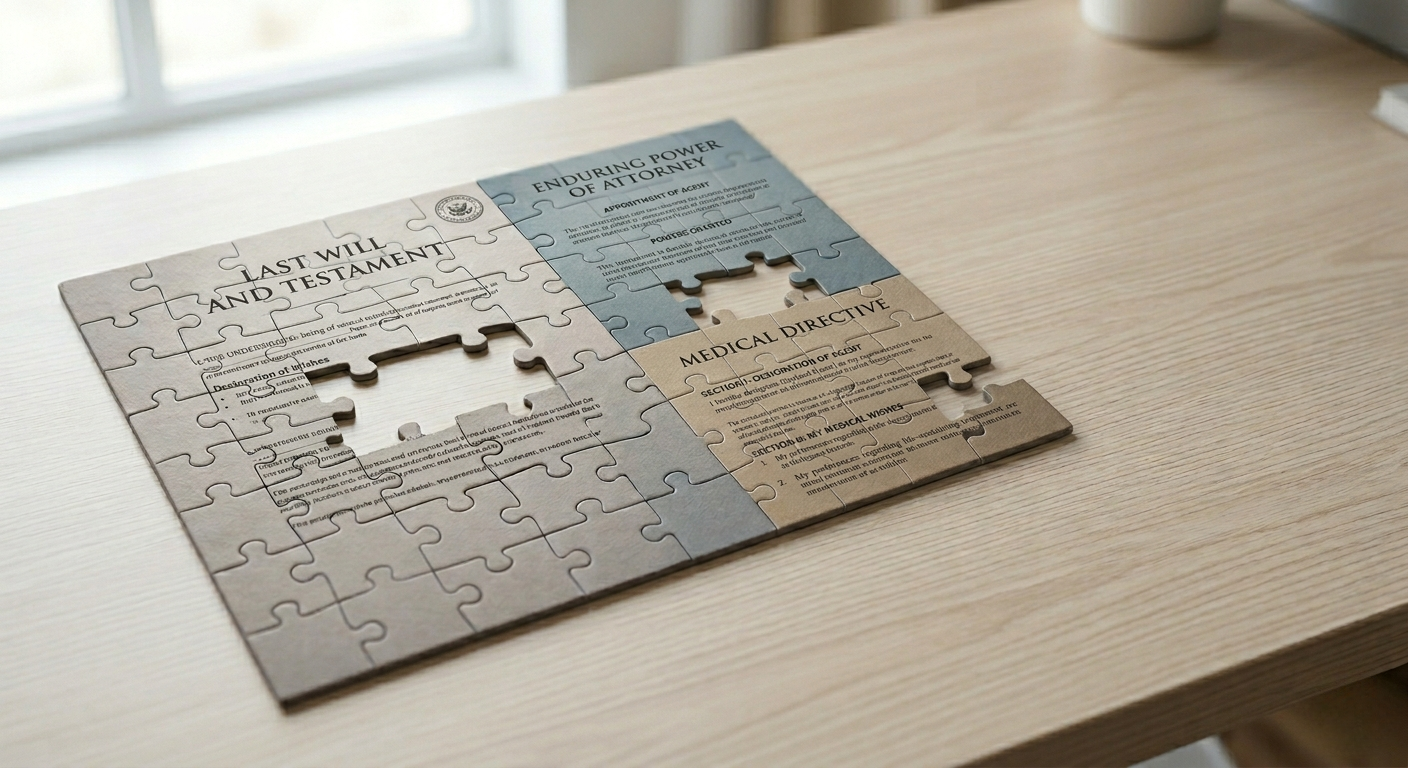
an image of a puzzle showing a will, power of attorney and medical directive with pieces missing

Where Estate Plans Usually Fall Short

There’s a gap in most people’s estate plans, and the frustrating part is that it’s completely avoidable. The even more frustrating part is that when that gap shows up, it’s rarely the person with the incomplete plan who pays the price. It’s the people around them.

That’s what makes this worth talking about.


The Assumption Most People Make

Most people don’t avoid estate planning because they’re irresponsible. They avoid it because life is busy, the conversation is uncomfortable, and there’s always a belief that there’s still time.

So they make assumptions. They assume their spouse will be able to deal with the bank if something happens. They assume their kids will work things out together. They assume the doctors will know who to turn to. And they assume that because a will is signed, the important things are covered.

Those assumptions are understandable. They’re also exactly where things go wrong.


What a Will Actually Does

Here’s what most people don’t realize about a will. It only takes effect after you die. That’s it. That’s all it does.

It doesn’t help if you’re still alive but you’ve had a stroke. It doesn’t help if you’re in hospital and can’t communicate. It doesn’t help if you can no longer manage your finances or make decisions for yourself. In any of those situations, a will does nothing.

That’s where families get caught off guard. They thought the document covered everything, and then life throws something at them that the will was never designed to handle. They discover, often in the middle of enormous stress, that the gap was there all along. And, unfortunately, it is often too late then to make the adjustments to take care of that gap.


The Two Documents That Fill the Gap

So what actually covers those situations? Well, there are two documents that don’t get nearly enough attention.

The first is an enduring power of attorney. This document is called by different names in different jurisdictions, but it’s the document that lets you choose someone to step in and manage your financial and legal matters if you’re no longer able to. Without it, even a devoted spouse or a capable adult child can run into real barriers at exactly the wrong time. Banks, institutions, and legal processes don’t respond to closeness or good intentions. They need authority, and without this document, there isn’t any.

Robert’s Story

When Robert retired at 67, he and his daughter Sandra had an understanding that she’d help manage things if he ever needed it. Two years later, early-stage dementia made that necessary sooner than either of them expected. But without an enduring power of attorney, Sandra had no legal standing to act on his behalf, and Robert was no longer able to create it. What they’d assumed would be a simple handoff turned into a court application process that took months and cost far more than anyone anticipated.

The second document is a personal directive, sometimes called a medical directive. Again, there are different names for this document depending on where you live. This is the document where you name the person who should make personal and healthcare decisions if you can’t make them yourself. It’s also where you can leave guidance about your values and wishes, so the people around you aren’t left guessing about what you would have wanted.

That last part matters more than people realize. When families are already under enormous strain, being asked to make deeply personal decisions without any direction is incredibly hard. A personal directive doesn’t remove the emotion from those situations, but it gives people something to work from. It replaces guesswork with guidance.

Family Conflict

Patricia had always been clear with her husband Tom about her wishes, but those conversations had never been written down. When she was hospitalized unexpectedly at 71, Tom found himself fielding questions from doctors while their adult children pushed for different approaches to her care. Everyone wanted to do right by her. Without a personal directive, no one could agree on what that actually meant.


Incomplete Planning Creates Burden

What’s important to understand is that incomplete planning doesn’t just create inconvenience. It creates burden. It places pressure on the very people you’d most want to protect.

Instead of being able to focus on caring for you, supporting each other, and making decisions, your family can find themselves chasing information, hitting walls, and trying to piece together what should have been made clear in advance. A hard situation becomes even harder when no one knows who has authority, where documents are, or what the plan was meant to be.

That’s not a failure of love or willingness. Families are almost always willing to help. The issue is that willingness and legal authority aren’t the same thing, and without the right documents in place, one doesn’t substitute for the other.

If you’re not sure whether your own plan covers these situations, that’s worth looking at sooner rather than later. It’s a straightforward conversation and the kind of thing I help people work through regularly. Learn more about the services available to support you.


The Part That’s Easy to Put Off

These documents ask people to think about vulnerability. They require us to imagine a time when we might need help, when we might not be able to speak for ourselves, or when we might not be able to manage the practical parts of life the way we always have. It’s much easier to put that off and tell ourselves there’ll be time later.

Sometimes there is. Sometimes there isn’t. And the difference between having these documents in place and not having them can be significant for the people who love you most.

A will remains essential. It just isn’t the whole plan. These other documents speak to what happens if help is needed during life, not just after death. Both matter. Both protect. Both reduce the risk that your family will be left trying to solve problems in real time without direction or authority.

If your planning has focused only on what happens after death, and not on what happens if you need help while you’re still here, there may be more work to do. That’s not a criticism. It’s simply a reminder that estate planning is bigger than most people realize, and that the gap is worth closing before it becomes someone else’s problem to manage.


Visit our services page to see how we can help.

Watch our video here, or watch on our YouTube Channel:

Prefer a podcast? Listen here!

Please send us your questions or share your comments.

Disclaimer: This content is for general information only and is not legal, financial, medical, or tax advice.

Hope Is Not a Strategy: Why a Will Is Not Enough

: Older couple seated at a dining table at home, reviewing paperwork together in a calm conversation about estate planning and decision-making.

Estate Planning Needs More Than Good Intentions

“Hope is not a strategy” is one of those phrases that sticks with you because it’s true.  And it’s especially true in estate planning.

Most people don’t avoid planning because they’re irresponsible. More often, they avoid it because life is full, the conversation is uncomfortable, and there’s a belief that there’s still time. They mean to get to it. They assume the people closest to them will know what to do. They trust that if something happens, things will somehow come together.

That kind of hope is understandable. It’s also where trouble often starts.

In estate planning, hope tends to show up in subtle ways. Someone hopes their spouse will be able to deal with the bank if needed. They hope their adult children will work well together. They hope doctors will know who to turn to. They hope that because a will has been signed, the important things are covered.

But hope isn’t a plan, and it certainly isn’t legal authority.


Brian’s Experience

When Brian’s wife Carol had a stroke at 64, he assumed he could step in and manage their finances while she recovered. They’d been married 38 years. But several accounts were in Carol’s name only, and without an enduring power of attorney, the bank had no legal basis to give him access. The weeks that followed were consumed by urgent legal steps he never anticipated, at a time when his only focus should have been Carol.

A will is important, but it only takes effect after death. It doesn’t help during incapacity. If you’re still alive but unable to manage your finances, understand documents, or communicate medical wishes, a will does nothing to bridge that gap. That’s where many families get caught off guard. They discover, often in the middle of stress, that the document they thought covered everything was never meant to handle the situation they’re actually facing.

That’s why estate planning has to be broader than a will. It has to include the possibility that life may become complicated before life is over.

An enduring power of attorney is part of that broader planning. It allows you to choose who can step in to deal with financial and legal matters if you no longer can. Without it, even a devoted spouse or capable adult child can run into barriers at exactly the wrong time. The issue isn’t usually a lack of willingness. Families are often very willing to help. The issue is that willingness and authority aren’t the same thing.

The same is true of a personal directive or medical directive. This is where you name the person who should make personal or healthcare decisions if you cannot, and where you can leave guidance about your wishes and values. That kind of clarity matters. It doesn’t remove the emotion from difficult situations, but it can prevent people from being left in the dark, trying to make deeply personal decisions without knowing whether they’re honouring your intentions or simply guessing.

Why Clarity Matters

When David’s mother Elaine was admitted to hospital after a fall, the medical team needed someone to direct her care. There was no personal directive and no named decision-maker. David and his sister had different ideas about what their mother would have wanted, and the disagreement was painful for everyone. David later said the hardest part wasn’t the grief. It was never quite knowing if they’d gotten it right.


That’s one of the hardest parts for families. They’re already under strain, and now they’re being asked to interpret silence.

If you already have a will in place, that’s an important start. But if your enduring power of attorney, personal directive, and the practical details around your planning haven’t been reviewed, there may still be gaps that could create unnecessary stress later.

If you’re not sure whether your plan fully covers incapacity, not just what happens after death, this is exactly the kind of gap worth paying attention to. I offer a planning review specifically designed to find those gaps before they become problems. Find out what yours might be missing.


People sometimes treat these documents as if they’re secondary, but they’re not. They’re part of the real structure of a plan. A will speaks to what happens after death. These other documents speak to what happens if help is needed during life. Both matter. Both protect. Both reduce the risk that your family will be left trying to solve problems in real time without authority or direction.

What often gets overlooked is that incomplete planning creates more than inconvenience. It creates burden. It places pressure on the very people you’d most want to protect. Instead of being able to focus on care, support, and decision-making, they can find themselves chasing information, encountering resistance, and trying to piece together what should have been made clear in advance.

That’s why this kind of planning isn’t just about paperwork. It’s about reducing uncertainty. It’s about giving the people around you a clearer path to follow if something changes. It’s about recognizing that a difficult situation becomes even harder when no one knows who has authority, where documents are, or what the plan was meant to be.

There’s also an emotional resistance built into all of this. These documents ask people to think about vulnerability. They require us to imagine a time when we may need help, may not be able to speak for ourselves, or may not be able to manage the practical parts of life in the way we always have. It’s much easier to put that off. It’s much easier to tell ourselves there’ll be time later.

Sometimes there is. Sometimes there isn’t. That’s why hope, by itself, isn’t enough. Hope is a feeling. Planning is a decision.

You can hope your enduring power of attorney is never needed. You can hope your personal directive stays tucked away untouched. You can hope your family never has to step into those roles. But if life takes a turn, it will matter that the documents are there and that someone can act with clarity, confidence, and proper authority.

That’s what good planning does. It doesn’t remove every difficulty, but it does make a hard situation less chaotic. It gives structure to uncertainty. It gives guidance where there might otherwise be confusion. It gives the people around you something stronger than assumption.

A will remains essential. It just isn’t the whole plan. If your planning has focused only on what happens after death, and not on what happens if help is needed during life, there may be more work to do. That’s not a failure. It’s simply a reminder that estate planning is bigger than many people realize.

Because when it comes to incapacity, family responsibility, and decision-making under pressure, hope isn’t a strategy. Preparation is.


Visit our services page to see how we can help.

Watch our video here, or watch on our YouTube Channel:

Prefer a podcast? Listen here!

Please send us your questions or share your comments.

Disclaimer: This content is for general information only and is not legal, financial, medical, or tax advice.


Estate Planning vs Will: Why a Will Alone Isn’t Enough

Estate Planning vs Will: Why a Will Alone Isn’t Enough

The Difference Between a Will and Estate Planning

Many people assume estate planning vs will is the same conversation. After all, a will is often the first (and sometimes only) document people think of when preparing for the future. But here’s the truth: a will, while essential, is only one piece of the puzzle.

A will covers some essential things. It states guardianship for minor or dependent children.  It should state funeral wishes. It tells your executor who should receive your property after debts and taxes are paid.  There is no doubt that a will is important, but it’s also limited. By itself, it represents a “die and distribute” plan: gather up assets, settle obligations, then divide what’s left.

Estate planning is different. It’s broader, more proactive, and addresses not just what happens after death, but also what might happen during life, such as incapacity, blended family dynamic, or business transitions. It provides clarity, protection, and peace of mind in ways a will alone cannot.


The “Die and Distribute” Approach

The term “die and distribute” may sound harsh, but it describes exactly what a basic will does. You pass away, the estate is liquidated or divided, and your beneficiaries receive their share. The law is followed, the paperwork is filed, and the process ends.

But this bare-bones approach doesn’t anticipate the complexities of modern families or the realities of today’s financial world. Executors can be left with unanswered questions, disputes may arise, and costs can mount when guidance is absent.

If your current setup looks a bit like John’s—just a will and not much else—my Legacy Planning Essentials Package is designed to help you take that next step. 


Estate Planning: The Bigger Picture

Estate planning vs will really comes down to scope. A will is a legal tool; estate planning is a process. It looks at your life as a whole: assets, liabilities, relationships, and values. It anticipates issues before they arise and gives your executor (and family) the clarity to manage transitions smoothly.

Estate planning also considers the survivor’s survivor. It’s not just about what happens when the first spouse dies, but about how everything is handled when the last spouse dies. This is often where planning gaps create the most stress for families.

Families with dependents, blended families, or business assets benefit greatly from this level of preparation. My Comprehensive Legacy Package helps families plan beyond “the last to die” scenario. 


Why a Will Alone Falls Short

The estate planning vs will question becomes clear when you consider what a will doesn’t cover. Here are five major gaps:

  • Incapacity: A will is powerless while you’re alive. Without enduring powers of attorney and personal directives, your family may need court approval to act on your behalf.
  • Family Conflict: Dividing assets “equally” doesn’t address emotional attachments. Cottages, farmland, heirlooms, or even business shares can spark disputes.
  • Taxes and Costs: A will doesn’t minimize probate fees or taxes. Proper estate planning can reduce costs and preserve more of your estate for loved ones.
  • Executor Burden: A will tells your executor what to do, but not how to do it. Without consolidated records, account access, and professional contacts, your executor may struggle.
  • Personal Legacy: A will distributes property, but estate planning allows you to pass on values, guidance, and stories.

What a Complete Estate Plan Should Include

A truly effective estate plan goes beyond a single document. It brings together several key pieces that work in harmony to protect your assets, guide decision-making, and support your loved ones when they need it most. Below are the core elements every complete estate plan should include.  Together, they create clarity and confidence for both you and your executor.

  • A current will tailored to your situation
  • Enduring powers of attorney
  • Healthcare directives and decision-maker clarity
  • Up-to-date beneficiary designations
  • Trusts (for minors, dependents with special needs, or tax/privacy goals)
  • Business succession documentation
  • Digital legacy planning (accounts, logins, crypto, social media)
  • Personal legacy documents (letters of wishes, ethical wills)
  • A consolidated information kit for your executor

Two Different Outcomes

The real power of estate planning becomes clear when you compare families who rely on a simple will with those who prepare a broader plan. The difference isn’t just about money; it’s about relationships, time, and stress. Consider how two similar families faced very different outcomes with the same type of asset: the family cottage.


Bottom Line

A will is necessary, but it’s not sufficient. Estate planning vs will isn’t about choosing one or the other, it’s about recognizing that a will is just one part of a much bigger plan. Without estate planning, families can face avoidable delays, costs, and conflict. With it, they gain clarity, protection, and peace of mind.

The truth is, every family’s situation is unique. The right plan balances legal, financial, and personal considerations in a way that a will alone simply can’t. If you’re not sure where to start, or if you want to make sure your loved ones won’t be left with gaps and guesswork, guidance can make all the difference. Reach out today, and let’s take the next steps together.


Visit our services page to see how we can help.

Watch our video here, or watch on our YouTube Channel:

Prefer a podcast? Listen here!

Please send us your questions or share your comments.

Disclaimer: This content is for general information only and is not legal, financial, medical, or tax advice.


YouTube
YouTube
LinkedIn
LinkedIn