Six Questions to Measure Your Brand

measure your brand

How is your brand perceived?

Presenting a unified brand – one that resonates with clients and prospects – is perhaps the number one element that will determine the success or the failure of your business.

As mentioned in previous articles, a brand is so much more than simply a logo. Your brand should define your company; what it represents, the guiding principles, and how you do business. It is a combination of colors, logo, and a clear representation of your core values.

When considering your brand, consider these following six questions to ensure an accurate depiction of your business.

1. How do clients and perspective clients perceive your company?

This is perhaps one of the most important factors. How your clients and prospects perceive your company will determine their interest in doing business with you.

2. What words would they use to describe you?
From time to time, ask your clients how they would describe your company. Also, you could consider an online poll to reach prospective clients and gauge their response.

3. Do those words match the way you want to be perceived?

Once you have the feedback from your clients and prospects about how they describe your company, compare their responses to what your intention is with your brand.

4. Does your brand appear trustworthy?

More and more, business is being done online. You must be sure that your brand is able to convey that you are trustworthy. But also remember that your off-line presence is just as important, so be sure to develop your brand to show authority and that your company can be trusted.

5. Would they recommend you?

One of the most important ways of marketing is that of word-of-mouth. Aside from the fact that it is the least expensive type of marketing, it is also more likely to create a better relationship with new clients due to the implied trust from the person who is recommending you. When reviewing your brand, engage your clients and ask them if they would consider recommending your business.

6. What do they like and dislike about the way you present your product or service?

Another key question that will help develop a strong, trustworthy brand is to ask your clients what they like-or don’t like-about how you are presenting your products or services in the marketplace. People like to do business with “winners”, so determining how you are seen through the eyes of your clients is critical.

Whether you are just starting your business or re-branding your business, keep these six questions in mind to help develop an identity that has strength and authority.

Until next time…

Are you ready to grow your business now? If you’re ready to take the next step and make your business more profitable, contact us today.

If you like the information you are receiving, please consider forwarding this post.

Do This To Ensure You Fail!

fail

No one sets out to fail – or do they?

Recently, I had a conversation with a colleague of mine. We are both in the marketing field, and so we typically discuss various issues that come up with our clients. This type of sharing has the benefit of bringing in a fresh set of eyes on the situation, often helping to determine a new approach to a given issue.

Now, in the interests of respecting and maintaining privacy for both my colleague and his client, certain circumstances in the following story will be altered.

But the essence and the lesson remain the same.

This client approached my colleague with a relatively simple project about two or three months ago. There was a fairly tight budget involved for a specific scope of work to be undertaken to complete his part of the project.  Over time, this project has ballooned in size and scope, but the budget has failed to increase at the same pace.

The changes to the project are not unusual or unreasonable, and in all likelihood could develop into an even better final product. The problem with the changes is that they are just being thrown out there, apparently on a whim.

When this project was first brought to my colleague’s attention, it seemed to have a clearly defined purpose and budget. However, now it seems as though whatever the project lead dreams about suddenly becomes part of the project.

This approach to marketing is doomed!

I’ve written in the past about what I term “ad hoc” marketing; its problems and its pitfalls. And what is happening with this project is a prime example of ad hoc marketing.

Too often, business owners are quick to say that marketing doesn’t work, or it doesn’t give them a proper return on investment. And while there are certainly some unscrupulous marketers, just as there are unscrupulous people in every line of work, it’s important that these business owners take responsibility when the failures rest on their shoulders.

No marketing campaign will ever work without first developing a proper marketing strategy. What is your budget? Who is your audience? What is your timeline? What is your message?

Sometimes, of course, things can change as a project gets underway. There is absolutely nothing wrong with changing your strategy if you find that circumstances have changed. But again, you don’t throw out your original marketing strategy and run with whatever idea crosses your mind at the moment. Stop and look at what remains beneficial in your original strategy and plan appropriately to incorporate the changes.

Whether you run a large corporation or are a one-man show, you will never obtain the results you want if you do not take a strategic approach to your marketing.

Until next time…

Are you ready to grow your business now? If you’re ready to take the next step and make your business more profitable, contact us today.

If you like the information you are receiving, please consider forwarding this post.

Fear Of Failure – Or Success – Podcast

fear of failure

Fear of the unknown is normal – and healthy!

But don’t let it paralyze you…

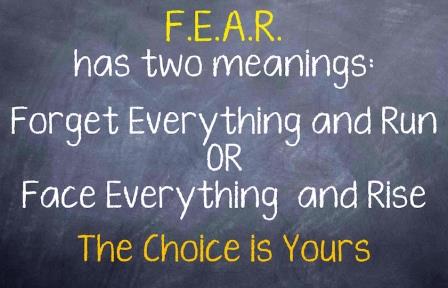
Many people have great business ideas, but allow their fears to stop them from acting.  And, strangely enough, fear of success can be as detrimental as fear of failure.

Today we are offering our final installment in Entrepreneur Series as a podcast.

Don’t have time to watch the webcast?  No problem – download the podcast and take it with you.

Listen here or download our podcast:


Until next time…

Are you ready to grow your business now? If you’re ready to take the next step and make your business more profitable, contact us today.

If you like the information you are receiving, please consider forwarding this post.

Fear Of Failure – And Success!

fear of failure

What’s holding you back?

Do you have fear of failure – or a fear of success?

Did you know that those issues are actually one and the same?

Today, we’re posting the final installment of our Entrepreneur Series. In this webcast, we discuss how fear of failure/success can hold you back from achieving your goals.

Join our webinar to see how to overcome these issues and help your business flourish.

Watch our video here, or watch on YouTube.


Until next time…


Are you ready to grow your business now? If you’re ready to take the next step and make your business more profitable, contact us today.

If you like the information you are receiving, please consider forwarding this post.

How To Make Your Hobby A Business

How To Make Your Hobby A Business

If you do what you love, you’ll never work a day in your life.

Now, I know that you have heard that quote before.  It’s attributed to Marc Anthony, and it is so true!

Today, we’re posting the fifth installment of our Entrepreneur Series entitled “Turn Your Hobby Into A Business”.

Join our webinar and see how you can make your hobby your business.

Watch our video here, or watch on YouTube.

Until next time…

Are you ready to grow your business now? If you’re ready to take the next step and make your business more profitable, contact us today.

If you like the information you are receiving, please consider forwarding this post.

Why You Need A Business Plan – Part 2

why you need to create a business plan

“If you fail to plan, you are planning to fail!”

This quote is attributed to Benjamin Franklin.  And it still proves to be true.

Today, we’re posting the fourth installment of our Entrepreneur Series, Part 2 of the discussion on why you need a business plan.

Join us now as we continue our discussion about why you need to create a business plan and why it is so critical to your success.

Watch our video here or watch on YouTube.

Until next time…

Are you ready to grow your business now? If you’re ready to take the next step and make your business more profitable, contact us today.

If you like the information you are receiving, please consider forwarding this post.

Why You Need A Business Plan – Part 1

why you need a business plan

Do you have a business plan for your business?

It’s been about a month since we posted a link to the Entrepreneur Series that we are working on with Frank Thomas, of the Small Business Tips Show.

Today, we’re posting the third installment of this series, and it’s all about a business plan.

When recording the webcast on this topic, Frank and I quickly discovered that it is a topic that requires a lot of depth and a lot of discussion. Rather than just skipping over some high points, we decided to create a two-part series.

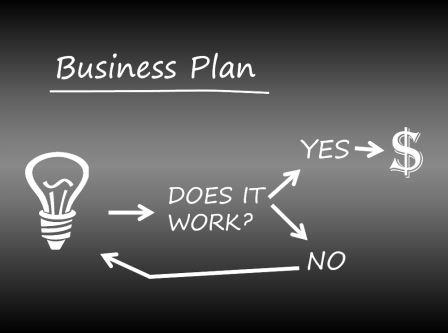
Now, I know there’s been some talk lately about whether you actually need a business plan or not. But, call me old-fashioned, I still maintain that your business plan provides the foundation upon which your business is constructed.

So check out part one now…and stay tuned. We’ll be posting part two in a couple of days.

Watch our video here, or watch on YouTube.

Until next time…

Are you ready to grow your business now? If you’re ready to take the next step and make your business more profitable, contact us today.

If you like the information you are receiving, please consider forwarding this post.

Hate Cold Calling? Try these strategies…

cold calling

The rumors that the days of cold calling are over are grossly exaggerated.

The truth is, cold calling is still an integral part of sales.

Regardless of whether you’re approaching your prospects via email, direct mail, or picking up the phone and calling them, you have to keep reaching out to new people all the time in order to grow your business. It may be cleverly disguised, but under the mask, it’s still cold calling.

I have met very few people who actually enjoy making cold calls. In fact, it can be the bane of any business owner – and often is! Those folks who embrace cold calling, and indeed make it into an art form, are few and far between.

But then there’s the rest of us.

I freely admit that I struggle with the cold call. Yes, I know it is something that we all must do. And, once I start making the calls, I always question why I suffered from call reluctance. I have almost never encountered anyone who treated me rudely, so what are we afraid of?

I suspect that the answer to this lies in the psychology of human nature. We all desire acceptance, and we all fear rejection. And these emotions reside in our subconscious. Therefore, we build up a resistance to reaching out to strangers, especially if we are representing a product or service that can be rejected. When the recipient of our cold calling effort declines our product or service, we tend to take it personally, as though we were being rejected rather than recognizing the fact that the prospect is simply turning down our offer.

So instead of fearing the cold call, we have to learn to embrace it. 

At minimum, you are creating more exposure for your business, and in the best case scenario, you are actually gaining a client.

We have to change the way we look at the cold call, as well as the delivery mechanisms. You can’t simply send the same message over and over again, asking them to buy your product or service. Remember that your prospect is being approached by many people every day to purchase their products or services. So, how do you position yourself to stand apart from the others?

The simple answer is to provide them with something that no one else is: value!

Continuing to ask prospects to meet with you or to buy your product or service doesn’t automatically translate to providing value. Buying decisions are almost always made based on emotions. We’ve heard it before, but the reality is that people will buy from you either because you have a unique product or service, or – most often – you are resolving a problem for them.

So, why not try a new approach? Why not provide a free resource that is of value to your prospect? This will open the lines of communication as well as differentiate you from your competitors.

Why not try…

• sending your prospect an article, website or an e-book that is applicable to their needs
• call your prospect or email them to offer an idea or suggestion
• invite a prospect to an event
• offer to make an introduction or introduce them to someone they should be connected with

By giving something to your prospects, with no strings attached, they will begin to understand that you are looking to provide them with of value, not just land a sale.

Of course, we all have to earn a living and no one has the right to expect something for nothing all the time. So provide value to your prospects to build trust, but remember that the goal is to lead them to becoming your client.

The key is to make your message valuable enough that the prospect will hear you out.

Until next time…

Are you ready to grow your business now? If you’re ready to take the next step and make your business more profitable, contact us today.

If you like the information you are receiving, please consider forwarding this post.

Choosing The Right Social Media Platform

social media

In our last article, we discussed how technology and social media have changed the way we communicate and how we market our businesses.

As technology evolves, the way we communicate also evolves, and social media is a prime example of this.

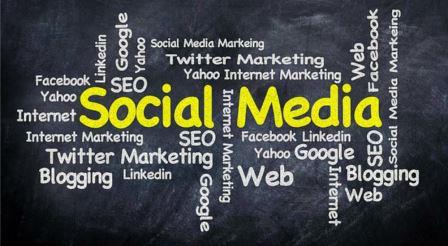
It appears that social media continues to be a popular choice for businesses, as it has proven itself to be a highly effective way to reach prospects. So now, more than ever, it’s important to position your business through at least one social media platform.

A recent study showed that as of January 2016, over 70% of folks in the United States had at least one social media profile. And it’s predicted that by 2018, the number of worldwide users will increase from 2.1 billion users to 2.5. Currently, Facebook claims over 1 ½ billion active monthly users, with YouTube posting and even 1 billion, an Instagram claiming 400 million.

Clearly, with the number of people on the various social media platforms, it only makes sense for you to ensure that your business is connected to at least one of these platforms.

Which raises the question – what platform, or platforms should you be on?

It doesn’t make sense, from a time or budget perspective, to choose too many platforms or to choose them randomly.

What is it that your company does? The social media platforms that your company should be on depends on your niche, as well as your target audience. Are you B2B, or B2C? Does your product or service lend itself to images? If so, an application such as Pinterest, Instagram, or Facebook would be a good choice or your business. On the other hand, if you specialize in a specific product or service selling to other companies, an application like LinkedIn would make more sense.

One of the advantages of using social media to reach your target audience is that it is relatively inexpensive. There are a number of free tools out there, such as HootSuite, that can help you schedule updates and posts to your social media platforms, allowing you to create content for posting ahead of time. Of course, these applications also have premium versions at a cost, depending on your requirements. There are also several companies that will manage and monitor your social media on your behalf, but unless social is a big part of your final, you should be able to manage this yourself, at least in the early days.

One of the biggest issues with social media is that, although it has become more and more integrated into our lives, it is still very difficult for businesses to measure their return on investment, or ROI.

My response to this issue is that you have to be clear with social media marketing, just like every other type of marketing, what exactly it is that you are looking to measure. What is your goal? Is your intent to use these social media platforms to drive website traffic, develop broader exposure for your business, or are you looking to make sales through the platform?

Social platforms are equipped to provide you with analytics. You can find out how many people have been exposed to your posts, how they are responding to them, as well as how many people are clicking on your website links. By taking a look at the analytics, you can find out what is the best time of day to post to reach your target audience, as well as which platforms are performing the best for you.

Be sure that if you take the time to develop social media profiles for your business that you do not waste that effort by ignoring those channels. Create a calendar, or at least make a commitment to post on a regular basis. Whether it is once a week or twice a day, be sure that you commit to this schedule and maintain it. Your followers and prospects will begin to anticipate your posts, and your audience will grow.

Also, remember that social media is about being social, not just about your own products and services. Be sure to interact with the people you are attracting to your platforms, and include posts that will be of interest to your followers, even if they are unrelated to your business.

Creating your social media profiles may be free, but remember that, just like everything else, there is still a cost attached. In order to be effective, you’ll have to invest some time and perhaps a bit of money into it to make sure that you are not wasting your efforts.

Until next time…

Are you ready to grow your business now? If you’re ready to take the next step and make your business more profitable, contact us today.

If you like the information you are receiving, please consider forwarding this post.

Find Your Niche And Stick To It!

niche

I had a few different topics I was considering for my post today, but then a conversation with a colleague clarified my decision.

Everybody talks about the importance of finding your niche. But often, this is simply a phrase that is thought of in generalities rather than specifics.

Many people consider that finding their niche translates to deciding what area of business to work in. And yes, this is the definition of a niche.

But how you work with your niche goes much deeper than the basic definition.

To get to my point, let’s take a brief look back.

As many of you know, I have been working in the marketing field for over 30 years. And a lot has happened over these 30 years. When I started marketing, there was no internet or online marketing. Then, in the early 90s, the internet became accessible to most people, and by the mid-90s folks were starting to recognize the untapped potential of utilizing this technology to help market their products and services to an audience that was very difficult, if not impossible, to reach in the past.

As we all know, the era of internet marketing was upon us and opportunities exploded. Then, in the 2000s, social entered the scene. Suddenly there were even more ways to interact with prospects and clients, often in real time.

But successful marketing doesn’t lie in any one delivery mechanism. Sorry, but there is no magic bullet.

So let’s get back to the present and the topic at hand – finding your niche.

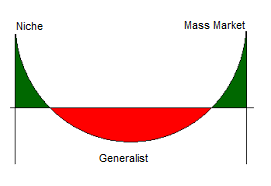
In the 80s and 90s, as things were evolving, there was a strong demand for people to become generalists. Due to the fact that internet marketing was a new, untapped, and unknown resource, people had to educate themselves about this new technology. As a result, marketers became resources who knew a little bit about a lot within the emerging and transitioning workspace.

To some degree, this persisted into the early 2000’s, as social platforms evolved and became opportunities for brands to interact with their clients and prospects.

But now it would appear that the pendulum has swung back. The era of the generalists seems to have passed, and now more than ever, it is important to identify and stick to your area of expertise.

The internet and new technology have created the opportunity for the global marketplace to be right outside your door. We have access to information that has been unparalleled in its growth and its reach. As I often say, we now live in a world where answers exist at the click of a mouse.

Therefore, in a sense, we have all become generalists. We can research everything from how to build a lamp to medical sites to help identify health issues.

So now, any of us can learn how to do nearly anything. But just because we read it on the internet does not make us an expert in that area.

Medical sites are great for researching and finding answers to questions you may have about your health, but to self-diagnose can be harmful to your health. It’s still important that you see the expert – a medical professional – to accurately diagnose and treat any symptoms you may have. And the same is true of every other market.

So find your niche. Stick to what you know; stick to your area of expertise, and create trusted alliances with those who support your niche. Stay true to your path and you won’t lose your way.

Until next time…

Are you ready to grow your business now? If you’re ready to take the next step and make your business more profitable, contact us today.

If you like the information you are receiving, please consider forwarding this post.

YouTube
YouTube
LinkedIn
LinkedIn