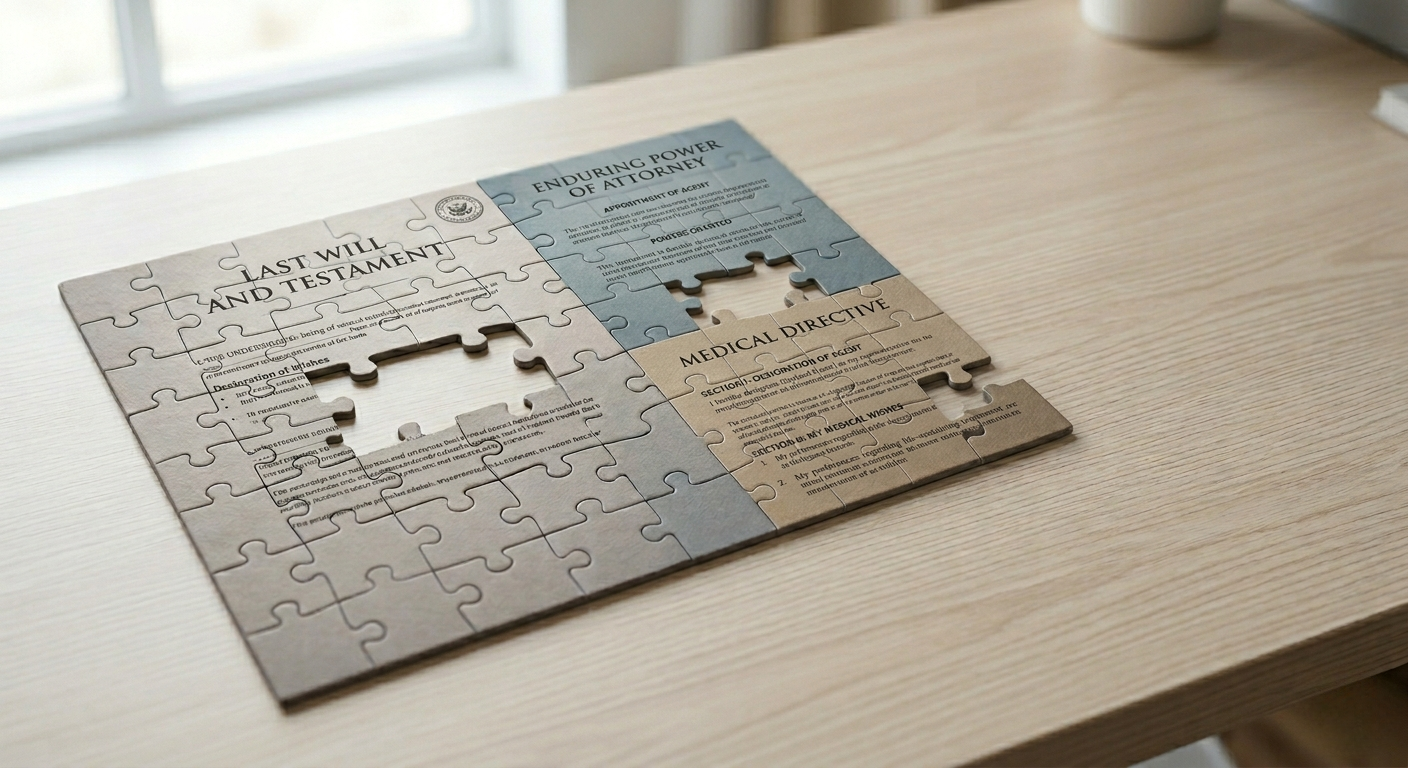
Where Estate Plans Usually Fall Short
There’s a gap in most people’s estate plans, and the frustrating part is that it’s completely avoidable. The even more frustrating part is that when that gap shows up, it’s rarely the person with the incomplete plan who pays the price. It’s the people around them.
That’s what makes this worth talking about.
The Assumption Most People Make
Most people don’t avoid estate planning because they’re irresponsible. They avoid it because life is busy, the conversation is uncomfortable, and there’s always a belief that there’s still time.
So they make assumptions. They assume their spouse will be able to deal with the bank if something happens. They assume their kids will work things out together. They assume the doctors will know who to turn to. And they assume that because a will is signed, the important things are covered.
Those assumptions are understandable. They’re also exactly where things go wrong.
What a Will Actually Does
Here’s what most people don’t realize about a will. It only takes effect after you die. That’s it. That’s all it does.
It doesn’t help if you’re still alive but you’ve had a stroke. It doesn’t help if you’re in hospital and can’t communicate. It doesn’t help if you can no longer manage your finances or make decisions for yourself. In any of those situations, a will does nothing.
That’s where families get caught off guard. They thought the document covered everything, and then life throws something at them that the will was never designed to handle. They discover, often in the middle of enormous stress, that the gap was there all along. And, unfortunately, it is often too late then to make the adjustments to take care of that gap.
The Two Documents That Fill the Gap
So what actually covers those situations? Well, there are two documents that don’t get nearly enough attention.
The first is an enduring power of attorney. This document is called by different names in different jurisdictions, but it’s the document that lets you choose someone to step in and manage your financial and legal matters if you’re no longer able to. Without it, even a devoted spouse or a capable adult child can run into real barriers at exactly the wrong time. Banks, institutions, and legal processes don’t respond to closeness or good intentions. They need authority, and without this document, there isn’t any.
When Robert retired at 67, he and his daughter Sandra had an understanding that she’d help manage things if he ever needed it. Two years later, early-stage dementia made that necessary sooner than either of them expected. But without an enduring power of attorney, Sandra had no legal standing to act on his behalf, and Robert was no longer able to create it. What they’d assumed would be a simple handoff turned into a court application process that took months and cost far more than anyone anticipated.
The second document is a personal directive, sometimes called a medical directive. Again, there are different names for this document depending on where you live. This is the document where you name the person who should make personal and healthcare decisions if you can’t make them yourself. It’s also where you can leave guidance about your values and wishes, so the people around you aren’t left guessing about what you would have wanted.
That last part matters more than people realize. When families are already under enormous strain, being asked to make deeply personal decisions without any direction is incredibly hard. A personal directive doesn’t remove the emotion from those situations, but it gives people something to work from. It replaces guesswork with guidance.
Patricia had always been clear with her husband Tom about her wishes, but those conversations had never been written down. When she was hospitalized unexpectedly at 71, Tom found himself fielding questions from doctors while their adult children pushed for different approaches to her care. Everyone wanted to do right by her. Without a personal directive, no one could agree on what that actually meant.
Incomplete Planning Creates Burden
What’s important to understand is that incomplete planning doesn’t just create inconvenience. It creates burden. It places pressure on the very people you’d most want to protect.
Instead of being able to focus on caring for you, supporting each other, and making decisions, your family can find themselves chasing information, hitting walls, and trying to piece together what should have been made clear in advance. A hard situation becomes even harder when no one knows who has authority, where documents are, or what the plan was meant to be.
That’s not a failure of love or willingness. Families are almost always willing to help. The issue is that willingness and legal authority aren’t the same thing, and without the right documents in place, one doesn’t substitute for the other.
If you’re not sure whether your own plan covers these situations, that’s worth looking at sooner rather than later. It’s a straightforward conversation and the kind of thing I help people work through regularly. Learn more about the services available to support you.
The Part That’s Easy to Put Off
These documents ask people to think about vulnerability. They require us to imagine a time when we might need help, when we might not be able to speak for ourselves, or when we might not be able to manage the practical parts of life the way we always have. It’s much easier to put that off and tell ourselves there’ll be time later.
Sometimes there is. Sometimes there isn’t. And the difference between having these documents in place and not having them can be significant for the people who love you most.
A will remains essential. It just isn’t the whole plan. These other documents speak to what happens if help is needed during life, not just after death. Both matter. Both protect. Both reduce the risk that your family will be left trying to solve problems in real time without direction or authority.
If your planning has focused only on what happens after death, and not on what happens if you need help while you’re still here, there may be more work to do. That’s not a criticism. It’s simply a reminder that estate planning is bigger than most people realize, and that the gap is worth closing before it becomes someone else’s problem to manage.
Visit our services page to see how we can help.
Watch our video here, or watch on our YouTube Channel:
Prefer a podcast? Listen here!
Please send us your questions or share your comments.
Disclaimer: This content is for general information only and is not legal, financial, medical, or tax advice.