I’ll Be Dead Anyway

An older man looking pensively outside with an image of his children, indicating choices of his estate gifts

He Told Me Three Things. Every One of Them Was Wrong.

Marcel isn’t an unreasonable man. He has a will. He’s thought about what happens when he dies, at least enough to put something on paper. He loves his five kids. He’s been married a long time, even if the marriage hasn’t been easy.

So when I mentioned that his will leaves everything to his spouse with no direction about personal property and suggested a family conversation might be worth having, I wasn’t prepared for how quickly he closed the door.

He said three things. I’ve heard all three before, more times than I can count.

“I’ll be dead. It won’t be my problem.”

“I know my kids. They won’t fight over anything.”

“After I’m gone, if she wants to deal with it, that’s up to her.”

Each one sounds reasonable. Each one is actually a decision, dressed up as indifference. And together, they’re setting up exactly the kind of situation Marcel believes he’s avoiding.


“I’ll be dead. It won’t be my problem.”

This one is technically true and practically useless.

Marcel won’t be there. He won’t witness the disagreement over who gets the dining room table, or the tools in the garage, or the watch he wore every day for thirty years. He won’t be there when two of his children feel like they deserved more clarity, or when one of them walks away from a family gathering feeling like something was taken from them.

But here’s what he will have done. He’ll have made a choice. Not choosing is still choosing. Leaving no direction about personal property, no expressed wishes, no conversation on record, is a decision that gets made by default. It just gets made by other people, under pressure, while they’re grieving.

The question isn’t whether it will be Marcel’s problem. It won’t be. The question is whose problem it becomes, and whether he’s comfortable with that.

Most people, when they think that through, aren’t as comfortable as they thought.


“I know my kids. They won’t fight over anything.”

Marcel probably does know his kids. But there’s a version of his kids he’s never met.

He hasn’t met them at sixty, navigating their own financial pressures, their own marriages, their own histories with each other that have accumulated over decades. He hasn’t met them grieving, operating without the one person who could clarify what he meant or what he wanted. He hasn’t met them negotiating with a spouse who is now the sole legal owner of everything, trying to figure out how to advocate for themselves without causing a rift.

Research backs this up in a way that surprises most people. Estate attorneys report that more than half of the disputes they see involve items that represent less than ten percent of the estate’s total value. Not the money. The stuff. The lamp. The jewellery. The photograph albums. The things that have no market value and enormous emotional weight.

Those disputes aren’t about greed. They’re about what the object means, and about old dynamics that were manageable when the parent was alive and become unmanageable when they’re not.

Marcel’s kids might be fine. Plenty of families navigate this well. But “I know my kids” isn’t a plan. It’s a hope. And hope isn’t the same thing as having the conversation.

When Sylvie’s father passed away

Sylvie and her three brothers had always gotten along. Their father was confident they’d divide things fairly, and he said so often. What he never said was who should get his coin collection, or the fishing gear, or the hand-built bookshelf that had been in his study for forty years. Within six weeks of his death, Sylvie had stopped speaking to her oldest brother. Not over money. Over the bookshelf. It was not about the bookshelf.


“If she wants to deal with it, that’s up to her.”

This one sounds like generosity. It isn’t.

When Marcel’s will passes everything to his spouse, she becomes the legal owner of everything in that estate. Every piece of furniture. Every tool. Every item with sentimental value to one or more of his five children. What she does with those things is entirely up to her. She has no legal obligation to honour anything Marcel said out loud, any promises made at the kitchen table, any understanding his children may have about what was meant for them.

She may handle it beautifully. She may distribute things exactly as Marcel would have wanted. But Marcel has given her that task with no roadmap, no expressed wishes on record, and a family that includes members who may find it hard to advocate for themselves without feeling like they’re creating conflict.

That’s not a small thing. That’s a significant amount of pressure placed on one person, at one of the hardest moments of her life, with five different sets of expectations she may or may not know about.

“She can deal with it” assumes she knows what to do. It assumes she knows what Marcel would have wanted. It assumes the children will trust her judgment and accept the outcome. Those are a lot of assumptions for a plan that has nothing written down.


What Marcel Could Do Instead

None of this requires a lawyer, though updating a will to include specific bequests of personal property is worth discussing with one. What it requires is a willingness to have the conversation while he still can.

That conversation doesn’t have to be formal or a big deal. It can start with something as simple as walking through the house and making note of what matters and who it matters to. It can include a written record of his wishes, even an informal one, so that his spouse and his children have something to refer to. It can include a direct conversation with his kids about what he wants for them and what he’s hoping they’ll do for each other.

The goal isn’t to predict every conflict. It’s to remove as many ambiguities as possible, so the people he loves aren’t left filling in the blanks under the worst possible circumstances.

If you’re not sure where to start, The Prepared Estate™ brings together two tools designed for exactly this stage of planning. Estate Architect™ walks you through the decisions that shape your estate plan, and In Plain Sight™ helps you organize and document the personal records, accounts, and assets your family will need to find. Together, they give your executor, your spouse, and your children something to work with. You can find it at https://agapimarketing.com/planning-toolkit/


Marcel isn’t a bad planner. He’s a very common one. He’s done enough to feel like he’s handled it, without quite doing enough to actually handle it. That gap is where most estate problems live.

The good news is that gap is entirely closeable. But only while he’s still here to close it.


Visit our services page to see how we can help.

Watch our video here, or watch on our YouTube Channel:

Prefer a podcast? Listen here!

Please send us your questions or share your comments.

Disclaimer: This content is for general information only and is not legal, financial, medical, or tax advice.

The Divorce Problem in Your Estate Plan

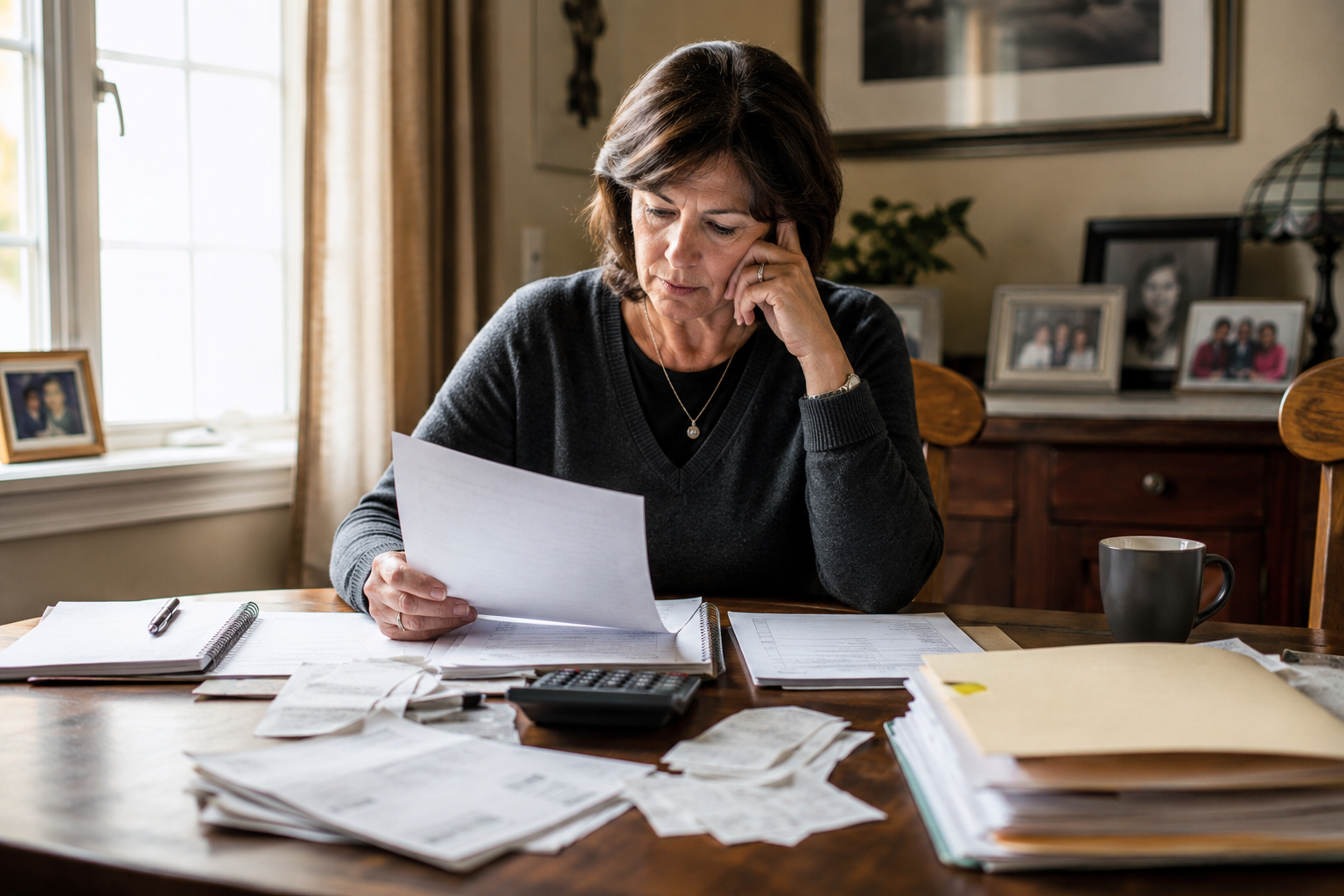
A woman reviews estate planning documents at a desk while two people in conflict are visible in the background, representing the intersection of inheritance and divorce.

What Happens to an Inheritance If Your Child Is Divorcing?

Most estate plans are written with a simple assumption: assets move from parent to child, and from there, life takes its course.

But life doesn’t stay simple. One of the most overlooked complications in estate administration is what happens when a beneficiary child is in the middle of a separation or divorce when an inheritance arrives.

It raises difficult but practical questions. Does the inheritance stay protected? Can an ex-spouse make a claim? And what should an executor do when the timing of distribution collides with a family breakdown?

These aren’t rare scenarios anymore. They’re becoming part of routine estate administration conversations.


Can a Child’s Ex-Spouse Claim an Inheritance?

In general terms, an inheritance received by one spouse is usually considered separate property, meaning it’s not automatically subject to division on separation or divorce.

But that protection depends heavily on what happens after the inheritance is received.

The legal principle is clear. The practical reality is not.

An inheritance can lose its protected status if it becomes mixed with family or marital property, and this often happens without any intention to blur ownership lines. A beneficiary deposits inherited funds into a joint account for convenience. Inheritance money pays down a shared mortgage or covers shared expenses during separation. Funds get invested into jointly owned assets with no written record separating them from marital property.

Once inheritance funds are mixed with shared assets, tracing them becomes difficult. In some cases, the inherited value can be considered part of the overall property division during separation. Even when the original inheritance is excluded, growth or assets purchased with those funds may still become part of the financial dispute.

The key issue isn’t whether an inheritance is theoretically protected. It’s whether it remains clearly identifiable in practice.


Why Timing Matters in Estate Administration

When a parent passes away, the timing of distribution can become critical if a child is already separated or in divorce proceedings.

Executors often assume their role is purely administrative: follow the will, distribute the assets, and close the file. But when a beneficiary is in the middle of family law proceedings, the timing of that distribution can influence how the inheritance is treated in negotiations between spouses.

If funds are distributed directly to a beneficiary before their separation is finalized, those funds may enter the financial picture being divided. On the other hand, delaying distribution without proper legal justification can create its own tension and disputes within the estate.

Executors aren’t expected to resolve family law matters. But they do need to recognize when a standard distribution may carry unintended consequences.


Why Executors Need to Be Cautious

Executors are often placed in a difficult position when a beneficiary is separating or divorcing. They may receive requests from the beneficiary to distribute funds quickly, informal notices from family law counsel, pressure from other family members to proceed without delay, and real uncertainty about whether funds should be held temporarily.

The challenge is that executors aren’t decision-makers in the family law process. But their actions can still have consequences outside the estate file. A standard payout made without awareness of a beneficiary’s legal situation can unintentionally expose assets to division in divorce proceedings.

In some cases, executors choose to hold funds in trust or seek legal direction before distributing. This isn’t about overstepping authority. It’s about avoiding unnecessary exposure of estate assets to external disputes.

When a Routine Distribution Becomes Complicated

When Ted passed away, he left an equal inheritance to his two adult children. His son Marcus was in the early stages of separation, but no one had informed the executor of any formal legal proceedings. The executor proceeded with a direct payout into Marcus’s personal account. Within weeks, those funds appeared in financial disclosure documents during the separation process. While the inheritance itself wasn’t automatically divisible, it had entered the broader financial picture because it hadn’t been kept separate or documented clearly. What began as a routine distribution became part of a contested financial disclosure process.


Planning for Real-Life Conditions, Not Ideal Ones

If you’re thinking about how your estate plan would hold up in situations like these, the key question isn’t just who inherits. It’s how that inheritance is protected once it leaves your estate.

The decisions you make before you sit down with a lawyer shape what your plan can actually do. If you want to think through those decisions more carefully, The Will Blueprint™ is a good place to start. It’s designed to help you work through the key choices before your legal appointment, so your will reflects what you actually intend, including how distributions are structured when family circumstances are anything but simple.

You can find it, along with the full suite of estate planning and executor resources, here: agapimarketing.com/planning-toolkit/


Why This Topic Is Often Missed in Estate Planning

Estate planning discussions tend to focus on wills, taxes, and asset distribution. Far less attention is given to what happens after an inheritance lands in the hands of a beneficiary who’s going through a relationship breakdown.

Yet this is where many unintended outcomes occur. The risk usually isn’t poor drafting. It’s that estate plans assume stability at the exact moment when stability may not exist.

A child may be separating at the time of death, finalizing a divorce shortly after distribution, or navigating new financial arrangements while grief and legal processes overlap. In these situations, even well-structured estate plans can produce outcomes that differ from what the parent expected.


What Parents Can Do Differently

No estate plan can control every future life event, but there are ways to reduce exposure and confusion.

It’s worth considering whether outright lump-sum distributions make sense in all circumstances, or whether trusts or staged distributions would provide more stability when a beneficiary’s situation is uncertain. Clarity matters too: the more identifiable inherited assets are after transfer, the easier they are to protect. Updating documents when family circumstances change closes the gap between what’s written and what’s real. And communicating your intentions clearly can reduce the assumptions that tend to lead to conflict.

The goal isn’t to control beneficiaries. It’s to reduce the chance that an inheritance becomes part of a legal process it was never intended to enter.


Final Thought

Inheritance doesn’t stop being vulnerable once it’s distributed. It simply moves into a different environment where relationships, timing, and financial behaviour determine what happens next. When a child is going through separation or divorce, that environment becomes more complex.

For parents and executors, the real question isn’t only what the estate plan says. It’s whether it still works when life is already in motion.

That’s where thoughtful planning makes the difference between intention and outcome.


Visit our services page to see how we can help.

Watch our video here, or watch on our YouTube Channel:

Prefer a podcast? Listen here!

Please send us your questions or share your comments.

Disclaimer: This content is for general information only and is not legal, financial, medical, or tax advice.

YouTube
YouTube
LinkedIn
LinkedIn