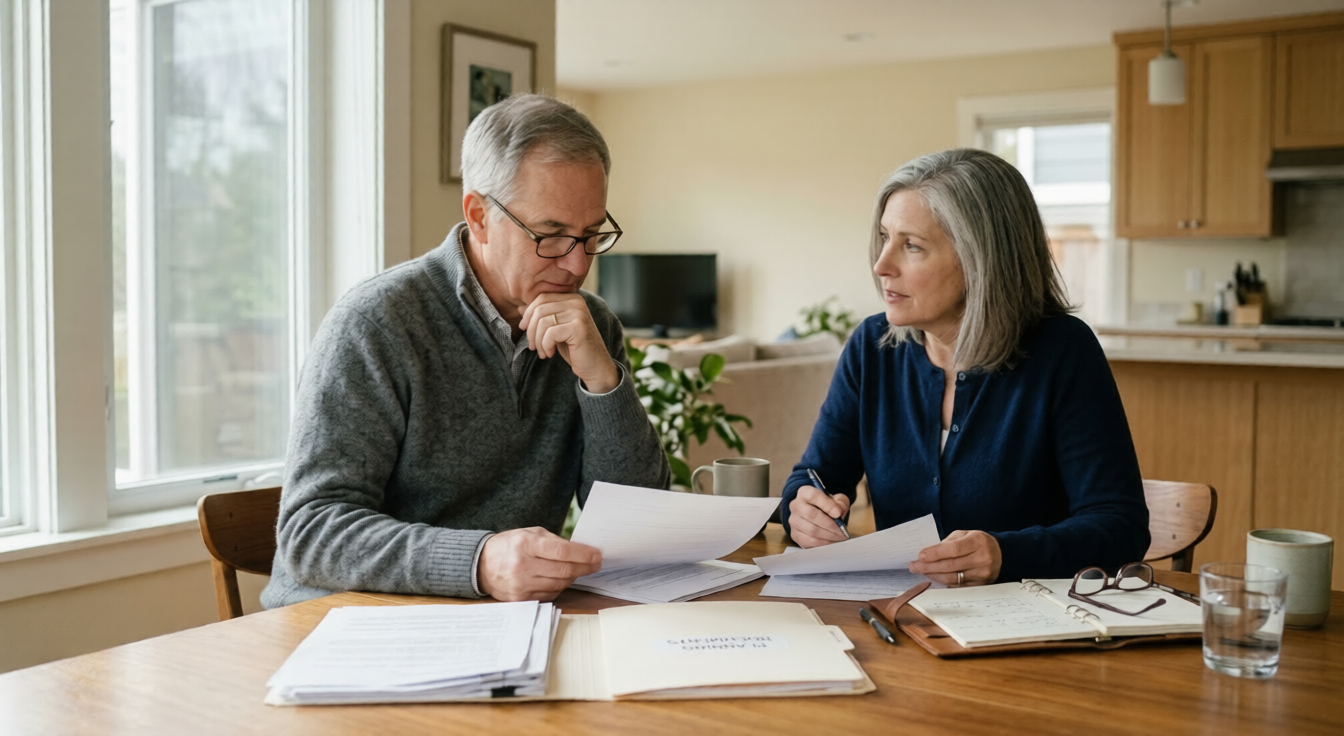
Estate Planning Needs More Than Good Intentions
“Hope is not a strategy” is one of those phrases that sticks with you because it’s true. And it’s especially true in estate planning.
Most people don’t avoid planning because they’re irresponsible. More often, they avoid it because life is full, the conversation is uncomfortable, and there’s a belief that there’s still time. They mean to get to it. They assume the people closest to them will know what to do. They trust that if something happens, things will somehow come together.
That kind of hope is understandable. It’s also where trouble often starts.
In estate planning, hope tends to show up in subtle ways. Someone hopes their spouse will be able to deal with the bank if needed. They hope their adult children will work well together. They hope doctors will know who to turn to. They hope that because a will has been signed, the important things are covered.
But hope isn’t a plan, and it certainly isn’t legal authority.
When Brian’s wife Carol had a stroke at 64, he assumed he could step in and manage their finances while she recovered. They’d been married 38 years. But several accounts were in Carol’s name only, and without an enduring power of attorney, the bank had no legal basis to give him access. The weeks that followed were consumed by urgent legal steps he never anticipated, at a time when his only focus should have been Carol.
A will is important, but it only takes effect after death. It doesn’t help during incapacity. If you’re still alive but unable to manage your finances, understand documents, or communicate medical wishes, a will does nothing to bridge that gap. That’s where many families get caught off guard. They discover, often in the middle of stress, that the document they thought covered everything was never meant to handle the situation they’re actually facing.
That’s why estate planning has to be broader than a will. It has to include the possibility that life may become complicated before life is over.
An enduring power of attorney is part of that broader planning. It allows you to choose who can step in to deal with financial and legal matters if you no longer can. Without it, even a devoted spouse or capable adult child can run into barriers at exactly the wrong time. The issue isn’t usually a lack of willingness. Families are often very willing to help. The issue is that willingness and authority aren’t the same thing.
The same is true of a personal directive or medical directive. This is where you name the person who should make personal or healthcare decisions if you cannot, and where you can leave guidance about your wishes and values. That kind of clarity matters. It doesn’t remove the emotion from difficult situations, but it can prevent people from being left in the dark, trying to make deeply personal decisions without knowing whether they’re honouring your intentions or simply guessing.
When David’s mother Elaine was admitted to hospital after a fall, the medical team needed someone to direct her care. There was no personal directive and no named decision-maker. David and his sister had different ideas about what their mother would have wanted, and the disagreement was painful for everyone. David later said the hardest part wasn’t the grief. It was never quite knowing if they’d gotten it right.
That’s one of the hardest parts for families. They’re already under strain, and now they’re being asked to interpret silence.
If you already have a will in place, that’s an important start. But if your enduring power of attorney, personal directive, and the practical details around your planning haven’t been reviewed, there may still be gaps that could create unnecessary stress later.
If you’re not sure whether your plan fully covers incapacity, not just what happens after death, this is exactly the kind of gap worth paying attention to. I offer a planning review specifically designed to find those gaps before they become problems. Find out what yours might be missing.
People sometimes treat these documents as if they’re secondary, but they’re not. They’re part of the real structure of a plan. A will speaks to what happens after death. These other documents speak to what happens if help is needed during life. Both matter. Both protect. Both reduce the risk that your family will be left trying to solve problems in real time without authority or direction.
What often gets overlooked is that incomplete planning creates more than inconvenience. It creates burden. It places pressure on the very people you’d most want to protect. Instead of being able to focus on care, support, and decision-making, they can find themselves chasing information, encountering resistance, and trying to piece together what should have been made clear in advance.
That’s why this kind of planning isn’t just about paperwork. It’s about reducing uncertainty. It’s about giving the people around you a clearer path to follow if something changes. It’s about recognizing that a difficult situation becomes even harder when no one knows who has authority, where documents are, or what the plan was meant to be.
There’s also an emotional resistance built into all of this. These documents ask people to think about vulnerability. They require us to imagine a time when we may need help, may not be able to speak for ourselves, or may not be able to manage the practical parts of life in the way we always have. It’s much easier to put that off. It’s much easier to tell ourselves there’ll be time later.
Sometimes there is. Sometimes there isn’t. That’s why hope, by itself, isn’t enough. Hope is a feeling. Planning is a decision.
You can hope your enduring power of attorney is never needed. You can hope your personal directive stays tucked away untouched. You can hope your family never has to step into those roles. But if life takes a turn, it will matter that the documents are there and that someone can act with clarity, confidence, and proper authority.
That’s what good planning does. It doesn’t remove every difficulty, but it does make a hard situation less chaotic. It gives structure to uncertainty. It gives guidance where there might otherwise be confusion. It gives the people around you something stronger than assumption.
A will remains essential. It just isn’t the whole plan. If your planning has focused only on what happens after death, and not on what happens if help is needed during life, there may be more work to do. That’s not a failure. It’s simply a reminder that estate planning is bigger than many people realize.
Because when it comes to incapacity, family responsibility, and decision-making under pressure, hope isn’t a strategy. Preparation is.
Visit our services page to see how we can help.
Watch our video here, or watch on our YouTube Channel:
Prefer a podcast? Listen here!
Please send us your questions or share your comments.
Disclaimer: This content is for general information only and is not legal, financial, medical, or tax advice.