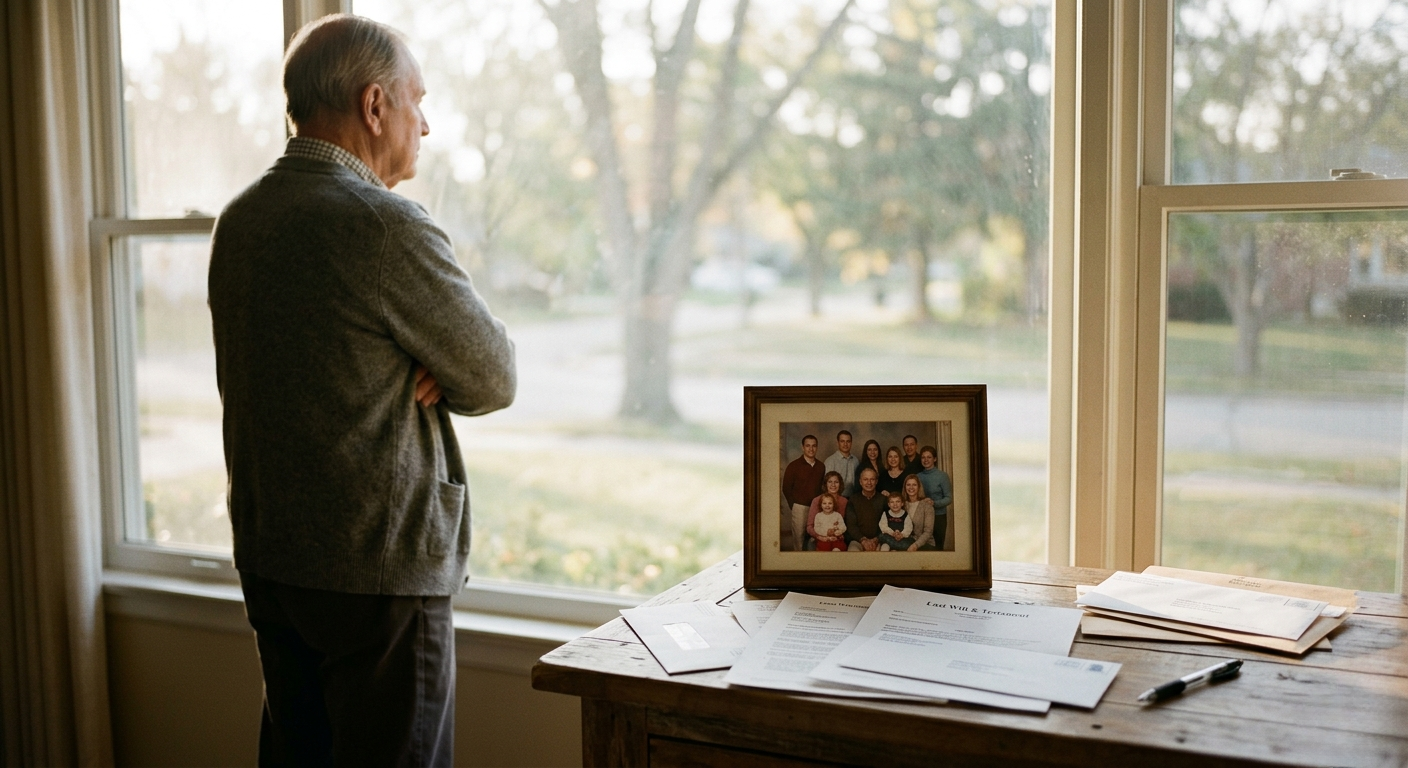
He Told Me Three Things. Every One of Them Was Wrong.
Marcel isn’t an unreasonable man. He has a will. He’s thought about what happens when he dies, at least enough to put something on paper. He loves his five kids. He’s been married a long time, even if the marriage hasn’t been easy.
So when I mentioned that his will leaves everything to his spouse with no direction about personal property and suggested a family conversation might be worth having, I wasn’t prepared for how quickly he closed the door.
He said three things. I’ve heard all three before, more times than I can count.
“I’ll be dead. It won’t be my problem.”
“I know my kids. They won’t fight over anything.”
“After I’m gone, if she wants to deal with it, that’s up to her.”
Each one sounds reasonable. Each one is actually a decision, dressed up as indifference. And together, they’re setting up exactly the kind of situation Marcel believes he’s avoiding.
“I’ll be dead. It won’t be my problem.”
This one is technically true and practically useless.
Marcel won’t be there. He won’t witness the disagreement over who gets the dining room table, or the tools in the garage, or the watch he wore every day for thirty years. He won’t be there when two of his children feel like they deserved more clarity, or when one of them walks away from a family gathering feeling like something was taken from them.
But here’s what he will have done. He’ll have made a choice. Not choosing is still choosing. Leaving no direction about personal property, no expressed wishes, no conversation on record, is a decision that gets made by default. It just gets made by other people, under pressure, while they’re grieving.
The question isn’t whether it will be Marcel’s problem. It won’t be. The question is whose problem it becomes, and whether he’s comfortable with that.
Most people, when they think that through, aren’t as comfortable as they thought.
“I know my kids. They won’t fight over anything.”
Marcel probably does know his kids. But there’s a version of his kids he’s never met.
He hasn’t met them at sixty, navigating their own financial pressures, their own marriages, their own histories with each other that have accumulated over decades. He hasn’t met them grieving, operating without the one person who could clarify what he meant or what he wanted. He hasn’t met them negotiating with a spouse who is now the sole legal owner of everything, trying to figure out how to advocate for themselves without causing a rift.
Research backs this up in a way that surprises most people. Estate attorneys report that more than half of the disputes they see involve items that represent less than ten percent of the estate’s total value. Not the money. The stuff. The lamp. The jewellery. The photograph albums. The things that have no market value and enormous emotional weight.
Those disputes aren’t about greed. They’re about what the object means, and about old dynamics that were manageable when the parent was alive and become unmanageable when they’re not.
Marcel’s kids might be fine. Plenty of families navigate this well. But “I know my kids” isn’t a plan. It’s a hope. And hope isn’t the same thing as having the conversation.
When Sylvie’s father passed away
Sylvie and her three brothers had always gotten along. Their father was confident they’d divide things fairly, and he said so often. What he never said was who should get his coin collection, or the fishing gear, or the hand-built bookshelf that had been in his study for forty years. Within six weeks of his death, Sylvie had stopped speaking to her oldest brother. Not over money. Over the bookshelf. It was not about the bookshelf.
“If she wants to deal with it, that’s up to her.”
This one sounds like generosity. It isn’t.
When Marcel’s will passes everything to his spouse, she becomes the legal owner of everything in that estate. Every piece of furniture. Every tool. Every item with sentimental value to one or more of his five children. What she does with those things is entirely up to her. She has no legal obligation to honour anything Marcel said out loud, any promises made at the kitchen table, any understanding his children may have about what was meant for them.
She may handle it beautifully. She may distribute things exactly as Marcel would have wanted. But Marcel has given her that task with no roadmap, no expressed wishes on record, and a family that includes members who may find it hard to advocate for themselves without feeling like they’re creating conflict.
That’s not a small thing. That’s a significant amount of pressure placed on one person, at one of the hardest moments of her life, with five different sets of expectations she may or may not know about.
“She can deal with it” assumes she knows what to do. It assumes she knows what Marcel would have wanted. It assumes the children will trust her judgment and accept the outcome. Those are a lot of assumptions for a plan that has nothing written down.
What Marcel Could Do Instead
None of this requires a lawyer, though updating a will to include specific bequests of personal property is worth discussing with one. What it requires is a willingness to have the conversation while he still can.
That conversation doesn’t have to be formal or a big deal. It can start with something as simple as walking through the house and making note of what matters and who it matters to. It can include a written record of his wishes, even an informal one, so that his spouse and his children have something to refer to. It can include a direct conversation with his kids about what he wants for them and what he’s hoping they’ll do for each other.
The goal isn’t to predict every conflict. It’s to remove as many ambiguities as possible, so the people he loves aren’t left filling in the blanks under the worst possible circumstances.
If you’re not sure where to start, The Prepared Estate™ brings together two tools designed for exactly this stage of planning. Estate Architect™ walks you through the decisions that shape your estate plan, and In Plain Sight™ helps you organize and document the personal records, accounts, and assets your family will need to find. Together, they give your executor, your spouse, and your children something to work with. You can find it at https://agapimarketing.com/planning-toolkit/
Marcel isn’t a bad planner. He’s a very common one. He’s done enough to feel like he’s handled it, without quite doing enough to actually handle it. That gap is where most estate problems live.
The good news is that gap is entirely closeable. But only while he’s still here to close it.
Visit our services page to see how we can help.
Watch our video here, or watch on our YouTube Channel:
Prefer a podcast? Listen here!
Please send us your questions or share your comments.
Disclaimer: This content is for general information only and is not legal, financial, medical, or tax advice.